
Tag: jesus

  • 04 Into the Wilderness (Mark 1:12-13)

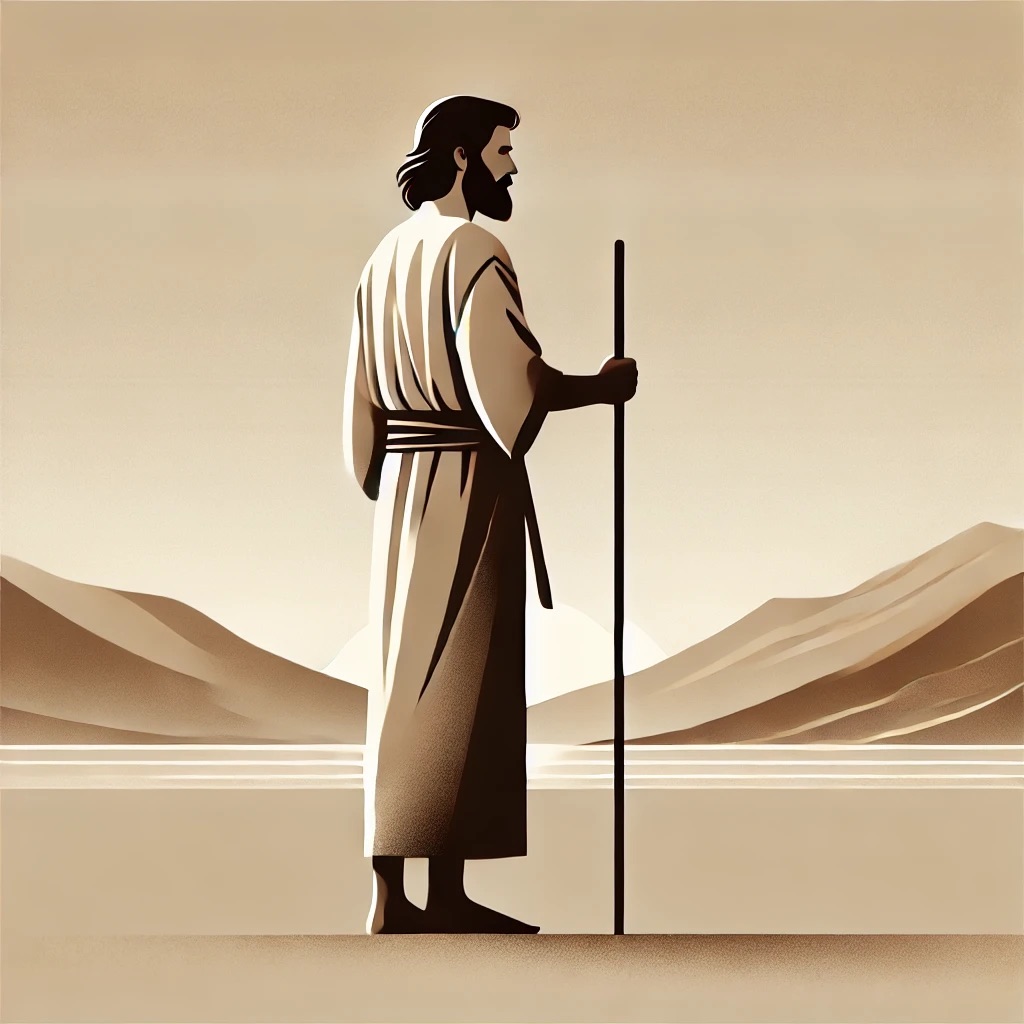
    Jesus does not linger in the moment of divine affirmation. He does not remain by the Jordan, basking in the voice that called Him beloved. Instead, Mark tells us that immediately He is driven into the wilderness. There is no delay, no transition—only movement. The Spirit that descended upon Him in peace now casts Him out into a place of desolation.

    “The Spirit immediately drove him out into the wilderness. And he was in the wilderness forty days, being tempted by Satan. And he was with the wild beasts, and the angels were ministering to him.”

    The Gospel of Mark moves quickly, always pushing forward, always emphasizing urgency. But in these two short verses, an entire spiritual reality is compressed into a moment: Jesus, freshly baptized, is sent into the unknown. The same Spirit that marked Him as the beloved Son now leads Him into a place of testing.

    The Wilderness as a Place of Preparation

    The wilderness is not a mistake. It is not a detour. It is part of the journey.

    Throughout Scripture, the wilderness is where God refines His people. Israel wandered for forty years, learning dependence on God. The prophets withdrew into the wilderness to encounter divine truth. And now, Jesus steps into the same reality—forty days of solitude, fasting, and trial.

    In Greek, the verb used here—ἐκβάλλει (ekballei), “drove out”—is forceful. This is not a gentle leading but a thrusting forward. It is the same verb Mark will later use when Jesus casts out demons (Mark 1:34, 39). The wilderness is not an invitation; it is a necessity. The Spirit compels Jesus forward, not because He is unprepared, but because this is what must happen next.

    The wilderness strips away comfort. It exposes. It reveals. It is a place of both danger and clarity, where everything unnecessary falls away, and what remains is only what is essential.

    Perhaps you have known your own wilderness. A season where you felt uprooted, uncertain, without direction. A place where the ground beneath you felt unstable, where you were confronted with fears you would rather avoid. If so, you are not alone. Even Jesus walked through the wilderness. Even Jesus faced the stripping away, the silence, the questions.

    Temptation and the Clash of Kingdoms

    Mark does not detail the nature of Jesus’ temptations as Matthew and Luke do. He gives us only a single sentence: “And he was in the wilderness forty days, being tempted by Satan.” But within that sentence lies a cosmic struggle.

    The presence of Satan signals that this is more than an internal battle; it is spiritual warfare. The Kingdom of God has broken into history, and now it is being opposed. Jesus stands in the wilderness where Adam once fell, where Israel once failed, and yet, He does not succumb. Where humanity has been weak, Jesus is strong. Where others lost their way, Jesus remains steadfast.

    Temptation is often misunderstood as a test of willpower, but at its core, it is a question of identity. In Matthew and Luke, Satan’s first words to Jesus are: “If you are the Son of God…” The enemy seeks to sow doubt, to twist the truth, to make Jesus prove what has already been declared.

    And is that not how temptation often works? Not as something obvious, but as a whisper of doubt. A questioning of who we are. A subtle pull toward forgetting what God has already spoken over us.

    But Jesus does not waver. He is already secure in His identity. He does not need to prove anything. He remains where Adam fell, where Israel faltered, and in doing so, He redefines what it means to walk faithfully with God.

    With the Wild Beasts, Among the Angels

    Mark includes a unique and striking detail: “He was with the wild beasts, and the angels were ministering to Him.”

    This simple phrase carries layers of meaning. In the ancient world, wild beasts represented danger and chaos. They were the unknown forces beyond human control, the embodiment of the untamed world. To be among the wild beasts was to be exposed, vulnerable.

    But there is also another layer. Isaiah 11:6-9 speaks of a time when the Messiah will bring peace to creation—when “the wolf shall dwell with the lamb.” Could this be a glimpse of that reality? That even in the wilderness, Jesus brings harmony? That where He stands, even the chaos of creation begins to shift?

    And then, the angels. Silent, unseen, yet present. The wilderness is not empty. Jesus is not alone. The angels minister to Him, a reminder that even in the hardest places, heaven is near.

    How often do we forget this? In our own times of wilderness, we focus on the struggle, on the isolation, on the difficulty. We forget that even there, the angels are present. That even when we feel unseen, God is sustaining us. That we do not walk through the wilderness alone.

    Embracing the Wilderness in Our Own Lives

    Jesus’ forty days in the wilderness are not just an event from the past; they are an invitation for us to see our own wilderness differently.

    We often resist seasons of discomfort. We see uncertainty as something to escape, suffering as something to avoid. But what if the wilderness is part of the process? What if this is where clarity is born?

    If you find yourself in a season of waiting, of struggle, of questioning—take heart. Jesus has walked this path before you. He knows the wilderness. He has felt the hunger, the isolation, the weight of trial. And yet, He was not overcome.

    The Spirit does not lead us into the wilderness to abandon us there. The Spirit leads us to refine us, to strengthen us, to prepare us for what is next.

    So if you are in the wilderness, stay. Stay, knowing that this is not the end of the story. Stay, knowing that temptation does not define you. Stay, knowing that God is with you, even among the wild beasts.

    And when the time comes, you will step out—not broken, but strengthened. Not lost, but found. Not uncertain, but ready.

    Leave a comment

  • 02. Prepare the way (Mark 1:2-4)

    It is not comfortable to be in the wilderness. It is empty, crude, and fraught with doubt. John the Baptist, however, emerges in the desert and cries forth a message that has endured throughout history: Prepare the way of the Lord. His voice does not emanate from the center of religious authority or the corridors of power. Rather, he invites individuals to enter a moment of transformation by standing where few would dare to live.

    John makes it clear that repentance and renewal are necessary. He makes no promises of immediate reform or an easy path forward. Instead, John exhorts people to plunge into the waters of baptism. He urges them to immerse themselves in the Jordan. They should let go of things that no longer serve them. His baptism is a symbolic act of readiness. It is a prelude to something bigger, which they do not yet completely comprehend. It is not merely a physical act of cleaning.

    According to the Gospel of Mark, John wore camel’s hair, a garment that is symbolic of the prophet Elijah, who was to arrive before the Lord’s great and awful day. His existence marks a watershed in history. Something new is emerging as the old fades. But letting go is necessary before embracing the new. People travel to him for this reason from all around Jerusalem and Judea. The wilderness, the discomfort of introspection, and the prospect of rejuvenation all appeal to them.


    John doesn’t talk about himself. One who is stronger than I, whose sandals’ strap I am not worthy of untying, follows me. He is aware that his position is only transitory and that his job is to make room for someone else. He is remarkably humble. John is happy to remain in the background during a period when religious leaders were vying for attention and authority, pointing to the one who will be baptized with the Holy Spirit rather than water.

    The necessity of preparing for change before it can truly take hold is a common theme in this passage. No change occurs in a vacuum. We must face our past and look to the future, just as the people in John’s day did. Without having to put forth the effort to create space for it, it is simple to yearn for something new. We wish for rejuvenation but oppose the purification. We desire a new beginning, but not the wilderness that frequently accompanies it.

    Μετάνοια (metanoia), the Greek term for repentance, is more than just feeling sad for past transgressions. It signifies a reorientation of one’s entire being, a complete shift of mind and heart. This is an active turning, a conscious decision to take a different course, rather than merely an emotional reaction. Repentance is realigning—realizing what is broken and allowing it to be fixed—rather than wallowing in guilt.

    Therefore, the wilderness is more than just a location on a map. It is a soul-related condition. It is where we go when we are lost, when life deprives us of our illusions, and when we have to face the truth. It is in the unnerving grandeur of the unknown, rather than the comfort of the known, that transformation starts. Nevertheless, Mark informs us that the people voluntarily support John. They look for him because they must, not because the wilderness is simple.

    Maybe this is where we are right now, on the brink of something new, knowing that something has to change but not knowing how to start. We can still hear John’s voice saying, “Set the path.” However, how do we get ready? How can repentance manifest itself in our daily lives?

    The necessity of letting go


    For some, it might be about letting go of burdens that have been held for too long. These include regrets, past injuries, or lingering anxieties. For others, it can entail identifying the habits that have prevented them from moving forward. They need to realize what needs to be addressed. Openness, not perfection, is the hallmark of true preparation. It’s about creating room for the future, even if we don’t fully comprehend it yet.

    Repentance is a reorientation of one’s entire being, a complete shift of mind and heart


    John informs the people that Jesus is close by, but they must purify their hearts before they can accept him. This is an internal metamorphosis rather than an outward ceremony. The impending one will immerse people in God’s own presence by baptizing them with the Holy Spirit. However, we must first leave the old in order to immerse ourselves in the new. We are unable to hold onto both simultaneously.

    John would probably say the same thing if he spoke to us now. They would interrupt the din of everyday existence, urging us to stop, look around, and become ready. He would tell us that we must accept what we are leaving behind before we can fully welcome what lies ahead. He would welcome us into the woods as a place of enlightenment and rejuvenation rather than as a place of punishment.

    The outdoors is sacred yet uncomfortable. Distractions disappear there, all that is untrue is eliminated, and the reality of who we are and who we are becoming becomes apparent. In order to be ready to accept the greater when he arrives, we must first prepare our hearts and straighten the road.

    Thus, the question still stands: What needs to be resolved in your life before you may proceed? What needs to be let go, admitted, or given up for regeneration to begin? Just like in John’s day, the invitation is now available. The call is still the same. Clear the path.

    Are you going to advance?


  • Mark 1:1

    1.1  “The Beginning of the Good News of Jesus Christ, the Son of God”

    A Reflection

    Mark 1:1 proclaims: “The beginning of the Good News of Jesus Christ, the Son of God.” Each word in this verse carries profound theological and philosophical significance, shaping not only the Gospel’s narrative but also the very foundation of Christian faith. This single sentence is an invitation into a new beginning, an introduction to Good News, a revelation of Jesus Christ, and a declaration of His divine identity as the Son of God. To understand it fully, we must explore how these elements interconnect into a single, transformative reality.

    1. The Beginning: The Moment of Creation and Renewal

    A beginning is never just a starting point—it is the birthplace of transformation. Just as Genesis 1:1 describes the creation of the universe, Mark 1:1 announces a new creation, a divine eruption into history. The Good News does not simply start with Jesus; He is the beginning—the arche, the source from which all things flow.

    Beginnings are moments of possibility and renewal, where something new emerges from nothingness. They introduce form where there was formlessness, structure where there was chaos, and meaning where there was emptiness. To say that the Gospel begins is to say that God is doing something new—not just in history, but in the lives of those who hear it. This is not just a story unfolding; it is an invitation to step into a transformed life.

    2. The Good News: More Than a Message, a Living Reality

    The Good News is not merely information; it is an event, a proclamation, a transformative encounter. News, by definition, changes reality—it alters perception, reshapes understanding, and demands a response. But what makes news good? It is not simply the fulfillment of human desire but a revelation of the ultimate truth, the ultimate good.

    The Good News of Jesus Christ is good not because it brings temporary relief, but because it reorders human existence, offering hope, salvation, and a new way of being. It is the resolution of humanity’s deepest uncertainty—the longing for meaning, for reconciliation with God, for eternal life.

    Yet, news can be unsettling. Just as good news for one person might be disruptive for another, the Gospel challenges old ways of living. It comforts the brokenhearted but unsettles those who cling to power, to pride, to self-sufficiency. The Good News invites us to let go of the old and embrace the new, but such an invitation requires courage, humility, and faith.

    The Good News of Jesus Christ is good not because it brings temporary relief, but because it reorders human existence

    3. Jesus Christ: The Center, Perimeter, and Radius of the Good News

    The Good News is not just about Jesus; it is by Jesus and belongs to Jesus. He is both the messenger and the message, the Word made flesh. To say that the Gospel is of Jesus Christ is to acknowledge that He is its center, its source, and its fulfillment.

    The name Jesus (Yeshua) means “God saves.” His very name declares His mission: to bring salvation. The title Christ (Messiah) affirms Him as the anointed one—the fulfillment of God’s promises, the long-awaited king who reigns not by force, but by sacrificial love.

    Everything in the Gospel is about Jesus, but more than that, everything is done by Him and through Him. He does not merely announce a new way of life; He is the way, the truth, and the life (John 14:6). Accepting the Good News is not just believing in a message—it is entering into a relationship with a Person, the one who embodies and owns the message itself.

    4. The Son of God: The Divine Identity of Jesus

    The title “Son of God” is the key to understanding who Jesus is and why His Good News matters. In ancient thought, to be a “son” meant to share in the essence, mission, and authority of the father. To call Jesus the Son of God is to declare that He is not just a prophet or a teacher, but that He shares in God’s very nature.

    Just as a son carries forward his father’s work, Jesus is the full revelation of the Father—His character, His love, His justice. He does not simply speak about God; He is God made visible.

    But His sonship is also a call to relationship. Jesus, the Son of God, opens the door for us to become children of God (John 1:12). He invites us to share in His sonship—to be adopted into the divine family, to enter into communion with God through Him.

    5. The Unified Meaning: An Invitation to Transformation

    Mark 1:1 is not just an introduction to a book—it is an invitation to step into a new life.

    • It is a beginning—a moment of renewal, where the old passes away and something new is born.
    • It is Good News—not just information, but transformation, a truth that changes everything.
    • It is of Jesus Christ—centered in Him, proclaimed by Him, and belonging to Him alone.
    • It is the proclamation of the Son of God—a revelation of who Jesus is and what He offers to those who accept Him.

    To embrace this verse fully is to embrace the reality it declares. It means recognizing that the story of Jesus is not just something to read, but something to live. It is an invitation to step into a new beginning, to be shaped by the Good News, to be drawn into the life of Jesus Christ, and to discover our own identity as children of God.

    The beginning has been announced. The Good News is proclaimed. Jesus Christ, the Son of God, stands before us.

    The only question is: How will we respond?

    1. What is a “beginning” in my life that changed me profoundly? How did it shape who I am today?
    2. How do I feel about the idea that every moment is an opportunity to begin again? Where in my life do I need a fresh start?
    3. What does Good News mean to me? What is the best news I have ever received, and how did it change my perspective?
    4. How does the Good News of Jesus differ from the “good news” the world offers?
    5. What does it mean to be a son or daughter of someone? How does this shape my understanding of Jesus as the Son of God?
    6. What is one practical step I can take this week to live out the reality of the Good News in my life?

  • Mark 1:1-13

    Mark 1:1-13

    The Power of New Beginning

    The first part of Mark’s Gospel is very urgent and strong, announcing a new beginning right away. Matthew and Luke both begin with Jesus’ family history and birth, but Mark goes straight to His work in public life. Mark’s opening, which is so clear and to the point, shows how Christian life works: it’s an active life, not an observational one; it’s a call to move, believe, and go into doubt. Mark’s beginning announces a new life that comes from moving, having faith, and facing uncertainty.

    It starts with “The beginning of the gospel of Jesus Christ, Son of God.” These words start a story, but they do it in a bigger and more meaningful way. They start a miracle story all over again. Mark’s use of “the beginning” forces us to see an event in a bigger context—not just another event in a schedule, but a fresh start for a change. When you start a new trip, you’re going into the unknown. You’re also starting a journey of growth, not a quick-fix accomplishment. Any moment in time offers a chance to start over, a chance to move forward in hope.

    People often get stuck and don’t do anything because they don’t want to move forward because of failures in the past or fear about the future. In Mark’s Gospel, it is taught that everything starts out in a messy, unsure, and sometimes rough way. But these kinds of starts have a lot of promise. Beginning is a faith-based act that means you are ready for change even though you can’t see the way ahead. You shouldn’t wait for everything to be right before taking the first step.

    Many people don’t start a new project because they don’t feel ready. They think they need to get everything right first. Mark’s Gospel, on the other hand, doesn’t start with perfection, but with action. Jesus doesn’t wait for the right time to do something; instead, he goes to work on purpose. Just the fact that it’s so important is a lesson. If we don’t start when we’re not ready, then maybe we won’t start at all. That’s a lesson in hope. That doesn’t mean being totally ready; it means having faith that God will meet us where we are when we’re ready to move forward.


    The word “the beginning” makes you think of movement. Faith is not a state of being still; it requires action. We must consciously move toward change if we want to grow spiritually, emotionally, and mentally. Having hope in something, no matter how small, can start a big change. You can make the first move at any time, because the present is a holy moment full of possibilities.

    Every morning is a fresh start. We can change our state of mind just by knowing that. To change our course, we can take a deep breath, pause, and remember that today is a fresh start, a chance to hold on to hope without fear. By looking at life as a trip that is still to be taken, we can figure out what motivates and holds us. Knowing that heart-led change is possible with every breath, we can let go of fear, doubt, and regret and replace them with hope and rebirth. New starts are a theme that runs through the Bible: Genesis begins with the words “In the beginning, God created…” This is how life came into the world from nothing. After the flood, Noah and his family landed on dry land, joining a world that had never been made before. The Israelites were freed from slavery during the Exodus. They were given a fresh start in a free land. The rising of Jesus made a fresh start, turning death into life. All of these things tell us that God is always making new things. We always have the chance to start a new life, no matter how bad things get.

    Mark’s Gospel isn’t just a story about what happened; it’s also a personal call to start over. Every new moment gives us a chance to start over, whether we’re starting a new job, going through a tough time, or just wanting a fresh start in life. Not by changing things in the outside world, but by going through a deep change on the inside, letting go of what holds us back and moving toward what God wants us to move toward.

    If you want to walk by faith, you have to take one step, even if you don’t know where you’re going. There is no such thing as overnight growth or instant change. It happens slowly and over time, even if you accept and take one step at a time. God met Noah after the flood, led the Israelites through the desert, and raised Jesus from the dead. Just like that, He meets us at the start of every new day, giving us grace, strength, and the knowledge that we are not alone.

    Trust is needed to start over. You have to be ready to let go of your need to know and believe in your faith in the not knowing. We need to let kindness fill in the gaps where we feel like we’re not good enough. It means seeing the present as holy and believing that God is at work, even if we can’t see the results yet. No matter what we go through or how hard things get, we always have the chance to start over. Mark 1:1 isn’t the beginning of the Gospel; it’s a call to change. It’s not a question of whether we’re ready; it’s a question of whether we’re willing. Long-term travelers all start with one step. Even though things will never be perfect, God’s kindness is always there, ready to help us take that first step. The offer is right in front of us.

    Will we take it and get ready for a fresh start?