Tag: gospel-of-mark

  • 11 Lowered to Grace

    11 Lowered to Grace

    The Courage to be seen.

    Mark 2:1–12

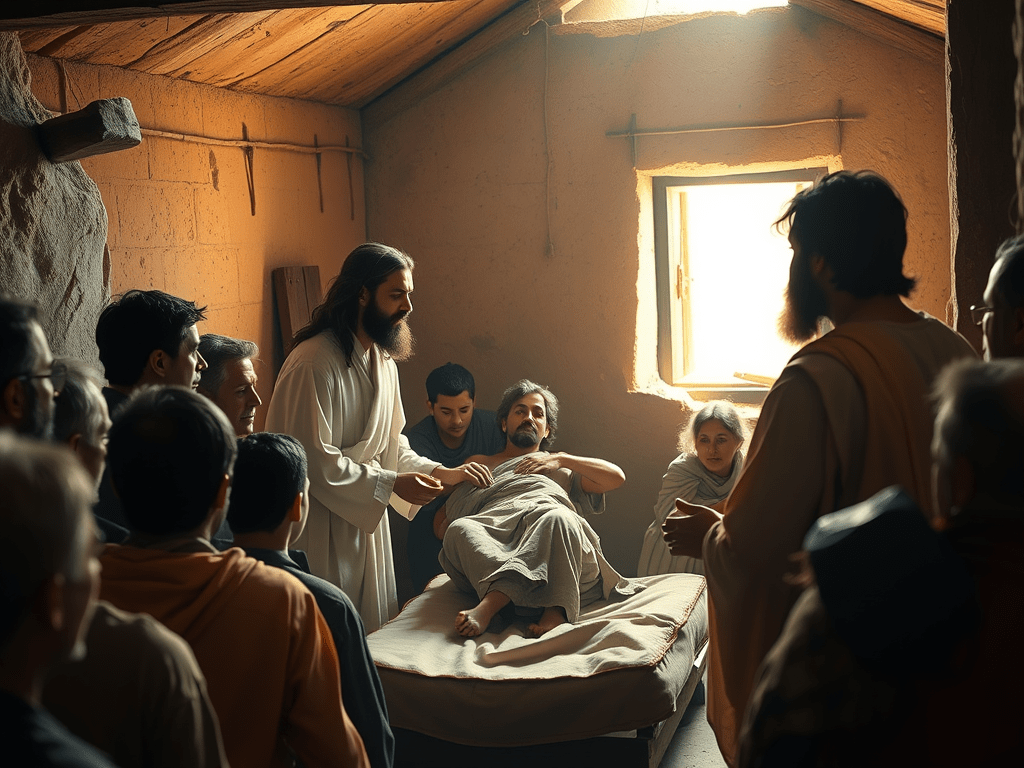
    One of the most quietly revolutionary episodes in all of Scripture is in the second chapter of Mark’s Gospel. There were no bright lights or loud voices from the skies. A small, crowded house in Capernaum, and the sound of a roof being ripped off.

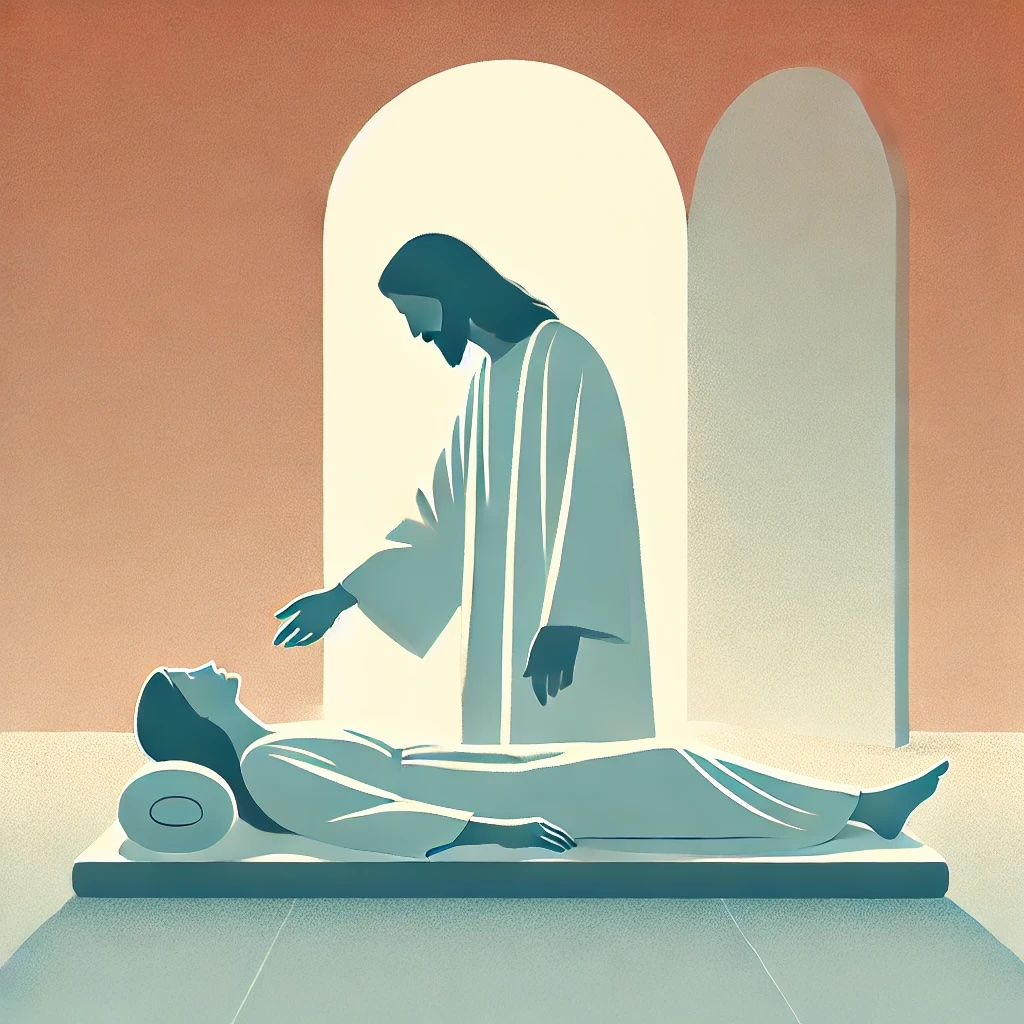
    Jesus is teaching down here. Four friends are lowering a disabled man into His presence above. The room goes quiet. Then Jesus speaks. It’s not a command to walk, but something much more personal and disarming:

    “Son, I forgive you for your sins.”
    —Mark 2:5

    What comes next is more than a miracle. It is an invitation to the kind of spiritual freedom that changes lives, not just for the man on the mat, but for all of us who know what it feels like to be stuck.

    When Movement Comes to a Halt

    We all have a mat. A spot where we’ve stopped moving. Fear is what some people feel. Some people feel guilt, tiredness, self-doubt, or a wound that has been hidden for too long. We often don’t get to Jesus on our own, but because of the gentle charity of those who help us through friendship, prayer, or just not letting us give up.

    “Sometimes the first step toward healing isn’t walking; it’s being willing to be carried.”

    In this case, the man who was crippled didn’t say anything. He didn’t say he was sorry. He didn’t say a prayer. He just let people see him. That was all it took.

    The Healing That Came Before the Miracle
    Jesus doesn’t talk about the man’s physical condition right away. Instead, He talks to his soul directly.

    “Son…”

    It’s more than simply a greeting; it’s a way to get your identity back. Jesus heals the self before he heals the body.
    He gives a sense of belonging before action.
    Before change, He offers acceptance.

    “To be known in your weakness and still be called beloved—that is the beginning of true healing.”

    We frequently think that being strong will help us be seen. But in this case, Jesus changes the story. Being completely open and honest is what draws His attention and opens the door to grace.

    The More Serious Conflict

    Of course, not everyone in the room was okay with this form of healing. The religious experts, or scribes, were shocked. They asked each other in silence, “Who can forgive sins but God?”

    They were right. But they weren’t ready for the answer either.

    Jesus, who knows their hearts, doesn’t argue with them; instead, He asks them a question:

    “Which is easier: to say, ‘Your sins are forgiven’ or to say, ‘Get up, take your mat, and walk’?”

    And then He urges the man to get up to show that He is in charge. And he does.

    He picks up the mat that once held him and walks away, complete, restored, and living.

    A Question for Us

    This chapter gives us a challenge that goes beyond religion and into the heart of personal change:

    Are we okay with being seen as we really are?

    Can we agree that grace comes before doing well?

    Are we ready to move into a life that is in line with the truth, both physically and spiritually?

    This is when being real and accepting others completely come together. Not the shallow type of self-acceptance that doesn’t want to change, but the profound kind that says, “I am not condemned, even here and now.” They are calling me.

    “Being real is what brings healing, not getting everything right.”

    A Way to Get Ready for the Journey
    Try this peaceful practice the next time you feel stuck in one part of your life:

    Be still.
    Put your hands on your heart.

    Take a breath and say, “I am seen.”
    Let go of your breath and say, “I am forgiven.”

    Let the words sink in.
    Picture Jesus standing in front of you, not asking you to walk yet, nor pushing or correcting you. Just calling you “Child” and letting that be enough.

    Willingness is the first step to wholeness.
    You don’t have to go up on the roof.
    You don’t even have to say anything.
    You only have to say yes to being lowered—into grace, truth, and healing.

    Jesus is still here.
    Still making space in the mob.
    Still bringing back the ones that can’t move on their own yet.

    And still saying,

    “Get up.”

  • 10 He touches the untouchables (Mark 1:40-45)

    10 He touches the untouchables (Mark 1:40-45)

    Jesus Heals the Leper

    Jesus has just left a time of prayer and continues His mission, proclaiming the kingdom of God throughout Galilee. His fame is spreading, His words draw crowds, and His authority over sickness and demons astonishes many. Then, a solitary man approaches—not from the crowd, but from the edges of society—someone no one else would dare touch.

    The Leper’s Desperation

    This man is not only sick—he’s an outcast. In the ancient world, leprosy was more than disease; it was a life of isolation. Lepers lived outside cities, avoided all contact, and cried “Unclean!” if anyone came near. They were treated as the living dead, cut off from community, worship, and hope.

    Yet this man dares to approach Jesus, breaking every social rule. He shouldn’t be near healthy people—especially not a teacher or holy man. But his desperation outweighs his fear.

    He doesn’t demand healing or presume a response. He kneels and says, “If you will, you can make me clean.”
    There is no doubt that Jesus can—only uncertainty about whether He will.

    This captures the heart of human suffering: We believe in God’s power, but we struggle with His willingness.
    Does He see us?
    Does He care?
    Will He answer?

    And then—Jesus moves.

    The Compassion of Jesus

    Mark says Jesus is moved with pity (Greek: splagchnistheis)—a deep, gut-level compassion.

    Jesus doesn’t hesitate. He reaches out and touches the man, then says, “I will; be clean.”

    This is radical. He could have healed with a word, as He’s done before. But He chooses to touch the untouchable.

    It may be the first human contact the leper has felt in years. No one else would come near—but Jesus moves toward him.

    In this moment, Jesus is doing more than healing a disease—He’s restoring a person.
    He removes suffering and restores dignity. He doesn’t just heal; He embraces.

    Immediately, the man is made clean.

    Obedience and Disobedience

    Jesus gives a clear command:

    “Say nothing to anyone, but go show yourself to the priest and offer what Moses commanded.”

    Why? Because only a priest could declare someone clean and allow them back into society (Leviticus 14). Healing wasn’t enough—he needed to be officially restored.

    But the man disobeys.
    He spreads the news freely, overwhelmed by joy after years of pain and shame.
    Understandable—but it has consequences.

    Jesus can no longer enter towns openly. He remains in desolate places, the very spaces lepers once occupied.

    In a way, Jesus trades places with the man.
    The leper is restored to society; Jesus is pushed into isolation.

    This foreshadows the ultimate exchange—when Jesus will take on all human sin and suffering at the cross, so we might be free.

    What This Means for Us

    Jesus is willing. That’s the core truth here. The leper didn’t doubt Jesus’ power—just His desire.
    Jesus’ response makes it clear: I do want to.

    We ask the same today. We believe God can—but we wonder if He wants to.

    This story says yes. He touches what others avoid. He embraces what’s rejected.
    He steps into our suffering, to heal and restore.

    If you’ve ever felt unwanted, unworthy, or too broken for grace—this is for you.

    Jesus isn’t repelled by your wounds or ashamed of your scars. He’s moved by them. He wants to make you whole.

    True healing restores more than the body.
    Jesus didn’t just remove disease—He gave the man his place back in the world.
    He restores identity, dignity, and belonging.

    Grace Disrupts

    The man’s disobedience changes Jesus’ ministry. Grace is rarely tidy—it spreads, disrupts, and transforms.

    But in the end, it always points us back to Jesus.

    And so, we find ourselves where the leper once knelt, saying:

    “If you will, you can make me clean.”

    And Jesus, without hesitation, reaches out and says:

    “I will; be clean.”

    The question is never His willingness—only our readiness to receive.


  • Gospel of Mark 08

    Gospel of Mark 08

    Mark 1:29–34: Healing at the Doorstep

    Jesus exits the synagogue, where He had just cast out an unclean demon, and enters the home of Simon and Andrew. It is a shift from public to private. It changes from a big display of authority in a hallowed venue to a quiet, intimate setting at home. But His influence does not diminish when He leaves the synagogue. The same authority that hushed the devil now extends into the intimate and mundane—to illness, suffering, and the daily difficulties of human life.
    Mark informs us:

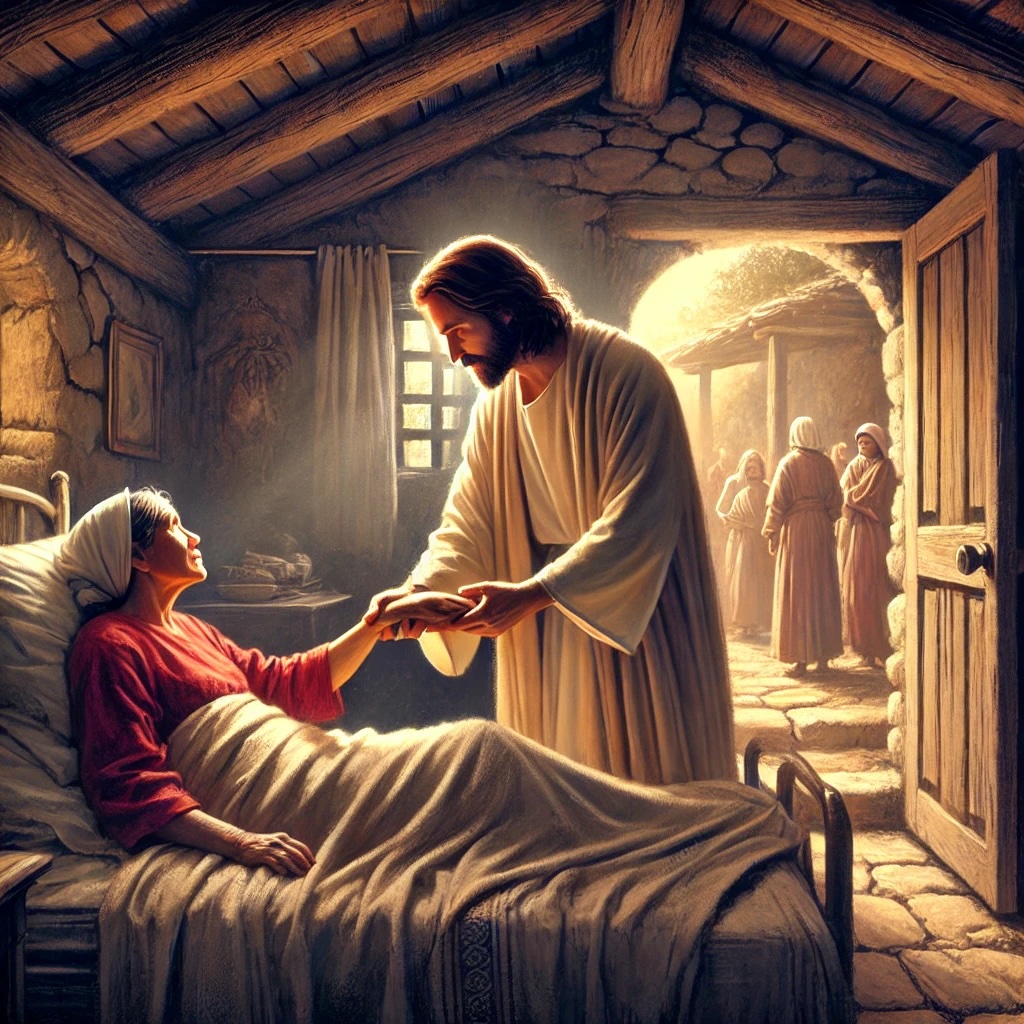
    “And he quickly left the synagogue and entered Simon and Andrew’s house, accompanied by James and John. Simon’s mother-in-law was now unwell with a fever, and they promptly informed him of this. And he came and grabbed her by the hand, pulled her up, and the fever subsided, and she began to serve them.”

    Healing That is Personal

    The scenario is simple, but powerful. Simon’s mother-in-law is ill, and they rush to Jesus for help. There is no lengthy explanation or complicated plea, just a simple acknowledgment: she is ill.
    Jesus reacts instantly. He does not doubt her worthiness for healing. He does not wait. He does not make a spectacle out of the situation. He merely stretches out His hand, raises her up, and the fever subsides.

    There is something really human about this moment. No grandiose gestures. There will be no bombastic proclamations. Just a hand extended, a compassionate touch, a simple restoration.

    And how did she respond? She begins serving them.
    This is more than just a duty; it represents complete healing. She is not only recuperating; she is completely healed, with strength to act and energy to serve. Jesus doesn’t merely cure her fever; He brings her back to life.

    Healing Beyond the Household

    However, this is merely the beginning at Simon’s house. As soon as the Sabbath concludes, the entire village rushes to the door, bringing their sick, suffering, and possessed.

    “That evening around sundown, they brought to him everyone who was ill or plagued by demons. And the entire city was gathering at the entrance. And he healed numerous people suffering from various ailments and threw out many devils.”

    The entryway becomes a point of transition. What began as a simple act of healing in a home turns into a deluge of need at Jesus’ feet. The entire city is now at the door, seeking restoration, relief, and hope.

    Jesus greets them all.

    He doesn’t turn them away. He is not tired of their cries. He touches, heals, and delivers. His authority is not confined to words spoken in a synagogue. It is not limited to private miracles performed in a home. It extends to anybody who comes to Him.

    Authority over sickness and oppression.

    Mark creates a distinction. Jesus cures the sick and expels devils.
    Physical suffering exists, as does spiritual persecution. Both are real. Both are hefty loads. Jesus has authority over them all.

    He not only teaches about the kingdom, but also represents its strength.
    Everywhere He goes, darkness retreats. Sickness is undone. Oppression is silenced. God’s kingdom is more than simply a distant hope; it is already present in the earth. But, despite this exhibition of might, there remains a quiet sweetness. There is no indication that Jesus heals to prove anything. There is no performance or spectacle. Only kindness.

    Healing: A Sign of the Kingdom

    Throughout Jesus’ mission, healing is more than just a return to health. It is an indication of something more.
    The prophets said that God would heal His people: “Then the eyes of the blind shall be opened, and the ears of the deaf unstopped; the lame man shall leap like a deer, and the tongue of the mute sing for joy.” (Isaiah 35:5–6)
    Jesus is fulfilling this promise. Every healing is a glimpse of the kingdom, a proof that God is repairing what was broken, reversing what was lost, and making everything new.

    Nevertheless, He does not allow the devils to speak.
    “He would not permit the demons to speak, because they knew him.”
    Why? Because Jesus’ purpose extends beyond simply performing miracles. He isn’t just a healer or exorcist. His power is real, but His identity has to be revealed in God’s time and way.
    The people see His marvels. But do they really comprehend who He is?

    What Does This Mean for Us?

    This text is not only about the past; it also applies to our current existence.
    Jesus meets us wherever we are. He is present in both sacred and mundane settings. He does not only carry out miracles on great platforms; He also works in the quiet moments, personal hardships, and locations that no one else sees.

    Healing is more than just alleviating misery; it is also about restoration. Simon’s mother-in-law is not only healed; she is restored to life, vigor, and purpose. True healing is about becoming entire, reclaiming our true selves.

    The door is still open. The entire village came at Simon’s door to seek healing. We are still at that barrier today. The invitation stays. Jesus still greets people who come, extends His hand, and mends what is broken.

    Will we come to Him? Will we bring to Him what is weighing us down? Will we believe that His touch can still make everything new?

    The door is open.

    The Healer is nearby.

    Will you come forward?

  • 02. Prepare the way (Mark 1:2-4)

    It is not comfortable to be in the wilderness. It is empty, crude, and fraught with doubt. John the Baptist, however, emerges in the desert and cries forth a message that has endured throughout history: Prepare the way of the Lord. His voice does not emanate from the center of religious authority or the corridors of power. Rather, he invites individuals to enter a moment of transformation by standing where few would dare to live.

    John makes it clear that repentance and renewal are necessary. He makes no promises of immediate reform or an easy path forward. Instead, John exhorts people to plunge into the waters of baptism. He urges them to immerse themselves in the Jordan. They should let go of things that no longer serve them. His baptism is a symbolic act of readiness. It is a prelude to something bigger, which they do not yet completely comprehend. It is not merely a physical act of cleaning.

    According to the Gospel of Mark, John wore camel’s hair, a garment that is symbolic of the prophet Elijah, who was to arrive before the Lord’s great and awful day. His existence marks a watershed in history. Something new is emerging as the old fades. But letting go is necessary before embracing the new. People travel to him for this reason from all around Jerusalem and Judea. The wilderness, the discomfort of introspection, and the prospect of rejuvenation all appeal to them.


    John doesn’t talk about himself. One who is stronger than I, whose sandals’ strap I am not worthy of untying, follows me. He is aware that his position is only transitory and that his job is to make room for someone else. He is remarkably humble. John is happy to remain in the background during a period when religious leaders were vying for attention and authority, pointing to the one who will be baptized with the Holy Spirit rather than water.

    The necessity of preparing for change before it can truly take hold is a common theme in this passage. No change occurs in a vacuum. We must face our past and look to the future, just as the people in John’s day did. Without having to put forth the effort to create space for it, it is simple to yearn for something new. We wish for rejuvenation but oppose the purification. We desire a new beginning, but not the wilderness that frequently accompanies it.

    Μετάνοια (metanoia), the Greek term for repentance, is more than just feeling sad for past transgressions. It signifies a reorientation of one’s entire being, a complete shift of mind and heart. This is an active turning, a conscious decision to take a different course, rather than merely an emotional reaction. Repentance is realigning—realizing what is broken and allowing it to be fixed—rather than wallowing in guilt.

    Therefore, the wilderness is more than just a location on a map. It is a soul-related condition. It is where we go when we are lost, when life deprives us of our illusions, and when we have to face the truth. It is in the unnerving grandeur of the unknown, rather than the comfort of the known, that transformation starts. Nevertheless, Mark informs us that the people voluntarily support John. They look for him because they must, not because the wilderness is simple.

    Maybe this is where we are right now, on the brink of something new, knowing that something has to change but not knowing how to start. We can still hear John’s voice saying, “Set the path.” However, how do we get ready? How can repentance manifest itself in our daily lives?

    The necessity of letting go


    For some, it might be about letting go of burdens that have been held for too long. These include regrets, past injuries, or lingering anxieties. For others, it can entail identifying the habits that have prevented them from moving forward. They need to realize what needs to be addressed. Openness, not perfection, is the hallmark of true preparation. It’s about creating room for the future, even if we don’t fully comprehend it yet.

    Repentance is a reorientation of one’s entire being, a complete shift of mind and heart


    John informs the people that Jesus is close by, but they must purify their hearts before they can accept him. This is an internal metamorphosis rather than an outward ceremony. The impending one will immerse people in God’s own presence by baptizing them with the Holy Spirit. However, we must first leave the old in order to immerse ourselves in the new. We are unable to hold onto both simultaneously.

    John would probably say the same thing if he spoke to us now. They would interrupt the din of everyday existence, urging us to stop, look around, and become ready. He would tell us that we must accept what we are leaving behind before we can fully welcome what lies ahead. He would welcome us into the woods as a place of enlightenment and rejuvenation rather than as a place of punishment.

    The outdoors is sacred yet uncomfortable. Distractions disappear there, all that is untrue is eliminated, and the reality of who we are and who we are becoming becomes apparent. In order to be ready to accept the greater when he arrives, we must first prepare our hearts and straighten the road.

    Thus, the question still stands: What needs to be resolved in your life before you may proceed? What needs to be let go, admitted, or given up for regeneration to begin? Just like in John’s day, the invitation is now available. The call is still the same. Clear the path.

    Are you going to advance?