
Tag: gospel

  • 05. Mark 1:14-15 The Time is Now


    Jesus does not start His work in a peaceful time. God doesn’t start His work when things are stable in politics or religion. Instead, He makes His formal announcement after John the Baptist is picked up. The person who made the way possible is now in jail, and the system that Jesus is about to face has shut them up.


    Mark simply says, “After John was arrested, Jesus went into Galilee and preached the gospel of God. He said, ‘The time is over, and the kingdom of God is near. Turn away from your sins and believe the gospel.’”

    These words make you feel rushed. Things are moving. Jesus doesn’t think twice. His message isn’t careful. That’s not what he does to make it more comfortable. So, He goes ahead with His task and tells them something very important: “The time is fulfilled.”
    “The kingdom of God is at hand.”
    “Repent and believe in the gospel.”
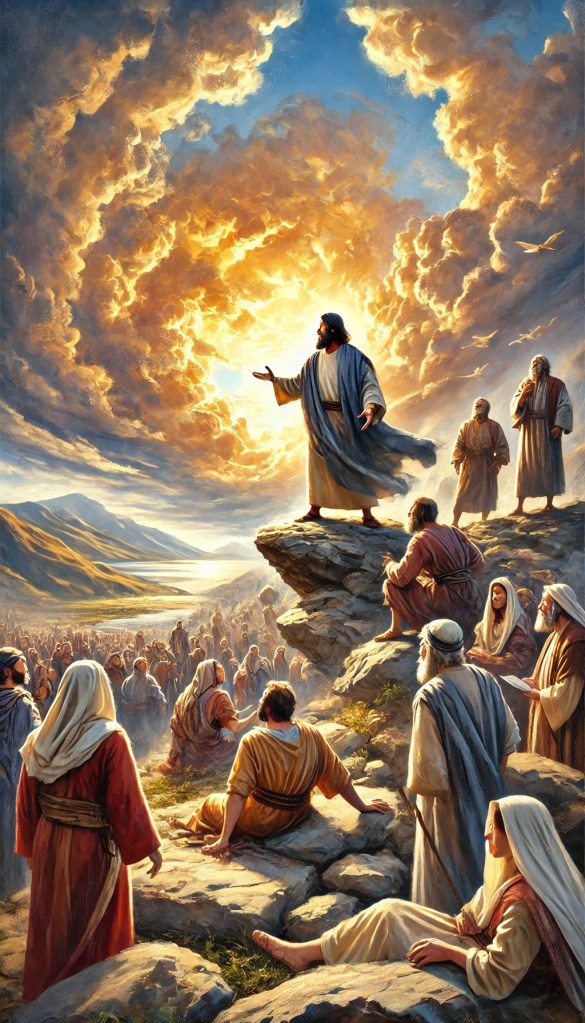
    These words aren’t just from the past. They’re still living. People are still welcome to accept them.


    This is the right time: Being in the Kairos Moment

    Jesus doesn’t just mean that history has reached a certain point when He says, “The time is fulfilled.” The Greek word for “time” in this case is kairos, which is not the same as chronos, which means “clock.” Kairos is a turning point, a divine call, or a chance to do something.


    Jesus is telling people that something has changed. Now the wait is over. The long-awaited moment that the prophets spoke about has finally come. It’s not just another part of history; this is the turning point.

    How often do we wait for the ideal time to make a change, move forward, or start something new? When things are just right, when we feel ready, or when we are better ready, we tell ourselves that we will start. But kairos time doesn’t wait for us to be ready; it tells us to act right now.
    Right now is always a kairos moment. No matter what, God is always calling us to start over. The call to change is not something that might happen in the future; it is already here.

    The coming of God’s kingdom: Not an idea but a reality


    One of the most confusing ideas in Christianity is “the kingdom of God,” which is at the heart of what Jesus taught. When we hear the word “kingdom,” we might think of a country’s government, its land, or its people. But the kingdom of God is not a government on earth; it is God’s rule coming into the world.


    ἂγγβκεν (ēngiken, meaning “is at hand”) is a perfect tense word in Greek. This means that the kingdom has already come and is still there. Says Jesus, “The reign of God is not just coming; it is already here, taking shape right in front of you.”


    But if the kingdom has already come, then why is the world still broken? This is what the “already and not yet” means. The kingdom began with Jesus, but it will not be fully finished until the end of time. There it is, but it is still happening. Real, but still waiting to be fulfilled.


    And we are asked to live in this space between—to know that God’s rule is already here even as we long for it to be fully realized.

    We don’t just sit back and wait for the kingdom to come. Jesus’ words make us want to respond. We step into the kingdom, live into it, and become it. It is not a question of whether or not God’s reign has started; it has. The question is whether we will see it and take part in it.


    Don’t repent, but believe: a call to change

    Jesus doesn’t just say that the kingdom has come; He tells people to “repent and believe in the gospel.”


    No, the word “repent” (μετανoεῖτε) does not mean to feel bad or sorry. To change one’s mind is to go in a different direction or see things in a different way. It’s a call to realign, or change the way you live so that it fits with God’s plan.


    And believe (πιστεύετε, pisteuete) is more than just agreeing with something. It means to fully lean on the truth of the gospel, to believe it, and to make a promise.


    Jesus wants people to do more than just believe that the kingdom is close. He wants them to live as if it were true.
    Believing and repenting are not two different things; they are two sides of the same coin. It means to turn away from an old way of living and to think it means to start a new life. Jesus’ call isn’t just for small changes; it’s for a whole new way of living.

    Living in the Kingdom as It Really Is

    How should we live as if the kingdom were already here?
    What does it mean to choose to see the world through the lens of God’s rule instead of fear, lack, or power? It means choosing a life where love is more important than power, where humility is more important than pride, and where service is more important than being in charge.

    It means being aware that every moment has the power to change things.

    Now is that kairos.

    Jesus’ words were important back then, and they are important now. The time has passed. The kingdom is almost here. You can turn away from your sins and have faith today, not tomorrow.

    So the question is: Will we wait any longer, or will we seize the moment? Will we see that God’s kingdom is moving among us, or will we keep living as if nothing has changed?

    You are welcome to join. Now is the time.

    Now is the time.


    Leave a comment

  • Mark 1:1

    1.1  “The Beginning of the Good News of Jesus Christ, the Son of God”

    A Reflection

    Mark 1:1 proclaims: “The beginning of the Good News of Jesus Christ, the Son of God.” Each word in this verse carries profound theological and philosophical significance, shaping not only the Gospel’s narrative but also the very foundation of Christian faith. This single sentence is an invitation into a new beginning, an introduction to Good News, a revelation of Jesus Christ, and a declaration of His divine identity as the Son of God. To understand it fully, we must explore how these elements interconnect into a single, transformative reality.

    1. The Beginning: The Moment of Creation and Renewal

    A beginning is never just a starting point—it is the birthplace of transformation. Just as Genesis 1:1 describes the creation of the universe, Mark 1:1 announces a new creation, a divine eruption into history. The Good News does not simply start with Jesus; He is the beginning—the arche, the source from which all things flow.

    Beginnings are moments of possibility and renewal, where something new emerges from nothingness. They introduce form where there was formlessness, structure where there was chaos, and meaning where there was emptiness. To say that the Gospel begins is to say that God is doing something new—not just in history, but in the lives of those who hear it. This is not just a story unfolding; it is an invitation to step into a transformed life.

    2. The Good News: More Than a Message, a Living Reality

    The Good News is not merely information; it is an event, a proclamation, a transformative encounter. News, by definition, changes reality—it alters perception, reshapes understanding, and demands a response. But what makes news good? It is not simply the fulfillment of human desire but a revelation of the ultimate truth, the ultimate good.

    The Good News of Jesus Christ is good not because it brings temporary relief, but because it reorders human existence, offering hope, salvation, and a new way of being. It is the resolution of humanity’s deepest uncertainty—the longing for meaning, for reconciliation with God, for eternal life.

    Yet, news can be unsettling. Just as good news for one person might be disruptive for another, the Gospel challenges old ways of living. It comforts the brokenhearted but unsettles those who cling to power, to pride, to self-sufficiency. The Good News invites us to let go of the old and embrace the new, but such an invitation requires courage, humility, and faith.

    The Good News of Jesus Christ is good not because it brings temporary relief, but because it reorders human existence

    3. Jesus Christ: The Center, Perimeter, and Radius of the Good News

    The Good News is not just about Jesus; it is by Jesus and belongs to Jesus. He is both the messenger and the message, the Word made flesh. To say that the Gospel is of Jesus Christ is to acknowledge that He is its center, its source, and its fulfillment.

    The name Jesus (Yeshua) means “God saves.” His very name declares His mission: to bring salvation. The title Christ (Messiah) affirms Him as the anointed one—the fulfillment of God’s promises, the long-awaited king who reigns not by force, but by sacrificial love.

    Everything in the Gospel is about Jesus, but more than that, everything is done by Him and through Him. He does not merely announce a new way of life; He is the way, the truth, and the life (John 14:6). Accepting the Good News is not just believing in a message—it is entering into a relationship with a Person, the one who embodies and owns the message itself.

    4. The Son of God: The Divine Identity of Jesus

    The title “Son of God” is the key to understanding who Jesus is and why His Good News matters. In ancient thought, to be a “son” meant to share in the essence, mission, and authority of the father. To call Jesus the Son of God is to declare that He is not just a prophet or a teacher, but that He shares in God’s very nature.

    Just as a son carries forward his father’s work, Jesus is the full revelation of the Father—His character, His love, His justice. He does not simply speak about God; He is God made visible.

    But His sonship is also a call to relationship. Jesus, the Son of God, opens the door for us to become children of God (John 1:12). He invites us to share in His sonship—to be adopted into the divine family, to enter into communion with God through Him.

    5. The Unified Meaning: An Invitation to Transformation

    Mark 1:1 is not just an introduction to a book—it is an invitation to step into a new life.

    • It is a beginning—a moment of renewal, where the old passes away and something new is born.
    • It is Good News—not just information, but transformation, a truth that changes everything.
    • It is of Jesus Christ—centered in Him, proclaimed by Him, and belonging to Him alone.
    • It is the proclamation of the Son of God—a revelation of who Jesus is and what He offers to those who accept Him.

    To embrace this verse fully is to embrace the reality it declares. It means recognizing that the story of Jesus is not just something to read, but something to live. It is an invitation to step into a new beginning, to be shaped by the Good News, to be drawn into the life of Jesus Christ, and to discover our own identity as children of God.

    The beginning has been announced. The Good News is proclaimed. Jesus Christ, the Son of God, stands before us.

    The only question is: How will we respond?

    1. What is a “beginning” in my life that changed me profoundly? How did it shape who I am today?
    2. How do I feel about the idea that every moment is an opportunity to begin again? Where in my life do I need a fresh start?
    3. What does Good News mean to me? What is the best news I have ever received, and how did it change my perspective?
    4. How does the Good News of Jesus differ from the “good news” the world offers?
    5. What does it mean to be a son or daughter of someone? How does this shape my understanding of Jesus as the Son of God?
    6. What is one practical step I can take this week to live out the reality of the Good News in my life?