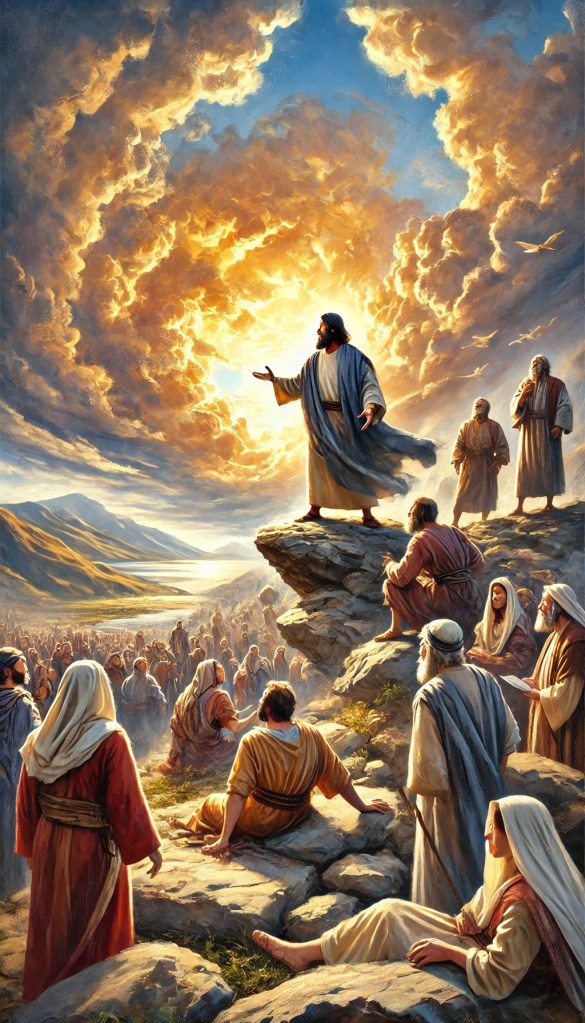
Tag: god

  • 11 Lowered to Grace

    11 Lowered to Grace

    The Courage to be seen.

    Mark 2:1–12

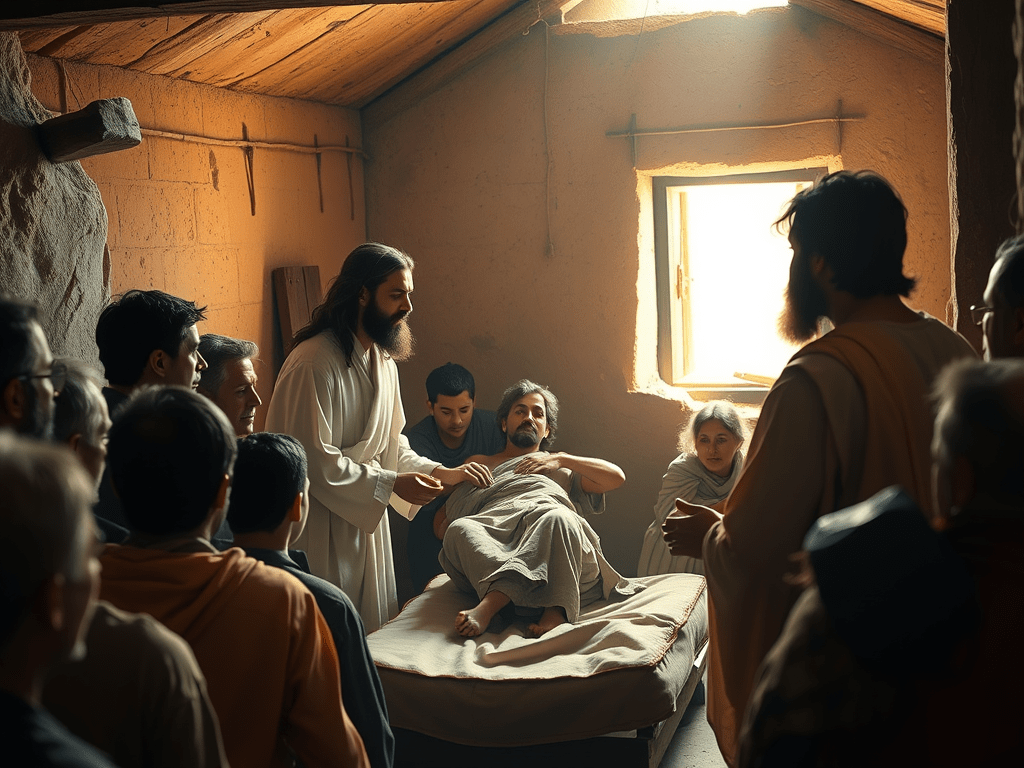
    One of the most quietly revolutionary episodes in all of Scripture is in the second chapter of Mark’s Gospel. There were no bright lights or loud voices from the skies. A small, crowded house in Capernaum, and the sound of a roof being ripped off.

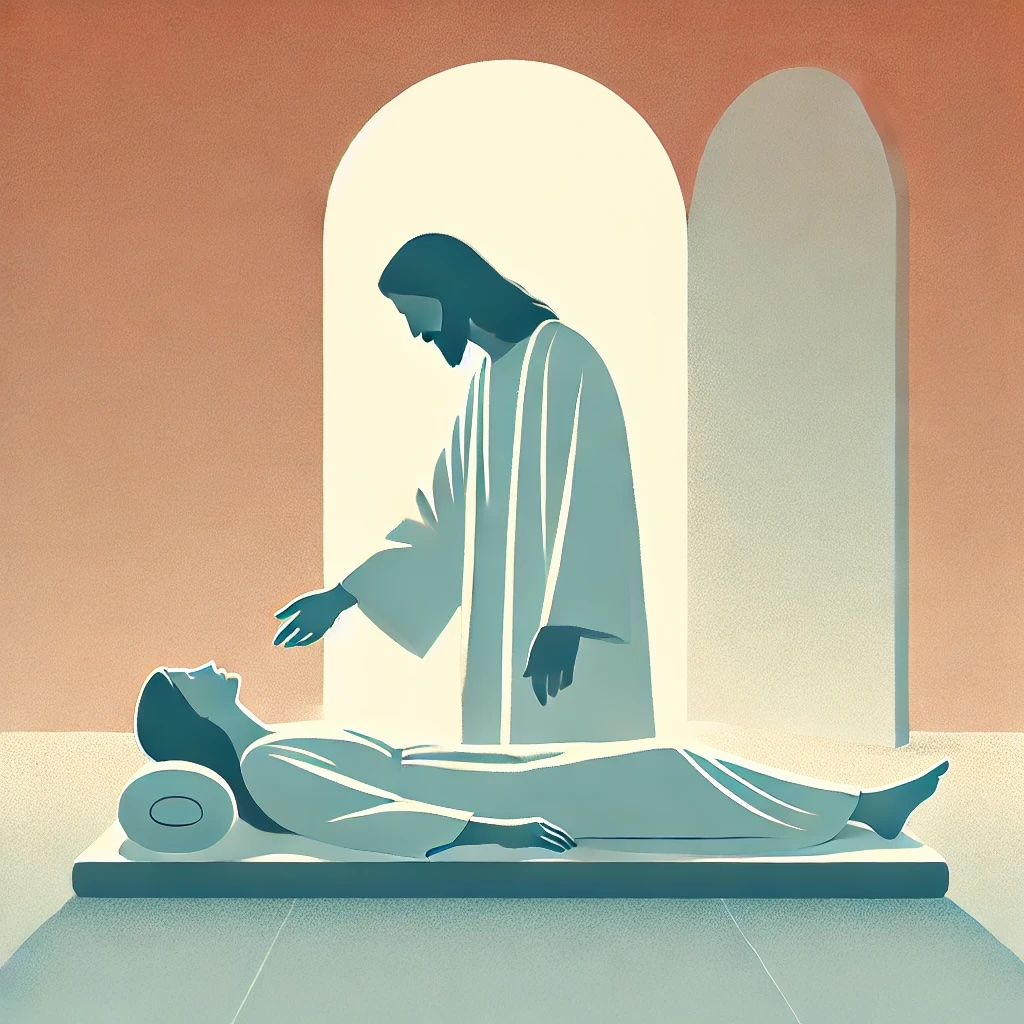
    Jesus is teaching down here. Four friends are lowering a disabled man into His presence above. The room goes quiet. Then Jesus speaks. It’s not a command to walk, but something much more personal and disarming:

    “Son, I forgive you for your sins.”
    —Mark 2:5

    What comes next is more than a miracle. It is an invitation to the kind of spiritual freedom that changes lives, not just for the man on the mat, but for all of us who know what it feels like to be stuck.

    When Movement Comes to a Halt

    We all have a mat. A spot where we’ve stopped moving. Fear is what some people feel. Some people feel guilt, tiredness, self-doubt, or a wound that has been hidden for too long. We often don’t get to Jesus on our own, but because of the gentle charity of those who help us through friendship, prayer, or just not letting us give up.

    “Sometimes the first step toward healing isn’t walking; it’s being willing to be carried.”

    In this case, the man who was crippled didn’t say anything. He didn’t say he was sorry. He didn’t say a prayer. He just let people see him. That was all it took.

    The Healing That Came Before the Miracle
    Jesus doesn’t talk about the man’s physical condition right away. Instead, He talks to his soul directly.

    “Son…”

    It’s more than simply a greeting; it’s a way to get your identity back. Jesus heals the self before he heals the body.
    He gives a sense of belonging before action.
    Before change, He offers acceptance.

    “To be known in your weakness and still be called beloved—that is the beginning of true healing.”

    We frequently think that being strong will help us be seen. But in this case, Jesus changes the story. Being completely open and honest is what draws His attention and opens the door to grace.

    The More Serious Conflict

    Of course, not everyone in the room was okay with this form of healing. The religious experts, or scribes, were shocked. They asked each other in silence, “Who can forgive sins but God?”

    They were right. But they weren’t ready for the answer either.

    Jesus, who knows their hearts, doesn’t argue with them; instead, He asks them a question:

    “Which is easier: to say, ‘Your sins are forgiven’ or to say, ‘Get up, take your mat, and walk’?”

    And then He urges the man to get up to show that He is in charge. And he does.

    He picks up the mat that once held him and walks away, complete, restored, and living.

    A Question for Us

    This chapter gives us a challenge that goes beyond religion and into the heart of personal change:

    Are we okay with being seen as we really are?

    Can we agree that grace comes before doing well?

    Are we ready to move into a life that is in line with the truth, both physically and spiritually?

    This is when being real and accepting others completely come together. Not the shallow type of self-acceptance that doesn’t want to change, but the profound kind that says, “I am not condemned, even here and now.” They are calling me.

    “Being real is what brings healing, not getting everything right.”

    A Way to Get Ready for the Journey
    Try this peaceful practice the next time you feel stuck in one part of your life:

    Be still.
    Put your hands on your heart.

    Take a breath and say, “I am seen.”
    Let go of your breath and say, “I am forgiven.”

    Let the words sink in.
    Picture Jesus standing in front of you, not asking you to walk yet, nor pushing or correcting you. Just calling you “Child” and letting that be enough.

    Willingness is the first step to wholeness.
    You don’t have to go up on the roof.
    You don’t even have to say anything.
    You only have to say yes to being lowered—into grace, truth, and healing.

    Jesus is still here.
    Still making space in the mob.
    Still bringing back the ones that can’t move on their own yet.

    And still saying,

    “Get up.”

  • Gospel of Mark 08

    Gospel of Mark 08

    Mark 1:29–34: Healing at the Doorstep

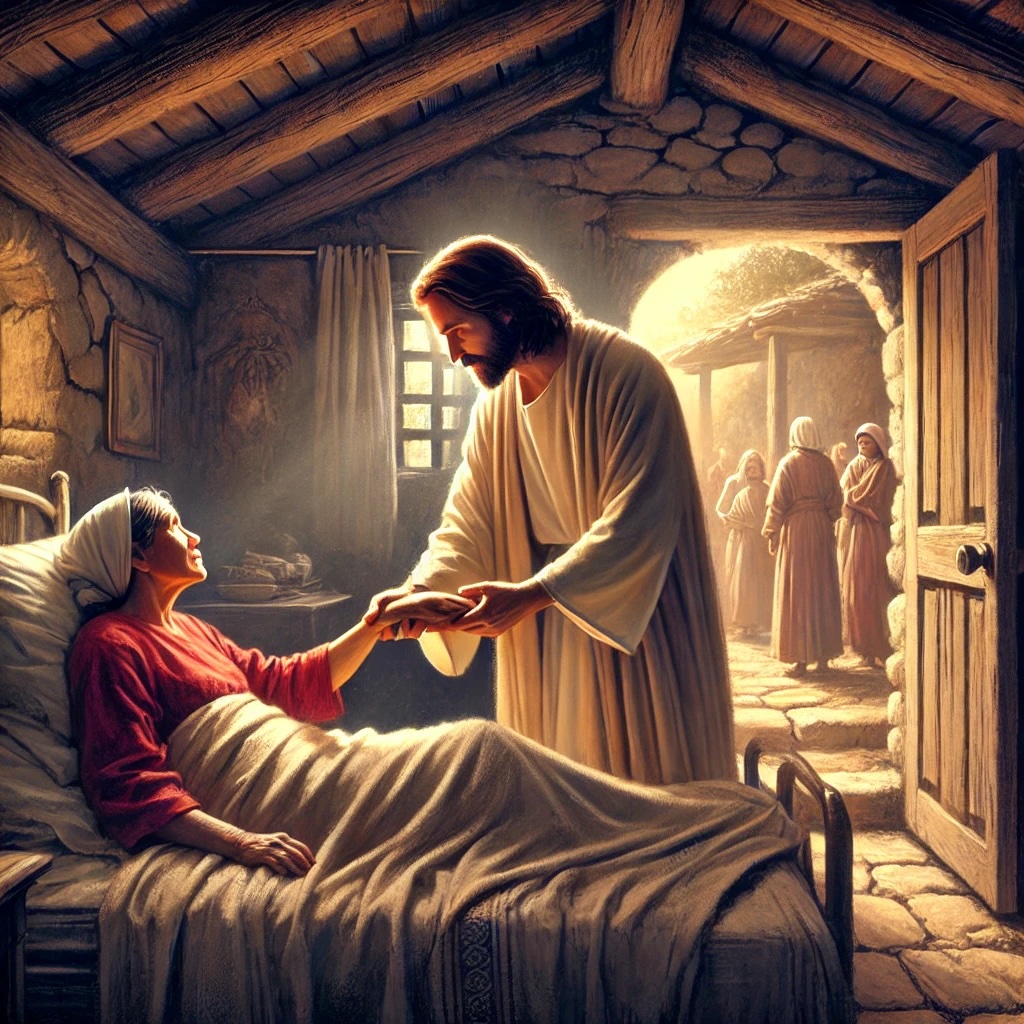
    Jesus exits the synagogue, where He had just cast out an unclean demon, and enters the home of Simon and Andrew. It is a shift from public to private. It changes from a big display of authority in a hallowed venue to a quiet, intimate setting at home. But His influence does not diminish when He leaves the synagogue. The same authority that hushed the devil now extends into the intimate and mundane—to illness, suffering, and the daily difficulties of human life.
    Mark informs us:

    “And he quickly left the synagogue and entered Simon and Andrew’s house, accompanied by James and John. Simon’s mother-in-law was now unwell with a fever, and they promptly informed him of this. And he came and grabbed her by the hand, pulled her up, and the fever subsided, and she began to serve them.”

    Healing That is Personal

    The scenario is simple, but powerful. Simon’s mother-in-law is ill, and they rush to Jesus for help. There is no lengthy explanation or complicated plea, just a simple acknowledgment: she is ill.
    Jesus reacts instantly. He does not doubt her worthiness for healing. He does not wait. He does not make a spectacle out of the situation. He merely stretches out His hand, raises her up, and the fever subsides.

    There is something really human about this moment. No grandiose gestures. There will be no bombastic proclamations. Just a hand extended, a compassionate touch, a simple restoration.

    And how did she respond? She begins serving them.
    This is more than just a duty; it represents complete healing. She is not only recuperating; she is completely healed, with strength to act and energy to serve. Jesus doesn’t merely cure her fever; He brings her back to life.

    Healing Beyond the Household

    However, this is merely the beginning at Simon’s house. As soon as the Sabbath concludes, the entire village rushes to the door, bringing their sick, suffering, and possessed.

    “That evening around sundown, they brought to him everyone who was ill or plagued by demons. And the entire city was gathering at the entrance. And he healed numerous people suffering from various ailments and threw out many devils.”

    The entryway becomes a point of transition. What began as a simple act of healing in a home turns into a deluge of need at Jesus’ feet. The entire city is now at the door, seeking restoration, relief, and hope.

    Jesus greets them all.

    He doesn’t turn them away. He is not tired of their cries. He touches, heals, and delivers. His authority is not confined to words spoken in a synagogue. It is not limited to private miracles performed in a home. It extends to anybody who comes to Him.

    Authority over sickness and oppression.

    Mark creates a distinction. Jesus cures the sick and expels devils.
    Physical suffering exists, as does spiritual persecution. Both are real. Both are hefty loads. Jesus has authority over them all.

    He not only teaches about the kingdom, but also represents its strength.
    Everywhere He goes, darkness retreats. Sickness is undone. Oppression is silenced. God’s kingdom is more than simply a distant hope; it is already present in the earth. But, despite this exhibition of might, there remains a quiet sweetness. There is no indication that Jesus heals to prove anything. There is no performance or spectacle. Only kindness.

    Healing: A Sign of the Kingdom

    Throughout Jesus’ mission, healing is more than just a return to health. It is an indication of something more.
    The prophets said that God would heal His people: “Then the eyes of the blind shall be opened, and the ears of the deaf unstopped; the lame man shall leap like a deer, and the tongue of the mute sing for joy.” (Isaiah 35:5–6)
    Jesus is fulfilling this promise. Every healing is a glimpse of the kingdom, a proof that God is repairing what was broken, reversing what was lost, and making everything new.

    Nevertheless, He does not allow the devils to speak.
    “He would not permit the demons to speak, because they knew him.”
    Why? Because Jesus’ purpose extends beyond simply performing miracles. He isn’t just a healer or exorcist. His power is real, but His identity has to be revealed in God’s time and way.
    The people see His marvels. But do they really comprehend who He is?

    What Does This Mean for Us?

    This text is not only about the past; it also applies to our current existence.
    Jesus meets us wherever we are. He is present in both sacred and mundane settings. He does not only carry out miracles on great platforms; He also works in the quiet moments, personal hardships, and locations that no one else sees.

    Healing is more than just alleviating misery; it is also about restoration. Simon’s mother-in-law is not only healed; she is restored to life, vigor, and purpose. True healing is about becoming entire, reclaiming our true selves.

    The door is still open. The entire village came at Simon’s door to seek healing. We are still at that barrier today. The invitation stays. Jesus still greets people who come, extends His hand, and mends what is broken.

    Will we come to Him? Will we bring to Him what is weighing us down? Will we believe that His touch can still make everything new?

    The door is open.

    The Healer is nearby.

    Will you come forward?

  • Lent 2025 School of Prayer

    Day 7: Using the Psalms to guide your prayers

    “My soul pants for you, my God, just as the deer pants for streams of water.” — Psalm 42:1

    With its unvarnished and honest pleas that convey joy, sadness, trust, fear, praise, and repentance, the Psalms are frequently referred to be the Bible’s prayer book. The Psalms provide us with phrases to present to God when we are at a loss for words. They serve as a reminder that prayer is about coming as we are, not about saying the correct things.

    In every stage of life, David, the poet of several Psalms, gave his all to God. He cried in times of sorrow (Psalm 13:1-2), asked for pardon in times of failure (Psalm 51:1-2), and gave thanks in times of triumph (Psalm 18:1-3). Whatever he had to deal with, he prayed about it all to God.

    Pick a Psalm that speaks to you today; it could be one of trust, lament, or gratitude. Take your time reading it and use it as a private prayer. Allow the words of Scripture to lead you to a closer relationship with God.

    Thought: Which Psalm resonates with you right now? In what ways might the Psalms enhance your Lent prayer life? Think about committing a verse to memory so you can pray it all day long.

    Fasting and Giving: Give your time to someone in need. Call a lonely friend or visit someone.

    Here is an organized list of Psalms by Topic to guide your prayers:

    ✨ Praise (Worshiping God’s greatness and majesty)

    • Psalm 8 – The glory of God in creation
    • Psalm 19 – The heavens declare the glory of God
    • Psalm 29 – The power of God’s voice
    • Psalm 47 – God reigns over all the earth
    • Psalm 103 – Bless the Lord, O my soul
    • Psalm 150 – Let everything that has breath praise the Lord

    💔 Lament (Crying out to God in pain or distress)

    • Psalm 13 – How long, O Lord?
    • Psalm 22 – My God, my God, why have You forsaken me?
    • Psalm 42 – Why are you downcast, O my soul?
    • Psalm 77 – I cried out to God for help
    • Psalm 88 – A cry from deep suffering
    • Psalm 130 – Out of the depths I cry to You, Lord

    🙏 Gratitude (Thanksgiving for God’s blessings)

    • Psalm 9 – I will give thanks to You, Lord
    • Psalm 23 – The Lord is my Shepherd
    • Psalm 30 – You turned my mourning into dancing
    • Psalm 34 – Taste and see that the Lord is good
    • Psalm 92 – It is good to give thanks to the Lord
    • Psalm 136 – His love endures forever

    🛡️ Trust (Confidence in God’s guidance and protection)

    • Psalm 16 – You will not abandon me
    • Psalm 27 – The Lord is my light and my salvation
    • Psalm 46 – God is our refuge and strength
    • Psalm 56 – When I am afraid, I will trust in You
    • Psalm 91 – He who dwells in the shelter of the Most High
    • Psalm 121 – My help comes from the Lord

    🌑 Absence of God (Feeling distant from God)

    • Psalm 10 – Why, O Lord, do You stand far off?
    • Psalm 42 – As the deer pants for streams of water
    • Psalm 43 – Why have You rejected me?
    • Psalm 63 – My soul thirsts for You
    • Psalm 77 – Has His love vanished forever?
    • Psalm 89 – Where is Your faithfulness, O Lord?

  • 06 Mark 1:16-20 The Call To Follow

    Jesus does not build His kingdom alone.

    From the very beginning of His ministry, He calls others to walk with Him, to learn from Him, to become part of something greater than themselves. His mission is not just about proclaiming truth—it is about forming a community, a people who will embody His message long after He is gone.

    Mark tells us the story simply:

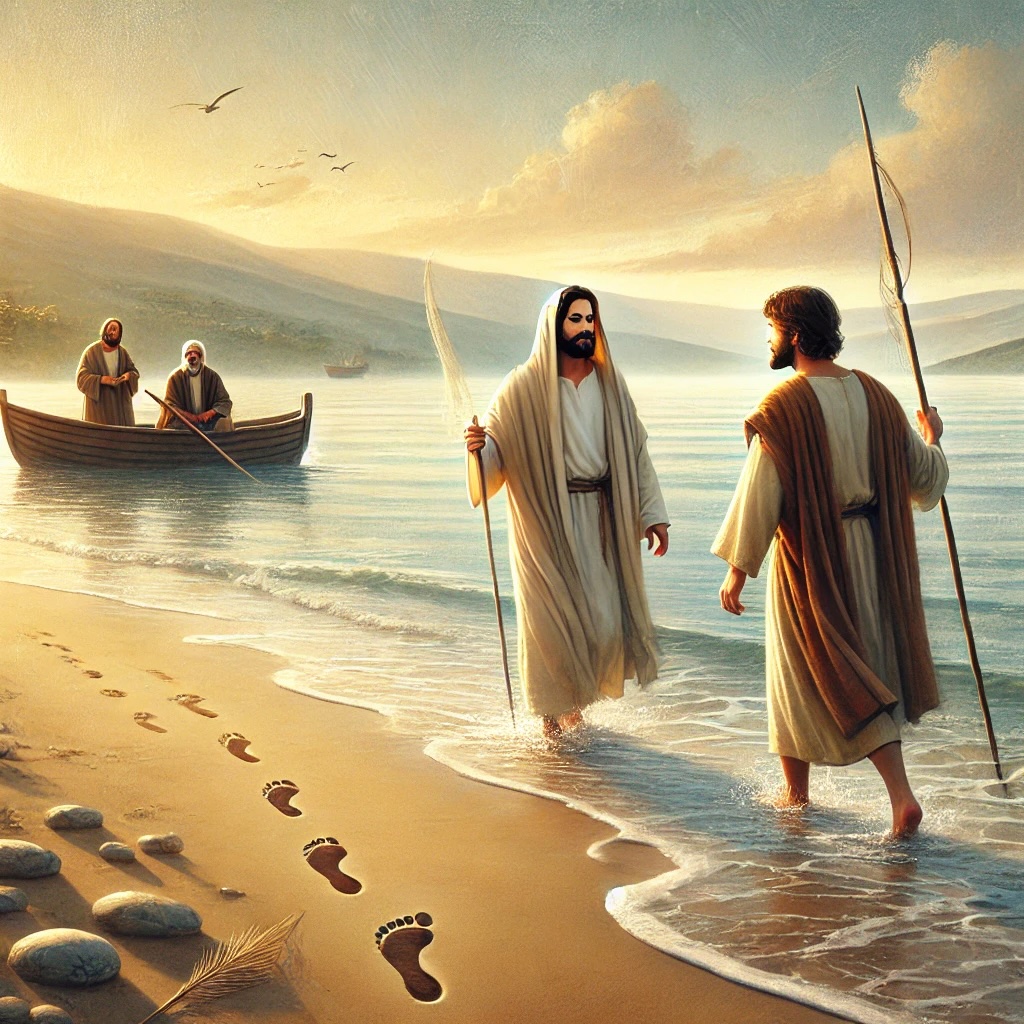
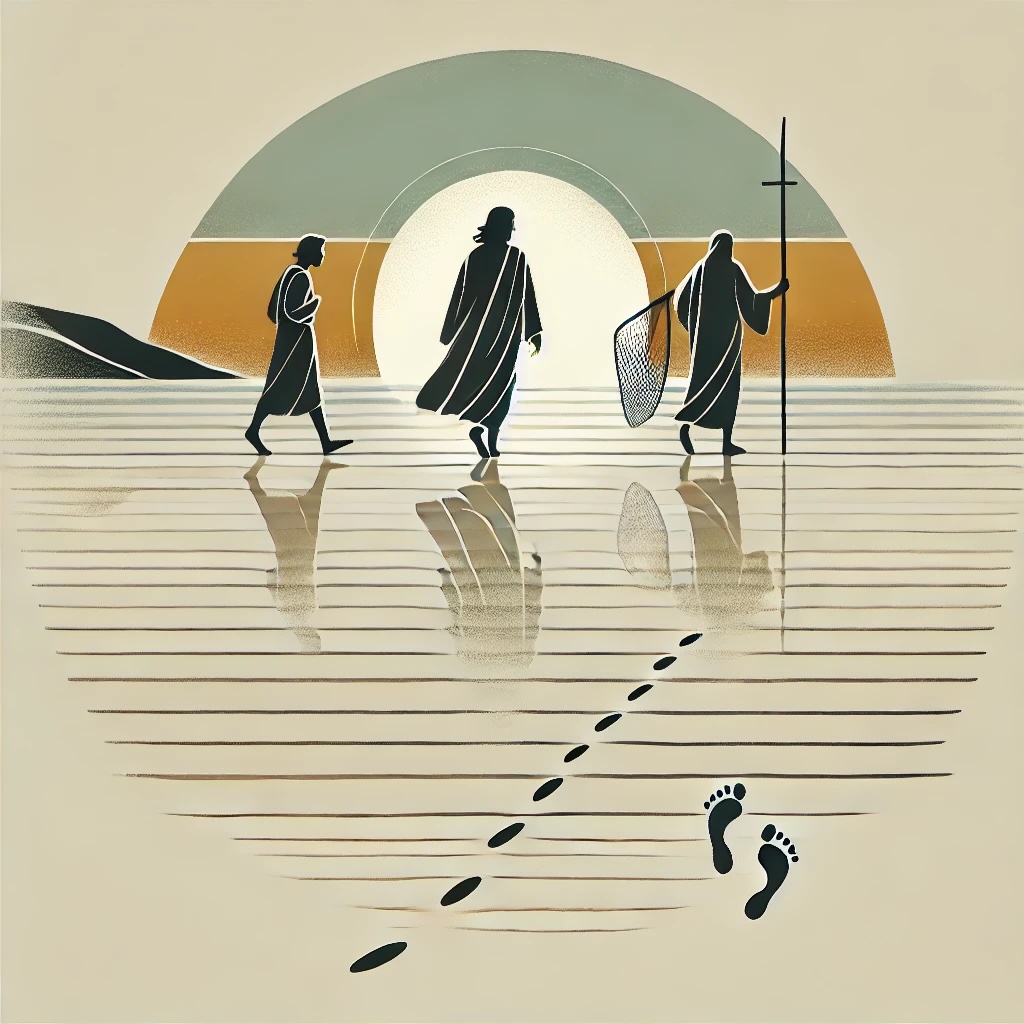
    “Passing alongside the Sea of Galilee, he saw Simon and Andrew, the brother of Simon, casting a net into the sea, for they were fishermen. And Jesus said to them, ‘Follow me, and I will make you fishers of men.’ And immediately they left their nets and followed him. And going on a little farther, he saw James the son of Zebedee and John his brother, who were in their boat mending the nets. And immediately he called them, and they left their father Zebedee in the boat with the hired servants and followed him.”

    There is something disruptive about this moment. These men are not idle. They are not searching for a teacher. They are fishermen, doing what they have always done, tending to the daily work of survival. And yet, when Jesus calls, they drop everything.

    A Call That Interrupts

    Jesus does not wait for Simon, Andrew, James, and John to come to Him. He goes to them. He meets them in their ordinary lives, in the midst of their routines. They are casting nets, mending gear, preparing for another day of work—until Jesus steps in and everything changes.

    We often imagine that life-changing moments come with preparation, with time to consider, with warning signs leading up to them. But in Mark’s Gospel, the call of Jesus is sudden, urgent, and immediate. There is no space for hesitation.

    And yet, there is something about Jesus that compels them to follow. He offers no roadmap, no security, no certainty about what will come next. All He says is, “Follow me.” And they go.

    Perhaps that is how real transformation works. It comes not when we are ready, but when we are willing. It does not always come with full understanding, but with an openness to step forward even when we do not know what the future holds.

    Leaving Behind the Nets

    What Simon, Andrew, James, and John do next is astonishing.

    “Immediately they left their nets and followed him.”

    Their nets were not just tools; they represented security, identity, livelihood. To leave them behind was to step into the unknown, to release the only life they had ever known.

    James and John leave behind not just nets, but their father. Their departure is not just a career shift; it is a radical severing of ties, a complete reordering of priorities.

    Jesus’ call is not a casual invitation—it demands a response that costs something. To follow Jesus means to let go, to release what is comfortable, to step away from what is familiar.

    And yet, they do not hesitate. Why? Because what Jesus offers is greater than what they leave behind.

    Fishers of Men: A New Purpose

    Jesus does not just tell them to follow Him—He redefines their identity.

    “Follow me, and I will make you fishers of men.”

    He does not say, Follow me, and you will be my students. He does not say, Follow me, and you will find deeper spiritual peace. Instead, He speaks in their language, through their experience.

    They were fishermen. This was what they knew—casting nets, waiting, gathering the catch. And now, Jesus takes that same skill, that same patience, that same endurance, and transforms it into something eternal.

    “I will make you fishers of men.”

    Their skills are not erased; they are redeemed for a greater purpose. They will still cast nets, but now for hearts and souls. They will still wait, but now with the patience of those who bring good news. They will still gather, but now into a kingdom that will never fade.

    God does not call us to abandon who we are—He transforms what we already know into something new. The gifts, talents, and experiences we have do not disappear when we follow Jesus. They are redirected, reshaped, repurposed for something greater than we ever imagined.

    The Cost of Following

    It is tempting to read this passage and admire the disciples’ immediate response without considering what it cost them.

    Simon, Andrew, James, and John did not just leave behind nets—they left behind their old way of defining themselves. Their work, their families, their sense of place in the world—all of it changed the moment they said yes.

    Following Jesus is never about adding Him to an already full life. It is about redefining life around Him.

    And yet, even in the leaving, there is gain.

    What they lost in security, they gained in purpose.
    What they gave up in familiarity, they received in calling.
    What they left behind in certainty, they stepped into in faith.

    Jesus does not call people to comfort. He calls them to Himself. And that is always worth whatever we must leave behind.

    The Call Today: Will You Follow?

    This story is not just about Simon, Andrew, James, and John. It is about every one of us.

    Jesus is still walking along the shores of our lives, still stepping into our ordinary routines, still speaking those two simple words:

    “Follow me.”

    The question is, will we?

    What nets are we holding onto that keep us from stepping forward? What security are we afraid to leave behind? What is Jesus calling us to step into, even when we feel unprepared?

    Following Jesus is not about having all the answers. It is about taking the first step.

    And like those first disciples, when we leave behind our old lives, we are stepping into something far greater than we ever imagined.

    The call has not changed.

    The invitation is still open.

    Will you follow?


    Leave a comment

  • 05. Mark 1:14-15 The Time is Now


    Jesus does not start His work in a peaceful time. God doesn’t start His work when things are stable in politics or religion. Instead, He makes His formal announcement after John the Baptist is picked up. The person who made the way possible is now in jail, and the system that Jesus is about to face has shut them up.


    Mark simply says, “After John was arrested, Jesus went into Galilee and preached the gospel of God. He said, ‘The time is over, and the kingdom of God is near. Turn away from your sins and believe the gospel.’”

    These words make you feel rushed. Things are moving. Jesus doesn’t think twice. His message isn’t careful. That’s not what he does to make it more comfortable. So, He goes ahead with His task and tells them something very important: “The time is fulfilled.”
    “The kingdom of God is at hand.”
    “Repent and believe in the gospel.”

    These words aren’t just from the past. They’re still living. People are still welcome to accept them.


    This is the right time: Being in the Kairos Moment

    Jesus doesn’t just mean that history has reached a certain point when He says, “The time is fulfilled.” The Greek word for “time” in this case is kairos, which is not the same as chronos, which means “clock.” Kairos is a turning point, a divine call, or a chance to do something.


    Jesus is telling people that something has changed. Now the wait is over. The long-awaited moment that the prophets spoke about has finally come. It’s not just another part of history; this is the turning point.

    How often do we wait for the ideal time to make a change, move forward, or start something new? When things are just right, when we feel ready, or when we are better ready, we tell ourselves that we will start. But kairos time doesn’t wait for us to be ready; it tells us to act right now.
    Right now is always a kairos moment. No matter what, God is always calling us to start over. The call to change is not something that might happen in the future; it is already here.

    The coming of God’s kingdom: Not an idea but a reality


    One of the most confusing ideas in Christianity is “the kingdom of God,” which is at the heart of what Jesus taught. When we hear the word “kingdom,” we might think of a country’s government, its land, or its people. But the kingdom of God is not a government on earth; it is God’s rule coming into the world.


    ἂγγβκεν (ēngiken, meaning “is at hand”) is a perfect tense word in Greek. This means that the kingdom has already come and is still there. Says Jesus, “The reign of God is not just coming; it is already here, taking shape right in front of you.”


    But if the kingdom has already come, then why is the world still broken? This is what the “already and not yet” means. The kingdom began with Jesus, but it will not be fully finished until the end of time. There it is, but it is still happening. Real, but still waiting to be fulfilled.


    And we are asked to live in this space between—to know that God’s rule is already here even as we long for it to be fully realized.

    We don’t just sit back and wait for the kingdom to come. Jesus’ words make us want to respond. We step into the kingdom, live into it, and become it. It is not a question of whether or not God’s reign has started; it has. The question is whether we will see it and take part in it.


    Don’t repent, but believe: a call to change

    Jesus doesn’t just say that the kingdom has come; He tells people to “repent and believe in the gospel.”


    No, the word “repent” (μετανoεῖτε) does not mean to feel bad or sorry. To change one’s mind is to go in a different direction or see things in a different way. It’s a call to realign, or change the way you live so that it fits with God’s plan.


    And believe (πιστεύετε, pisteuete) is more than just agreeing with something. It means to fully lean on the truth of the gospel, to believe it, and to make a promise.


    Jesus wants people to do more than just believe that the kingdom is close. He wants them to live as if it were true.
    Believing and repenting are not two different things; they are two sides of the same coin. It means to turn away from an old way of living and to think it means to start a new life. Jesus’ call isn’t just for small changes; it’s for a whole new way of living.

    Living in the Kingdom as It Really Is

    How should we live as if the kingdom were already here?
    What does it mean to choose to see the world through the lens of God’s rule instead of fear, lack, or power? It means choosing a life where love is more important than power, where humility is more important than pride, and where service is more important than being in charge.

    It means being aware that every moment has the power to change things.

    Now is that kairos.

    Jesus’ words were important back then, and they are important now. The time has passed. The kingdom is almost here. You can turn away from your sins and have faith today, not tomorrow.

    So the question is: Will we wait any longer, or will we seize the moment? Will we see that God’s kingdom is moving among us, or will we keep living as if nothing has changed?

    You are welcome to join. Now is the time.

    Now is the time.


    Leave a comment

  • Living the Present Moment … in time of Political and Social Stress

    Present, Not Panicked!

    For us Christians, one of the paths to encountering and loving God is through the present moment. The term “mindfulness” refers to a practice that enables us to grow in awareness of this very moment. Mindfulness helps us become fully conscious of the Present Moment, which is exactly where we meet God.

    Imagine the Stoic Emperor Marcus Aurelius writing in his personal reflections two thousand years ago, unaware that you would one day read his words. In his profound work “Meditations,” he captured an insight by quoting Plato:

    How beautifully Plato put it. Whenever you want to talk about people, it’s best to take a bird’s-eye view and see everything all at once—gatherings, armies, farms, weddings and divorces, births and deaths, noisy courtrooms or silent spaces, every foreign people, holidays, memorials, markets—all blended together and arranged in a pairing of opposites.” – (Meditations, 7.48)

    Today, we live in a world more interconnected and tumultuous than ever, constantly inundated with news and opinions, often starkly divided and presented as opposites. Social media, news feeds, and even our phones offer an endless stream of information, distractions, and emotional triggers. Like Marcus Aurelius suggested, we must rise above it all in our minds, seeing the vast array of human experiences without becoming emotionally ensnared by them.

    As followers of Christ, how do we navigate this complex landscape without succumbing to anxiety, anger, or despair? How do we stay informed yet remain grounded in peace? The key lies in mindfulness—a practice that harmonizes beautifully with Christian spirituality.

    Mindfulness: Observing Without Judgment, Releasing with Trust

    Mindfulness is about being fully present in the moment, calmly observing thoughts, emotions, and external events without judgment, allowing us to gently release anxiety and attachment. Rather than quickly labeling political news or events as “good” or “bad,” mindfulness invites us to observe with calm discernment and entrust everything to God’s sovereign plan.

    Jesus himself embodied this mindful approach when He said in Matthew 6:34, “Do not worry about tomorrow, for tomorrow will worry about itself.” His invitation was not toward passivity or ignorance but toward spiritual awareness that liberates us from worry. Jesus calls us to place our ultimate security not in human institutions or political outcomes but in God’s unchanging love.

    The Emotional Weight of Political Anxiety

    Political stress is a genuine concern for many people today. Constant exposure to negative or divisive news can trigger chronic stress responses, leading to anxiety, frustration, and hopelessness. From a Christian perspective, such emotional strain hinders our ability to embody Christ’s peace and love effectively. Instead of trusting in God’s ultimate sovereignty, we can find ourselves overly reliant on human efforts, causing our faith to waver.

    Embracing Mindfulness in Times of Political Unrest

    By incorporating mindfulness into our political and social awareness, we remain present without being swept away by negative emotions. Here’s how you can apply it:

    1. Observe Before Reacting

    Mindfulness trains us to pause before responding. When distressing news arises, take a breath, observe without judgment, acknowledge your emotions, and then respond with thoughtful prayer rather than immediate reaction.

    2. Mindful Media Engagement

    One major contributor to political anxiety is relentless media consumption. Practice mindfulness by:

    • Setting clear boundaries around news intake.
    • Selecting trustworthy, balanced sources.
    • Taking regular breaks from screens to reflect and pray.

    3. Ground Yourself in Prayer and Scripture

    In turbulent times, Scripture reassures us of God’s steadfast presence. Merge mindfulness with Christian practice by reflecting on verses like:

    • John 14:27“Peace I leave with you; my peace I give you…”
    • Philippians 4:6-7“Do not be anxious about anything…”

    Meditate on these words to foster internal peace amidst external turmoil.

    4. Engage Compassionately

    Mindfulness reminds us to see beyond politics and recognize the humanity in others. Engage in political conversations with compassion, patience, and empathy, embodying Christ’s commandment to love our neighbors—especially those we disagree with.

    5. Surrender What You Cannot Control

    Feelings of powerlessness often accompany political anxiety. Mindfulness teaches us to discern our responsibilities and let go of what lies beyond our influence, entrusting it to God.

    Practice a simple breath prayer:

    • Inhale: “Lord, I trust You.”
    • Exhale: “I release my worries to You.”

    This act of letting go is not resignation but active faith.

    Conclusion: Embracing Peace Amidst Chaos

    As Christians, we are called to be a calming, constructive presence in the world. Mindfulness does not call us to ignore reality but empowers us to engage it from a place of trust and peace. Inspired by the wisdom of Marcus Aurelius, take that bird’s-eye view—recognize the world’s complexity without becoming emotionally entangled.

    You have already chosen a path that will endure all of life’s fluctuations—weddings and divorces, births and deaths, turmoil and tranquility. The world is indeed busy and demanding, constantly pulling at your attention.

    Yet, you matter immensely, now and always. The world’s turbulence underscores the importance of embracing this moment. Waiting for a “better time” is an illusion.

    We never shall have any more time. We have, and we have always had, all the time there is.”

    So, breathe. Observe. Pray. Let your faith guide you, knowing that in God’s kingdom, peace reigns supreme.


    Leave a comment

  • Mark 1:1

    1.1  “The Beginning of the Good News of Jesus Christ, the Son of God”

    A Reflection

    Mark 1:1 proclaims: “The beginning of the Good News of Jesus Christ, the Son of God.” Each word in this verse carries profound theological and philosophical significance, shaping not only the Gospel’s narrative but also the very foundation of Christian faith. This single sentence is an invitation into a new beginning, an introduction to Good News, a revelation of Jesus Christ, and a declaration of His divine identity as the Son of God. To understand it fully, we must explore how these elements interconnect into a single, transformative reality.

    1. The Beginning: The Moment of Creation and Renewal

    A beginning is never just a starting point—it is the birthplace of transformation. Just as Genesis 1:1 describes the creation of the universe, Mark 1:1 announces a new creation, a divine eruption into history. The Good News does not simply start with Jesus; He is the beginning—the arche, the source from which all things flow.

    Beginnings are moments of possibility and renewal, where something new emerges from nothingness. They introduce form where there was formlessness, structure where there was chaos, and meaning where there was emptiness. To say that the Gospel begins is to say that God is doing something new—not just in history, but in the lives of those who hear it. This is not just a story unfolding; it is an invitation to step into a transformed life.

    2. The Good News: More Than a Message, a Living Reality

    The Good News is not merely information; it is an event, a proclamation, a transformative encounter. News, by definition, changes reality—it alters perception, reshapes understanding, and demands a response. But what makes news good? It is not simply the fulfillment of human desire but a revelation of the ultimate truth, the ultimate good.

    The Good News of Jesus Christ is good not because it brings temporary relief, but because it reorders human existence, offering hope, salvation, and a new way of being. It is the resolution of humanity’s deepest uncertainty—the longing for meaning, for reconciliation with God, for eternal life.

    Yet, news can be unsettling. Just as good news for one person might be disruptive for another, the Gospel challenges old ways of living. It comforts the brokenhearted but unsettles those who cling to power, to pride, to self-sufficiency. The Good News invites us to let go of the old and embrace the new, but such an invitation requires courage, humility, and faith.

    The Good News of Jesus Christ is good not because it brings temporary relief, but because it reorders human existence

    3. Jesus Christ: The Center, Perimeter, and Radius of the Good News

    The Good News is not just about Jesus; it is by Jesus and belongs to Jesus. He is both the messenger and the message, the Word made flesh. To say that the Gospel is of Jesus Christ is to acknowledge that He is its center, its source, and its fulfillment.

    The name Jesus (Yeshua) means “God saves.” His very name declares His mission: to bring salvation. The title Christ (Messiah) affirms Him as the anointed one—the fulfillment of God’s promises, the long-awaited king who reigns not by force, but by sacrificial love.

    Everything in the Gospel is about Jesus, but more than that, everything is done by Him and through Him. He does not merely announce a new way of life; He is the way, the truth, and the life (John 14:6). Accepting the Good News is not just believing in a message—it is entering into a relationship with a Person, the one who embodies and owns the message itself.

    4. The Son of God: The Divine Identity of Jesus

    The title “Son of God” is the key to understanding who Jesus is and why His Good News matters. In ancient thought, to be a “son” meant to share in the essence, mission, and authority of the father. To call Jesus the Son of God is to declare that He is not just a prophet or a teacher, but that He shares in God’s very nature.

    Just as a son carries forward his father’s work, Jesus is the full revelation of the Father—His character, His love, His justice. He does not simply speak about God; He is God made visible.

    But His sonship is also a call to relationship. Jesus, the Son of God, opens the door for us to become children of God (John 1:12). He invites us to share in His sonship—to be adopted into the divine family, to enter into communion with God through Him.

    5. The Unified Meaning: An Invitation to Transformation

    Mark 1:1 is not just an introduction to a book—it is an invitation to step into a new life.

    • It is a beginning—a moment of renewal, where the old passes away and something new is born.
    • It is Good News—not just information, but transformation, a truth that changes everything.
    • It is of Jesus Christ—centered in Him, proclaimed by Him, and belonging to Him alone.
    • It is the proclamation of the Son of God—a revelation of who Jesus is and what He offers to those who accept Him.

    To embrace this verse fully is to embrace the reality it declares. It means recognizing that the story of Jesus is not just something to read, but something to live. It is an invitation to step into a new beginning, to be shaped by the Good News, to be drawn into the life of Jesus Christ, and to discover our own identity as children of God.

    The beginning has been announced. The Good News is proclaimed. Jesus Christ, the Son of God, stands before us.

    The only question is: How will we respond?

    1. What is a “beginning” in my life that changed me profoundly? How did it shape who I am today?
    2. How do I feel about the idea that every moment is an opportunity to begin again? Where in my life do I need a fresh start?
    3. What does Good News mean to me? What is the best news I have ever received, and how did it change my perspective?
    4. How does the Good News of Jesus differ from the “good news” the world offers?
    5. What does it mean to be a son or daughter of someone? How does this shape my understanding of Jesus as the Son of God?
    6. What is one practical step I can take this week to live out the reality of the Good News in my life?

  • Mark 1:1-13

    Mark 1:1-13

    The Power of New Beginning

    The first part of Mark’s Gospel is very urgent and strong, announcing a new beginning right away. Matthew and Luke both begin with Jesus’ family history and birth, but Mark goes straight to His work in public life. Mark’s opening, which is so clear and to the point, shows how Christian life works: it’s an active life, not an observational one; it’s a call to move, believe, and go into doubt. Mark’s beginning announces a new life that comes from moving, having faith, and facing uncertainty.

    It starts with “The beginning of the gospel of Jesus Christ, Son of God.” These words start a story, but they do it in a bigger and more meaningful way. They start a miracle story all over again. Mark’s use of “the beginning” forces us to see an event in a bigger context—not just another event in a schedule, but a fresh start for a change. When you start a new trip, you’re going into the unknown. You’re also starting a journey of growth, not a quick-fix accomplishment. Any moment in time offers a chance to start over, a chance to move forward in hope.

    People often get stuck and don’t do anything because they don’t want to move forward because of failures in the past or fear about the future. In Mark’s Gospel, it is taught that everything starts out in a messy, unsure, and sometimes rough way. But these kinds of starts have a lot of promise. Beginning is a faith-based act that means you are ready for change even though you can’t see the way ahead. You shouldn’t wait for everything to be right before taking the first step.

    Many people don’t start a new project because they don’t feel ready. They think they need to get everything right first. Mark’s Gospel, on the other hand, doesn’t start with perfection, but with action. Jesus doesn’t wait for the right time to do something; instead, he goes to work on purpose. Just the fact that it’s so important is a lesson. If we don’t start when we’re not ready, then maybe we won’t start at all. That’s a lesson in hope. That doesn’t mean being totally ready; it means having faith that God will meet us where we are when we’re ready to move forward.


    The word “the beginning” makes you think of movement. Faith is not a state of being still; it requires action. We must consciously move toward change if we want to grow spiritually, emotionally, and mentally. Having hope in something, no matter how small, can start a big change. You can make the first move at any time, because the present is a holy moment full of possibilities.

    Every morning is a fresh start. We can change our state of mind just by knowing that. To change our course, we can take a deep breath, pause, and remember that today is a fresh start, a chance to hold on to hope without fear. By looking at life as a trip that is still to be taken, we can figure out what motivates and holds us. Knowing that heart-led change is possible with every breath, we can let go of fear, doubt, and regret and replace them with hope and rebirth. New starts are a theme that runs through the Bible: Genesis begins with the words “In the beginning, God created…” This is how life came into the world from nothing. After the flood, Noah and his family landed on dry land, joining a world that had never been made before. The Israelites were freed from slavery during the Exodus. They were given a fresh start in a free land. The rising of Jesus made a fresh start, turning death into life. All of these things tell us that God is always making new things. We always have the chance to start a new life, no matter how bad things get.

    Mark’s Gospel isn’t just a story about what happened; it’s also a personal call to start over. Every new moment gives us a chance to start over, whether we’re starting a new job, going through a tough time, or just wanting a fresh start in life. Not by changing things in the outside world, but by going through a deep change on the inside, letting go of what holds us back and moving toward what God wants us to move toward.

    If you want to walk by faith, you have to take one step, even if you don’t know where you’re going. There is no such thing as overnight growth or instant change. It happens slowly and over time, even if you accept and take one step at a time. God met Noah after the flood, led the Israelites through the desert, and raised Jesus from the dead. Just like that, He meets us at the start of every new day, giving us grace, strength, and the knowledge that we are not alone.

    Trust is needed to start over. You have to be ready to let go of your need to know and believe in your faith in the not knowing. We need to let kindness fill in the gaps where we feel like we’re not good enough. It means seeing the present as holy and believing that God is at work, even if we can’t see the results yet. No matter what we go through or how hard things get, we always have the chance to start over. Mark 1:1 isn’t the beginning of the Gospel; it’s a call to change. It’s not a question of whether we’re ready; it’s a question of whether we’re willing. Long-term travelers all start with one step. Even though things will never be perfect, God’s kindness is always there, ready to help us take that first step. The offer is right in front of us.

    Will we take it and get ready for a fresh start?

  • Dawn: A New Light of Fraternity and Hope

    Dawn is more than just the beginning of a new day; it is a symbol of renewal, unity, and the promise of transformation. Across spiritual traditions and cultures, dawn carries deep meaning—it is the light that dispels darkness, the moment of awakening, the call to a new way of living. Within the vision of Fratelli Tutti, dawn becomes a powerful metaphor for fraternity, justice, and peace—the light we are called to carry into a world that too often remains in division and indifference.

    Dawn as a Spiritual Awakening

    In Christianity, dawn symbolizes resurrection and new beginnings. The Gospel tells us that Jesus rose “early in the morning, on the first day of the week” (Mark 16:2), revealing that light always triumphs over darkness. Similarly, in Hinduism, the Brahma Muhurta—the time just before sunrise—is considered the most sacred hour for prayer, meditation, and connection with the divine. It is believed that at this time, the mind is clearest and the soul most receptive to wisdom.

    Islam also emphasizes the spiritual power of dawn—the first prayer of the day, Fajr, takes place in the quiet hours before sunrise, symbolizing the renewal of faith and the turning of the heart toward God. In Buddhism, the dawn is a reminder of impermanence and mindfulness—each day is new, offering a fresh opportunity to cultivate compassion and wisdom.

    In Fratelli Tutti, Pope Francis calls us to a similar awakening—to rise from the sleep of indifference and embrace fraternity as a daily commitment. Like the dawn, love and justice must not be postponed but lived now, bringing warmth to a world often cold with division.

    Dawn and the Stranger: Seeing the Other in a New Light

    Dawn does not belong to one nation or one people; it rises for all. In the same way, fraternity calls us to recognize that every person is our brother or sister.

    In African traditions, dawn is a time for storytelling and wisdom-sharing, as elders gather the community to pass down knowledge. The Zulu concept of Ubuntu—*”I am because we are”—*expresses the reality that our humanity is interconnected. The light of dawn reminds us that no one flourishes alone, and that fraternity is not just an ideal but a necessity.

    This echoes the parable of the Good Samaritan, which Pope Francis highlights in Fratelli Tutti. The Samaritan does not ask whether the wounded man is of his people—he simply sees him as a fellow human being and acts. Like the rising sun that shines on both friend and stranger, fraternity calls us to see beyond differences, beyond borders, beyond divisions.

    In Native American traditions, dawn is a sacred time for prayer and gratitude. The Lakota people greet the morning sun with the words “Mitákuye Oyás’iŋ”—*”All my relations”—*recognizing that all of creation is connected. How different would our world be if we, too, started each day acknowledging the sacred bond between all people, all nations, all creatures?

    A Call to Rise and Act

    Dawn does not wait for permission to rise—it moves, it spreads, it transforms the sky. So, too, must we bring the light of fraternity into action:

    • Can we rise above resentment and offer forgiveness?
    • Can we step out of comfort zones to accompany those in need?
    • Can we commit to small daily acts of fraternity that build a culture of peace?

    In Japanese tradition, the rising sun is a symbol of renewal and perseverance—no matter how dark the night, the dawn always returns. Let this be our model: a daily renewal of our commitment to fraternity, justice, and love.

    As the first rays of sunlight stretch across the horizon, let us ask:

    What dawn is waiting to rise in my heart today?

    Let us not simply admire the light—let us become it.

    Mantra: “Rise with love, embrace the world.”