Tag: book-review

  • The Little Prince

    The Little Prince

    “The Rose and the Thorns” – about love and having the guts to listen.

    It started with a sprout.

    The Little Prince saw it one morning while taking care of his world. A different seed had started to grow. Like everything else unexpected in life, it filled him with wonder. It also made him worry.

    He paid close attention.

    Things that grow aren’t always safe. He was very aware of this. Baobabs also start out as simple green shoots. They can grow into monsters that crack the earth under their feet if nothing is done to stop them.

    So, the Little Prince waited, not sure what to do. He hoped this new life would be a flower, but he was afraid it might really be another baobab.

    He wasn’t aware of it yet. He was learning the first love truth. At first, love may come as a surprise. It is full of both hope and danger. It could look like beauty or danger. It looks like both a lot of the time.

    When It Blooms

    The flower finally got bigger and opened. He could not breathe after seeing what he saw. He had never seen anyone like her before.

    A Rose—beautiful, flowing, and uniquely her own. The Little Prince fell deeply and without any doubt in love with her right away.

    But he was confused almost right away.

    The Rose wasn’t easy. She was haughty, picky, and easily hurt. That’s how she talked. She asked for strange things. She sighed deeply and gave him hints that he didn’t get.

    She said there were drafts, but she turned down the glass dome. She wanted to be admired, but she didn’t care. She was pretty and far away, dainty and full of thorns.

    The Little Prince said, “The flower is very complicated.”

    That’s how he felt: amazed and worn out.

    It wasn’t easy for him to love her.

    Why the Thorns Were There

    The Rose was proud of her thorns. They were her security, she said. They would keep her safe from tigers and other bad things. The Little Prince was confused and didn’t know what to think about this. He thought that her thorns were more of a sign than a tool. Still, she held on to them as if she were nothing without them.

    “What good are thorns?” he had asked earlier, in pain.

    The Rose wasn’t really trying to scare everyone, though.

    Her goal was to keep herself safe.

    The thorns were also not tools.

    They were walls. How many of us do the same thing?
    • Use humor instead of being honest how often do we?
    • Pull away from each other when we want to be close?
    • Pretend we don’t care because we feel open when we do?

    The Rose was scared, but not of the Little Prince. She was scared of how much she needed him. Also, this is a love truth: When people want to connect with others the most, they often guard themselves the most. People often guard themselves most when they desire connection.

    Not understood

    The Little Prince didn’t get her. He had an open heart, was honest, and wasn’t complex. He was very clear when he loved. He couldn’t hide the fact that he was hurt.

    As for how the Rose made her feel, she used a different language. She was complicated and unknown. She hid her need as pride. She covered up her fear with pride. The Little Prince began to wonder if she really cared because she didn’t say “I love you” clearly.

    So, he started to pull away, which is something many people do when love gets complicated. His heart, which used to be happy, became heavy with worries.

    He said, “One shouldn’t listen to flowers.” “It’s enough just to smell them and look at them.”

    He didn’t want to listen anymore because it hurt too much. But this wasn’t knowledge; it was disappointment. That voice belonged to someone who loved deeply but hadn’t learned how to stay when things got tough yet.

    We’ve all done this, right?

    We fall in love with someone because they are beautiful. But we freeze when we see how complicated their feelings are.

    We think that their emotional shields mean they are being rejected. “Maybe I should just admire them from afar,” we tell ourselves. Love is not admiring beauty from afar, though. It is wanting without being linked.

    It asks us to listen, even if the words are hard to understand. This is what real, deep love. It tells us to stay, even if the other person hides behind their thorns. It asks us to believe, even if people are scared and hard to reach.

    Things He Didn’t Know

    In a later part of the story, the Little Prince will realize how wrong he was at this point. “I should have judged her by what she did.” I didn’t know how to love her yet. I was too young.

    It’s too late for him to grasp that the Rose had truly loved him all along. However, it was not in the way he believed she would. Care, not judgment, was what she needed. Someone who could see past the thorns to the delicate flower inside was what she needed.

    He left his world not because he stopped loving her. He didn’t get that love often speaks in strange ways. We need to learn how to understand it.

    What This Tells Us

    One of the most emotionally complex parts of The Little Prince is this chapter.

    It also shows us a lot about how our own relationships work. Love starts with awe and grows through understanding. People who are hard to love are often the ones who worry that they are not loveable. Emotional complexity is not a flaw; it comes from pain, past experiences, and longing. Listening is more than just hearing words; it means figuring out what someone is trying to say emotionally.

    Thoughts:
    Think about the Roses in your life.
    • Have you misunderstood someone because they didn’t show love the way you thought they would?
    • Have you ever left a friendship or connection that was hard for you emotionally?
    • Have you ever hid your need to be loved behind thorns like pride, snark, or distance?
    If that’s the case, what would happen if you came back without answers but with kinder ears?


    Love is not a problem that needs to be solved. It’s important to hold someone in their inconsistencies. Understand them in their doubts. Listen to them, not just admire them.

    The Rose is hard to understand. We’re all the same.

    To love someone, though, is not to escape the thorns.

    To let the flower open, you have to stay for a while.

  • Dorian Gray 04

    Dorian Gray 04

    In the Mirror of Love: Illusions of Love and Self-Deception in The Picture of Dorian Gray and the Perils of Idealization

    In Chapter 4 of The Picture of Dorian Gray, the protagonist faces a dilemma. He questions whether his obsession with Sibyl Vane is a genuine love. Or is it merely an illusion? He finds himself at a pivotal point in his development, as he becomes increasingly obsessed with her sensuality and extravagance. However, when the fantasy doesn’t pan out, Dorian’s fixation on Sibyl Vane becomes more than just an illusion.

    Lord Henry Wotton, Dorian’s friend, plays a crucial role in his disconnection from reality. He informs Sibyl that he loves her and intends to marry her, but Henry’s cynical view of love is terrifying. He believes that love is an illusion that humans make up for fun and is never genuine. This belief undermines the authenticity of Dorian’s emotions and weakens his self-esteem.

    Dorian disregards Lord Henry’s doubts, as he remains drunk on his love for Sibyl. However, uncertainty sets in, and the notion that love is merely a facade takes up residence in his mind. Dorian’s fixation on Sibyl renders even enormous riches, which define rank and influence in Victorian society, meaningless to him.

    The chapter also explores the theme of idealization. This refers to the harmful propensity to view other people through rose-colored glasses rather than their actual qualities. This can lead to disappointment upon oneself when they realize that someone is only human. Dorian’s story cautions against the perils of idealizing others, as it invites disappointment upon themselves and can have catastrophic effects.

    Imagining perfect lives isn’t necessarily negative; it can encourage us to value beauty more highly. However, we run the danger of losing the capacity to establish genuine, significant connections when we conflate illusion with reality.

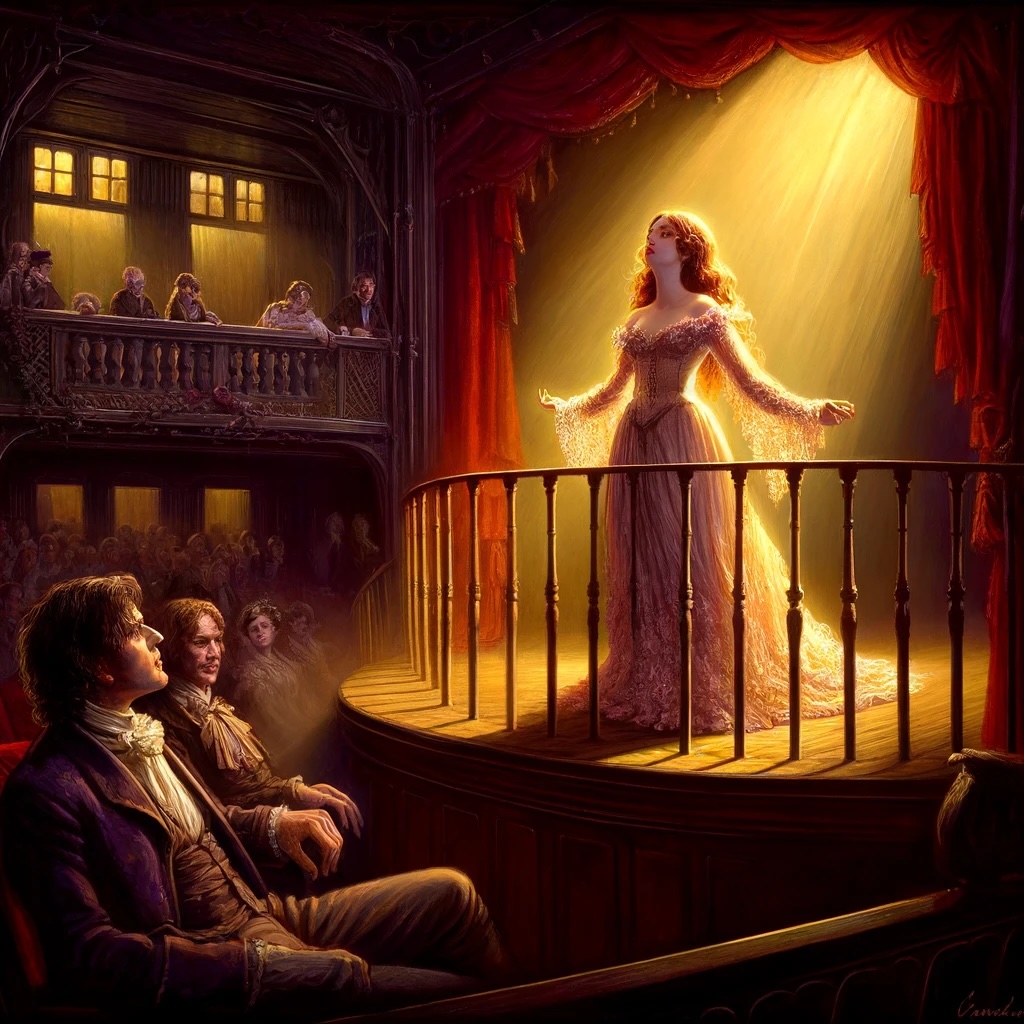
    Dorian invites Lord Henry and Basil Hallward to attend Sibyl Vane’s performance. He believes they will share his view of her as stunning. He thinks she is the most talented actress working today and a goddess of art. In reality, Sibyl Vane is merely a girl whose existence extends beyond the parts she plays. She is invisible to Dorian.

    When deception is shattered, what happens? When Sibyl Vane materializes, what will happen? Dorian doesn’t know now, but this is the question that will ultimately alter his life.

    Dorian Gray’s life mirrors ours in many ways. He prioritizes appearances over actuality and sincerity, leading to a disconnect from reality. Dorian’s life mirrors ours in many ways, and we can learn from his experiences.

    Join in the Discussion.

    Dorian Gray is starting to disconnect from reality as he prioritizes appearances over actuality and sincerity. But his life mirrors ours in many ways.

    Have you ever been captivated by someone’s concept instead of their actual person?
    💬 Is it possible to love someone without getting to know them?
    💬 Have you ever had trouble seeing through illusion and beauty to what really existed?

    What do you think?

    Let’s read. Let’s Grow.

  • Who Shapes your Story – How power can change things.

    The Picture of Dorian Gray – Chapter 3

    Who makes your story what it is?
    It’s nice to think that we’re in charge of our own lives. We have the right to think, choose, and believe what we want. Is that really true, though? Or, like Dorian Gray, are we shaped by the sounds around us? Some are good, some are bad, but they all leave their mark on the person we become.

    We learn more about how Dorian changes in Chapter 3 of The Picture of Dorian Gray. There is still something different about the young, attractive guy who has Basil Hallward’s attention. He is now influenced by Lord Henry Wotton, a man whose words are more important than his deeds and whose philosophy pulls people in instead of pushing them.

    A bad idea is what starts Dorian’s path toward self-indulgence, not a single bad deed. A whisper. Just a thought. You should be certain that pleasure is the most important thing, that morality is a lie, and that your sole responsibility is to yourself.

    This is the real start of his fall.

    How Chapter 3 Shows Us Our Own Lives Through the Power of Words


    At the beginning of the chapter, Lord Henry goes to see his uncle, Lord Fermor, to find out more about Dorian’s family history. Here, we learn about Dorian’s sad family history. His mother, Margaret Devereux, was incredibly beautiful, but she broke society norms by falling in love with a lowly soldier. This love wasn’t meant to last. It seems likely that her father, Lord Kelso, set up the fight between the soldier and the officer to kill him. Soon after, Margaret died of a broken heart, leaving Dorian alone.

    Dorian grew up in a home without love and was cared for by his cold and mean grandpa. He never got the kind of loving guidance that helps a young person become strong, self-aware, and moral. Instead, he acquired wealth, beauty, and, perhaps most dangerously, a need for admiration and respect.

    Lord Henry steps into this emotional hole.

    At a fancy lunch later in the chapter, Henry gives one of his most alluring talks yet. He tells them that pain has no purpose, that morals is made up, and that they should only live their lives for fun. People around him can hear him without having to shout. His words, which are full of charm and wit, stick in their minds. Dorian pays close attention because he is already fascinated by Henry’s ideas. The changes are already happening.

    But let’s take a break from the book for a while. Let’s look at ourselves through the lens of the story.

    Who has made you who you are?

    Chance vs. Fate: How Much of Us Is Really Ours?


    Dorian wasn’t bad from the start. He wasn’t meant to be vain or careless. He was weak, though. He was a perfect subject for Henry’s theory because he didn’t have any family love, he loved beauty, and he wanted to fit in.

    Are we really that different?

    Remember things from your own life. Could it have been a teacher, a friend, or a mentor? Did their words ever change the way you saw the world?

    Someone may have given you ideas, encouraged you to be the best version of yourself, and opened your eyes to new opportunities.


    Or maybe, like Lord Henry, someone put a seed in you that made you want to hurt yourself. Perhaps it was a friend who encouraged you to disregard your intuition, a relationship that forced you to compromise your principles in order to blend in, or an idea that led you to believe that happiness solely hinged on receiving approval from others.

    Dorian picks to pay attention to Lord Henry. He chooses to yield to Lord Henry’s influence.

    The main difference between fiction and real life, though, is that we can see these effects before they make us who we are.

    Self-Reflection Activity: Who Has Had an Impact on You?

    Take some time to think. Write in a journal or just think about these questions as you sit down:

    • Who in your life has had the most impact on what you believe?
    • Did they have a good or bad effect? Or both?
    • Did they make you more like who you are, or did they try to change you into someone you weren’t supposed to be?
    • If you think about it now, do you think their words helped you, or did they make you feel less like yourself?

    Now, picture for a second that Dorian had never met Lord Henry. Imagine that instead of Henry’s alluring ideas, Dorian had a mentor who showed him the value of being kind, strong, and having self-worth above all else.

    Would he have picked the same things?

    Would he have changed into the same person?

    And if we think about our own lives, what would have happened if we had listened to different voices?

    Finding the Right Balance Between Self-Discovery and Outside Influence

    Lord Henry tells Dorian that the most important task is to be oneself. We shouldn’t let fear or moral rules stop us from going after what we want. This way of thinking seems freeing at first glance—who wouldn’t want to live their life without regrets?

    However, going after joy without thinking about it can be dangerous.

    Yes, we owe it to ourselves to find out who we are, get what we want, and decide what makes us happy. But are we really free if we do things without thinking about how they will affect us, other people, or our future? Or are we just trying to avoid taking responsibility?

    Balance is key to growing as a person. It’s about being happy while also being aware of what we’re changing into. In contrast to Dorian, we can think about the opinions we let into our lives. We can pick to listen to people who will help us grow instead of people who will hurt us.

    Last Words: Are We Free or Are We Dorian?

    Dorian is still on the verge of changing at this point in the book. He hasn’t done any really bad things yet. He’s not yet the kind of man who will hide his picture out of fear. But things have started to change.

    He is no longer just himself; what Lord Henry said has become a part of him.

    How about you?

    You should be living your own truth. Are you still hearing someone else’s voice?

    We are not stuck in a book like Dorian is. We don’t have to let what other people say about us define us. We can choose to forget things that don’t help us. We are empowered to change our own stories.

    Finally, as you leave this part of the book and this time for thought, ask yourself:

    What do you want to be?
    Whose voice are you going to let shape that answer?

    Let’s read. Let us think. Let us get bigger.


    Leave a comment