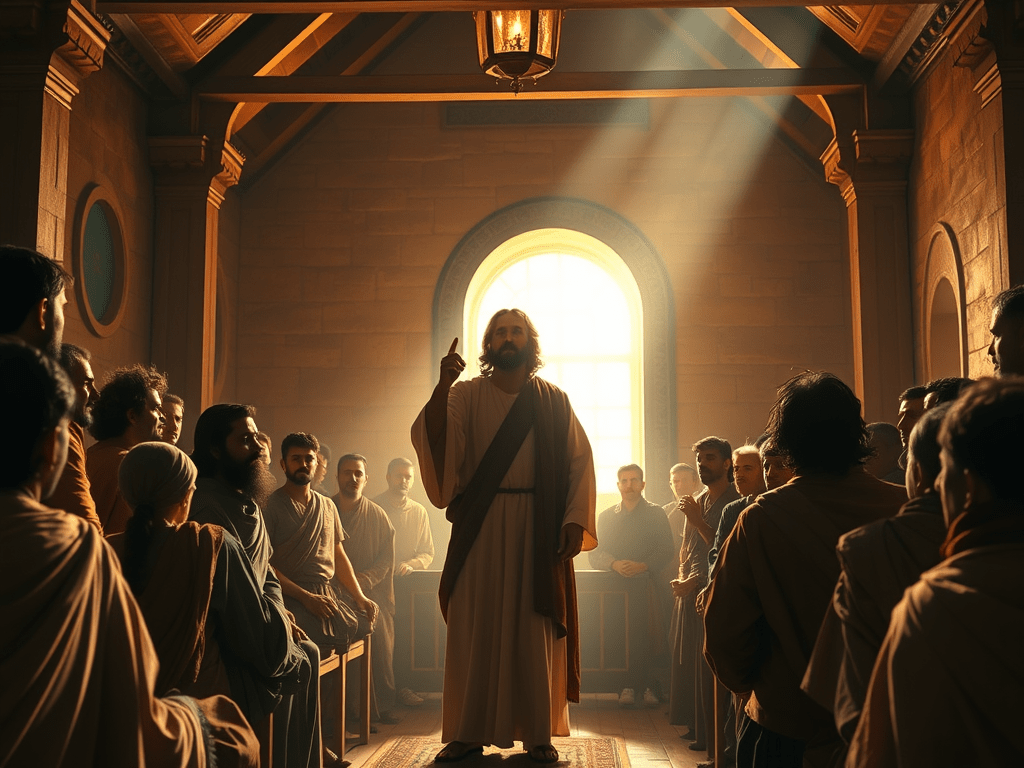

Jesus enters Capernaum, a fishing town on the northern shore of the Sea of Galilee, and immediately steps into the synagogue on the Sabbath. The people gathered there are used to hearing the Torah taught by scribes, religious experts who interpret the Scriptures. But today, something is different.
Mark tells us:
“And they went into Capernaum, and immediately on the Sabbath he entered the synagogue and was teaching. And they were astonished at his teaching, for he taught them as one who had authority, and not as the scribes.”
From the very first words He speaks, Jesus commands attention. His teaching is unlike anything the people have heard before. It is not filled with rabbinic citations, not a careful balancing act between different interpretations of the law. His words carry weight. They carry authority.
The Greek word ἐξουσία (exousia) is used here for “authority.” It means more than just power; it implies the right to rule, the ability to act decisively and with divine backing. Jesus does not simply teach about God—He speaks as if He is speaking for God Himself.
This is not just a teacher. This is something entirely different.
And before the people can fully grasp what they are witnessing, something unexpected happens.
A Disruption in the Synagogue
“And immediately there was in their synagogue a man with an unclean spirit. And he cried out, ‘What have you to do with us, Jesus of Nazareth? Have you come to destroy us? I know who you are—the Holy One of God.’”
The moment Jesus begins teaching, darkness pushes back.
A man possessed by an unclean spirit suddenly speaks, his voice cutting through the astonished silence of the synagogue. The people may not yet fully understand who Jesus is, but the spiritual realm does.
“What have you to do with us, Jesus of Nazareth? Have you come to destroy us?”
There is fear in the demon’s words. It knows that Jesus is not just another teacher, not just another prophet. It calls Him by name—“the Holy One of God.”
This is the first direct confrontation between Jesus and the forces of evil in Mark’s Gospel, and it reveals an essential truth: the presence of Jesus is a direct threat to the kingdom of darkness.
Wherever Jesus goes, light pushes into the shadows. The forces of evil do not act indifferently toward Him. They react, they resist, they tremble.
Authority Over the Spiritual Realm
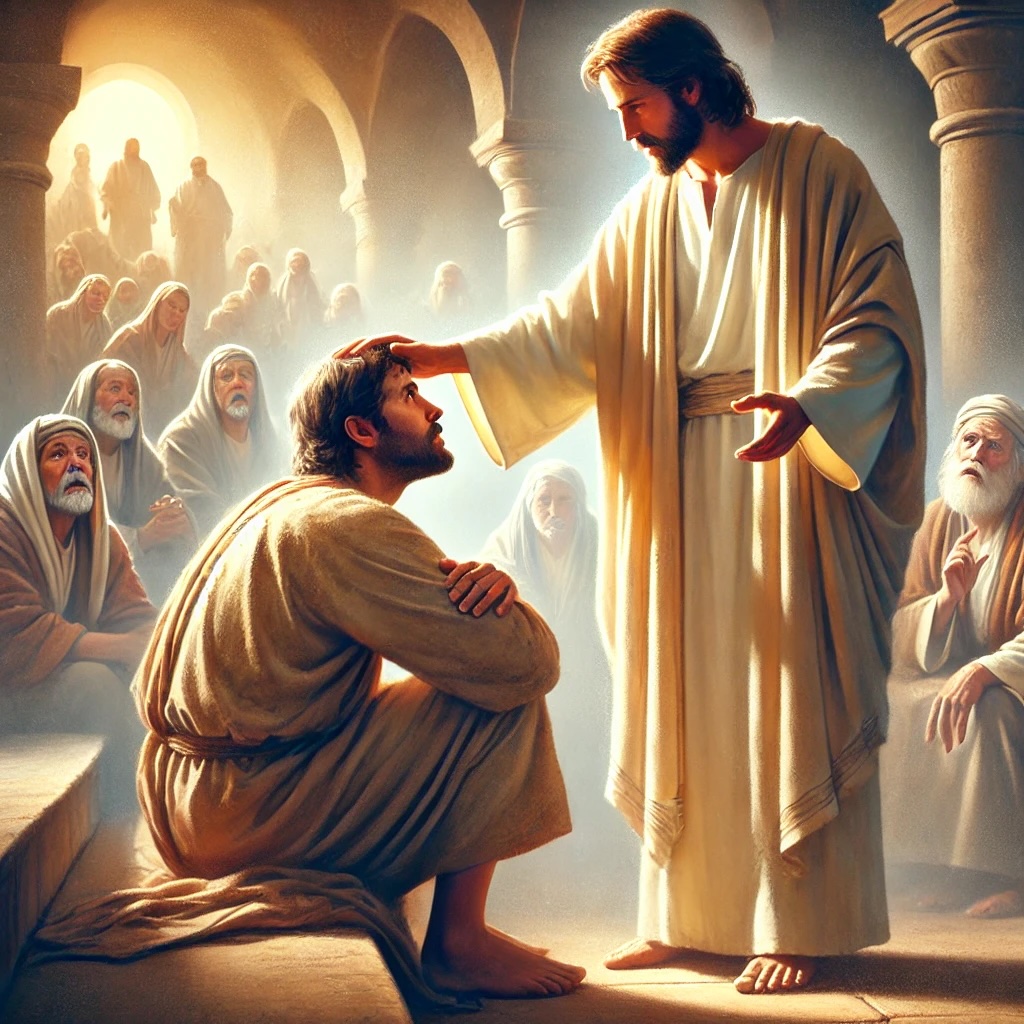
Jesus does not engage in conversation with the demon. He does not ask its name, does not perform a long ritual. He does not appeal to a higher power—because He is the higher power.
“But Jesus rebuked him, saying, ‘Be silent, and come out of him!’ And the unclean spirit, convulsing him and crying out with a loud voice, came out of him.”
There is no struggle. No back-and-forth. No contest.
With a single command, Jesus silences the spirit and drives it out.
The word “rebuke” (ἐπετίμησεν, epetimēsen) is significant. This is the same word used later when Jesus rebukes the storm on the Sea of Galilee, commanding it to be still (Mark 4:39). The same authority that subdues the chaos of nature is now being exercised over the chaos within a person’s soul.
Jesus speaks, and the forces of darkness obey immediately.
This is power beyond human comprehension. And the people witnessing it know it.
Amazement and a New Kind of Authority
“And they were all amazed, so that they questioned among themselves, saying, ‘What is this? A new teaching with authority! He commands even the unclean spirits, and they obey him.’ And at once his fame spread everywhere throughout all the surrounding region of Galilee.”
The crowd had been astonished by His teaching before the exorcism, but now they are completely overwhelmed.
The scribes spoke about spiritual matters, but they had no power over them. They could explain what God had done in the past, but they could not act with God’s authority in the present.
Jesus, however, teaches and acts with the same power. His words are not just theories or interpretations—they change reality.
The people do not simply say, What a great miracle! Instead, they recognize that this miracle and His teaching go together. His authority over the spiritual world confirms the truth of His words.
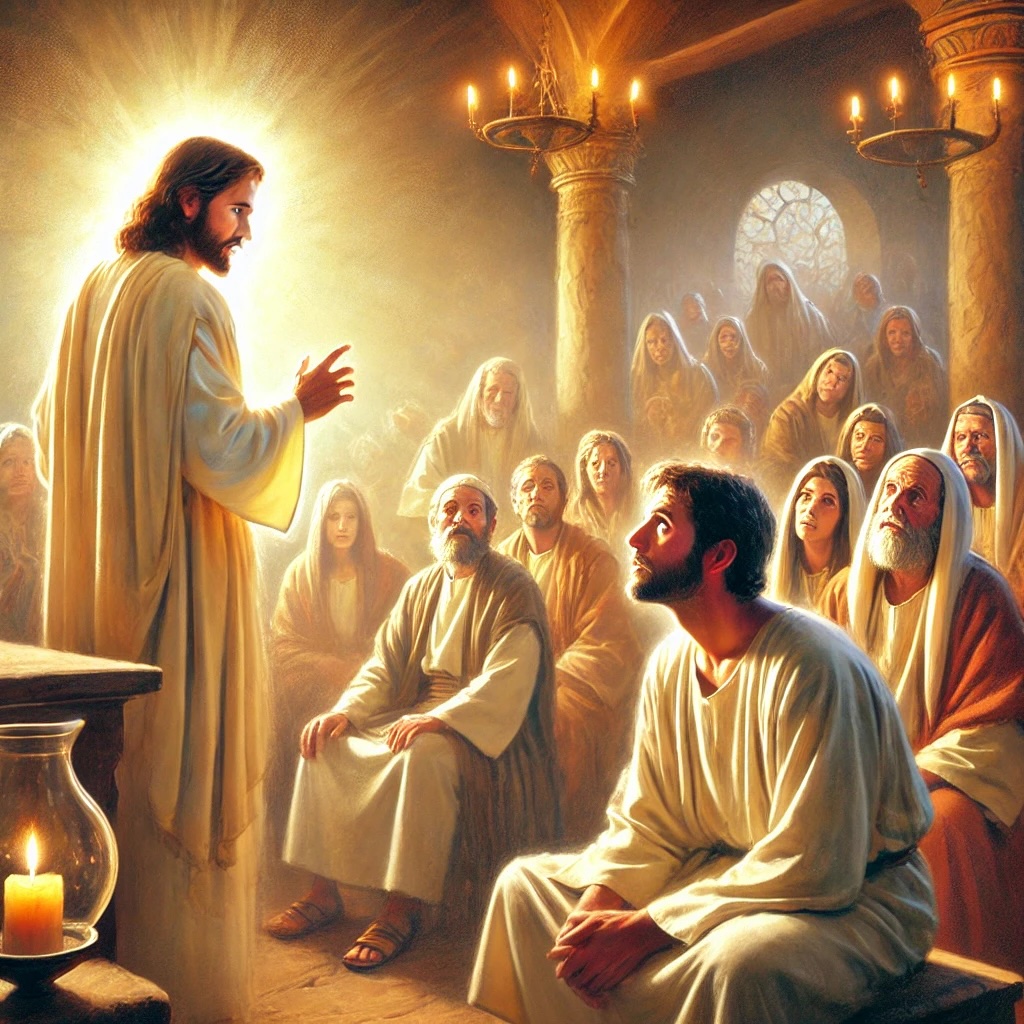
And His fame spreads instantly. The news is out: there is a man in Galilee who speaks like no other, who commands like no other, who carries authority like no other.
What This Means for Us
The authority of Jesus is not just something to admire—it is something that calls for a response.
When Jesus speaks, things change. Darkness cannot remain where He is present. He does not tolerate oppression, does not allow deception, does not negotiate with evil. He simply commands it to leave.
If Jesus has authority over the forces of darkness, then what does that mean for our own fears, struggles, and battles?
It means that His power is still active today. It means that no force of darkness has the final say over our lives. It means that when He speaks, things must shift.
And just like the people in the synagogue, we are faced with a question:
“What is this?”
Who is this Jesus who speaks, and reality bends to His voice?
Who is this teacher whose words do not just inform, but transform?
Who is this man whose presence disturbs the forces of evil, whose very existence threatens the dominion of darkness?
Mark gives us the answer before the story even unfolds:
He is the Son of God.
The question now is—will we recognize His authority, not just in theory, but in our own lives?
Because the same Jesus who walked into the synagogue in Capernaum walks into the spaces of our hearts today.
And He still speaks.
Are we listening?
 Vita Dinamica: Dynamic Life