Category: Meditations

  • 11 Lowered to Grace

    11 Lowered to Grace

    The Courage to be seen.

    Mark 2:1–12

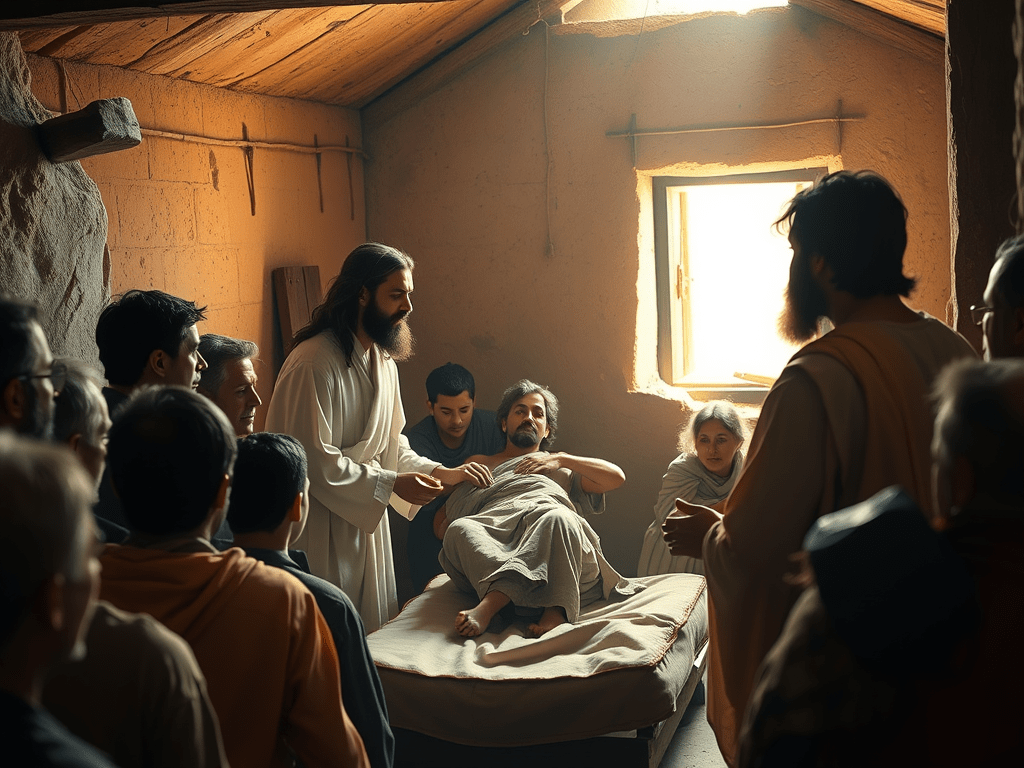
    One of the most quietly revolutionary episodes in all of Scripture is in the second chapter of Mark’s Gospel. There were no bright lights or loud voices from the skies. A small, crowded house in Capernaum, and the sound of a roof being ripped off.

    Jesus is teaching down here. Four friends are lowering a disabled man into His presence above. The room goes quiet. Then Jesus speaks. It’s not a command to walk, but something much more personal and disarming:

    “Son, I forgive you for your sins.”
    —Mark 2:5

    What comes next is more than a miracle. It is an invitation to the kind of spiritual freedom that changes lives, not just for the man on the mat, but for all of us who know what it feels like to be stuck.

    When Movement Comes to a Halt

    We all have a mat. A spot where we’ve stopped moving. Fear is what some people feel. Some people feel guilt, tiredness, self-doubt, or a wound that has been hidden for too long. We often don’t get to Jesus on our own, but because of the gentle charity of those who help us through friendship, prayer, or just not letting us give up.

    “Sometimes the first step toward healing isn’t walking; it’s being willing to be carried.”

    In this case, the man who was crippled didn’t say anything. He didn’t say he was sorry. He didn’t say a prayer. He just let people see him. That was all it took.

    The Healing That Came Before the Miracle
    Jesus doesn’t talk about the man’s physical condition right away. Instead, He talks to his soul directly.

    “Son…”

    It’s more than simply a greeting; it’s a way to get your identity back. Jesus heals the self before he heals the body.
    He gives a sense of belonging before action.
    Before change, He offers acceptance.

    “To be known in your weakness and still be called beloved—that is the beginning of true healing.”

    We frequently think that being strong will help us be seen. But in this case, Jesus changes the story. Being completely open and honest is what draws His attention and opens the door to grace.

    The More Serious Conflict

    Of course, not everyone in the room was okay with this form of healing. The religious experts, or scribes, were shocked. They asked each other in silence, “Who can forgive sins but God?”

    They were right. But they weren’t ready for the answer either.

    Jesus, who knows their hearts, doesn’t argue with them; instead, He asks them a question:

    “Which is easier: to say, ‘Your sins are forgiven’ or to say, ‘Get up, take your mat, and walk’?”

    And then He urges the man to get up to show that He is in charge. And he does.

    He picks up the mat that once held him and walks away, complete, restored, and living.

    A Question for Us

    This chapter gives us a challenge that goes beyond religion and into the heart of personal change:

    Are we okay with being seen as we really are?

    Can we agree that grace comes before doing well?

    Are we ready to move into a life that is in line with the truth, both physically and spiritually?

    This is when being real and accepting others completely come together. Not the shallow type of self-acceptance that doesn’t want to change, but the profound kind that says, “I am not condemned, even here and now.” They are calling me.

    “Being real is what brings healing, not getting everything right.”

    A Way to Get Ready for the Journey
    Try this peaceful practice the next time you feel stuck in one part of your life:

    Be still.
    Put your hands on your heart.

    Take a breath and say, “I am seen.”
    Let go of your breath and say, “I am forgiven.”

    Let the words sink in.
    Picture Jesus standing in front of you, not asking you to walk yet, nor pushing or correcting you. Just calling you “Child” and letting that be enough.

    Willingness is the first step to wholeness.
    You don’t have to go up on the roof.
    You don’t even have to say anything.
    You only have to say yes to being lowered—into grace, truth, and healing.

    Jesus is still here.
    Still making space in the mob.
    Still bringing back the ones that can’t move on their own yet.

    And still saying,

    “Get up.”

  • 10 He touches the untouchables (Mark 1:40-45)

    10 He touches the untouchables (Mark 1:40-45)

    Jesus Heals the Leper

    Jesus has just left a time of prayer and continues His mission, proclaiming the kingdom of God throughout Galilee. His fame is spreading, His words draw crowds, and His authority over sickness and demons astonishes many. Then, a solitary man approaches—not from the crowd, but from the edges of society—someone no one else would dare touch.

    The Leper’s Desperation

    This man is not only sick—he’s an outcast. In the ancient world, leprosy was more than disease; it was a life of isolation. Lepers lived outside cities, avoided all contact, and cried “Unclean!” if anyone came near. They were treated as the living dead, cut off from community, worship, and hope.

    Yet this man dares to approach Jesus, breaking every social rule. He shouldn’t be near healthy people—especially not a teacher or holy man. But his desperation outweighs his fear.

    He doesn’t demand healing or presume a response. He kneels and says, “If you will, you can make me clean.”
    There is no doubt that Jesus can—only uncertainty about whether He will.

    This captures the heart of human suffering: We believe in God’s power, but we struggle with His willingness.
    Does He see us?
    Does He care?
    Will He answer?

    And then—Jesus moves.

    The Compassion of Jesus

    Mark says Jesus is moved with pity (Greek: splagchnistheis)—a deep, gut-level compassion.

    Jesus doesn’t hesitate. He reaches out and touches the man, then says, “I will; be clean.”

    This is radical. He could have healed with a word, as He’s done before. But He chooses to touch the untouchable.

    It may be the first human contact the leper has felt in years. No one else would come near—but Jesus moves toward him.

    In this moment, Jesus is doing more than healing a disease—He’s restoring a person.
    He removes suffering and restores dignity. He doesn’t just heal; He embraces.

    Immediately, the man is made clean.

    Obedience and Disobedience

    Jesus gives a clear command:

    “Say nothing to anyone, but go show yourself to the priest and offer what Moses commanded.”

    Why? Because only a priest could declare someone clean and allow them back into society (Leviticus 14). Healing wasn’t enough—he needed to be officially restored.

    But the man disobeys.
    He spreads the news freely, overwhelmed by joy after years of pain and shame.
    Understandable—but it has consequences.

    Jesus can no longer enter towns openly. He remains in desolate places, the very spaces lepers once occupied.

    In a way, Jesus trades places with the man.
    The leper is restored to society; Jesus is pushed into isolation.

    This foreshadows the ultimate exchange—when Jesus will take on all human sin and suffering at the cross, so we might be free.

    What This Means for Us

    Jesus is willing. That’s the core truth here. The leper didn’t doubt Jesus’ power—just His desire.
    Jesus’ response makes it clear: I do want to.

    We ask the same today. We believe God can—but we wonder if He wants to.

    This story says yes. He touches what others avoid. He embraces what’s rejected.
    He steps into our suffering, to heal and restore.

    If you’ve ever felt unwanted, unworthy, or too broken for grace—this is for you.

    Jesus isn’t repelled by your wounds or ashamed of your scars. He’s moved by them. He wants to make you whole.

    True healing restores more than the body.
    Jesus didn’t just remove disease—He gave the man his place back in the world.
    He restores identity, dignity, and belonging.

    Grace Disrupts

    The man’s disobedience changes Jesus’ ministry. Grace is rarely tidy—it spreads, disrupts, and transforms.

    But in the end, it always points us back to Jesus.

    And so, we find ourselves where the leper once knelt, saying:

    “If you will, you can make me clean.”

    And Jesus, without hesitation, reaches out and says:

    “I will; be clean.”

    The question is never His willingness—only our readiness to receive.


  • Lent2025 School of Prayer 40

    Day 40: A Life of Prayer Beyond Lent

    “Pray without ceasing.”1 Thessalonians 5:17

    As Lent comes to a close, the journey of prayer does not end—it is just the beginning. Throughout these 40 days, you have sought to deepen your relationship with God, reflect on His love, and align your heart with His will. Now, the challenge is to carry this spirit of prayer into everyday life.

    Paul’s call to “pray without ceasing” does not mean we must always be speaking words of prayer, but that we should live with a heart constantly aware of God’s presence. Prayer is not just for the Lenten season or moments of need—it is the foundation of a life lived with God.

    As you move forward, commit to keeping prayer at the center of your daily life. Set aside time to be with God, pray in the little moments of your day, and invite Him into every aspect of your life. Let your heart remain open to His voice, and trust that He is always near.

    Reflection: How has your prayer life grown during Lent? What habits will you carry forward beyond this season? Ask God to help you remain faithful in prayer, not just today, but for a lifetime.

  • Lent2025 School of Prayer 39

    Day 39: Prayer and Love for Others

    “Love one another. As I have loved you, so you must love one another.”John 13:34

    Prayer is not just about our relationship with God—it also transforms how we love and serve others. Jesus taught that the greatest commandments are to love God and love our neighbor (Matthew 22:37-39). True prayer should lead us to a greater love for those around us, especially those who are difficult to love.

    When we pray, we invite God’s love into our hearts, and this love should overflow into our daily lives. Prayer fuels patience, kindness, forgiveness, and compassion. It softens our hearts toward others, helping us to see them through God’s eyes.

    Today, take time to pray for someone specifically—a friend, a family member, or even someone who challenges you. Ask God to bless them, guide them, and fill them with His love. Let your prayer inspire you to take action—whether through an encouraging word, an act of kindness, or simply a heart of patience and grace.

    Reflection: Does your prayer life lead you to love others more? How can you allow prayer to transform your heart and relationships? Ask God to help you love as He loves.

  • Lent 2025 School of Prayer 38

    Day 38: Becoming a person of Prayer


    “Then Jesus told his disciples a story to show them that they should always pray and never give up,” — Luke 18:1


    Prayer is not just something we do—it is part of who we are called to be. Jesus often went alone to pray, which shows us that a life full of prayer is a life close to God. We should always pray and not give up because it keeps us close to the Father, makes our faith stronger, and links us with His will.

    To become a person of prayer, you have to make it a habit to talk to God all the time. Not only in times of trouble, but also in everyday situations, like when you’re thankful, worshiping, giving up, or loving someone. People who pray more often feel God’s presence in their daily lives.

    Think about how you pray today. When you need help, do you always pray, or is it something you only do when you need it? Pray to God to help you pray deeply, faithfully, and all the time.

    Some thoughts: What can you do to make prayer a more normal part of your daily life? What little thing can you do today to start praying more? Make a promise to talk to God more deeply.

  • Lent 2025 School of Prayer 37

    Day 37: The Victory of Prayer

    “This is the confidence we have in approaching God: that if we ask anything according to his will, he hears us.”1 John 5:14

    Prayer is powerful because we pray to a God who is faithful, sovereign, and victorious. Sometimes, we may feel that our prayers go unanswered. We might think we are fighting battles alone. But God always hears us. His will is always accomplished.

    Victory in prayer does not always mean we get what we ask for. However, it does mean that God is working for our good and His glory. Jesus’ victory over sin and death gives us assurance. No prayer is wasted. No struggle is in vain. No battle is too great for God.

    When we pray, we are not just speaking into the air—we are aligning ourselves with God’s power. Whether we see the answer immediately or not, we can trust that prayer moves heaven and transforms hearts.

    Today, pray with confidence. Declare God’s victory over your fears, your struggles, and your doubts. Stand firm in faith, knowing that He is working on your behalf.

    Reflection: Do you pray with confidence, or do you doubt that God hears you? How can you claim the victory of Christ in your prayers today? Pray boldly, trusting in His faithfulness.

    Fasting & Giving: Fast from holding onto grudges. Pray for the person who hurt you.

  • Reading together the book Acts of the Apostles: Daily Reflections for Easter-Pentecost 2025

    Easter 2025

    Welcome to the Journey!

    The Book of Acts narrates the events that occur after the resurrection. It tells what happens not just to Jesus’ followers, but to the world. Over the next 50 days, you’ll walk with the earliest Christians. They learn to live in the power of the risen Christ.

    This study is designed to help you:

    • Read Scripture deeply
    • Reflect personally
    • Engage in discussion
    • Grow in spiritual boldness, service, and love

    Each unit includes:

    • 📖 A short Scripture reading
    • 🔍 Reading comprehension questions
    • 🧠 Key vocabulary
    • 🗣️ Group discussion prompts
    • ✍️ A journaling question for personal reflection

    Whether you’re working through this on your own or with a group, this is more than just a workbook. It’s a training ground to live the resurrection every day. From the upper room to the ends of the earth, God is still writing the story—and you’re part of it.

    So grab a pen, a Bible, and an open heart.
    Let’s begin.

    📚 Table of Contents

    UnitTitleScripture
    1The Promise of the SpiritActs 1:1–5
    2The Ascension of JesusActs 1:6–11
    3Praying in the Upper RoomActs 1:12–14
    4A New Witness is ChosenActs 1:15–26
    5Pentecost – Filled with the SpiritActs 2:1–13
    6Peter’s Bold ProclamationActs 2:14–41
    7A Devoted Resurrection CommunityActs 2:42–47
    8Living the Resurrection TogetherReview: Acts 1–2
    9Healing at the Beautiful GateActs 3:1–10
    10Peter Speaks to the CrowdActs 3:11–26
    11Boldness in the Face of OppositionActs 4:1–22
    12The Church Prays for BoldnessActs 4:23–31
    13One Heart and SoulActs 4:32–37
    14Ananias and SapphiraActs 5:1–11
    15Signs, Wonders, and Unstoppable WitnessActs 5:12–42
    16Called to ServeActs 6:1–7
    17Stephen’s Bold WitnessActs 6:8–15
    18Stephen’s Final MessageActs 7:1–53
    19Stephen’s Death and Saul’s RoleActs 7:54–8:3
    20Scattered but Still SpeakingActs 8:4–25
    21Philip and the Ethiopian OfficialActs 8:26–40
    22Saul Encounters the Risen ChristActs 9:1–19
    23Saul Begins to PreachActs 9:20–31
    24Aeneas is HealedActs 9:32–35
    25Tabitha is Raised to LifeActs 9:36–43
    26When God Redefines the BoundariesActs 10:1–33
    27Resurrection Life in a New CityActs 11:1–18
    28When the Church Suffers—and PraysActs 12:1–19
    29When Power Falls and the Word RisesActs 12:20–25
    30Sent by the SpiritActs 13:1–12
    31The Promise FulfilledActs 13:13–52
    32Persevering with Resurrection BoldnessActs 14:1–7
    33Redirecting the GloryActs 14:8–20
    34Strengthening the Souls of the DisciplesActs 14:21–28
    35Grace Is EnoughActs 15:1–21
    36The Joy of Grace Made ClearActs 15:22–35
    37When Resurrection People DisagreeActs 15:36–41
    38Guided and Connected by the SpiritActs 16:1–5
    39When God Redirects the JourneyActs 16:6–10
    40Open Hearts and a Riverside RevivalActs 16:11–15
    41Singing in the DarkActs 16:16–40
    42Revival and Resistance in ThessalonicaActs 17:1–15
    43Known by the Unknown GodActs 17:16–34
    44“Do Not Be Afraid—I Am With You”Acts 18:1–17
    45Strengthening What God Has StartedActs 18:18–23
    46Teachability Is Resurrection StrengthActs 18:24–28
    47When the Word Takes RootActs 19:1–20
    48A Life Poured OutActs 20:17–38
    49Resurrection at the Heart of the StormActs 21–28
    50You Are the Next ChapterReflection & Prayer
  • Lent 2025 School of Prayer 36

    Day 36: Waiting in Prayer

    “The Lord is good to those whose hope is in him, to the one who seeks him; it is good to wait quietly for the salvation of the Lord.”Lamentations 3:25-26

    Waiting is one of the hardest aspects of prayer. We pray, but sometimes God’s answer seems delayed. In these moments, we may feel forgotten, discouraged, or tempted to give up. Yet, Scripture reminds us that God’s timing is always perfect. His delays are not denials—they are invitations to trust and grow in faith.

    Throughout the Bible, we see people waiting in prayer:

    • Abraham waited for God’s promise of a son.
    • Moses waited in the wilderness before leading Israel.
    • Mary and the disciples waited in prayer after Jesus’ ascension for the coming of the Holy Spirit.

    Waiting in prayer is not passive—it is an active trust in God. It shapes our hearts, deepens our faith, and prepares us for what He has planned.

    If you are in a season of waiting, do not lose heart. Keep praying, keep trusting, and keep hoping. God is at work, even when you cannot see it.

    Reflection: Is there a prayer you’ve been waiting on God to answer? How can you use this time to draw closer to Him? Spend a few moments today surrendering your waiting to God in trust.

    Fasting & Giving: Fast from any sin you struggle with. Seek confession and renewal.

  • Lent 2025 School of Prayer 35

    Day 35: Prayer and Resurrection Hope

    “I am the resurrection and the life. The one who believes in me will live, even though they die.”John 11:25

    Prayer is not just about the struggles of today—it is rooted in the hope of resurrection. As we approach Easter, we remember that Jesus’ death was not the end of the story. He rose again, conquering sin and death, and in Him, we have the promise of new life.

    When we pray, we do so with hope, not despair. No matter what we face—suffering, loss, or uncertainty—we pray as people of the resurrection. The same power that raised Jesus from the dead is at work in our lives today. Every hardship we endure is not the final word; God is making all things new.

    Today, let your prayer be one of resurrection hope. If you are struggling, bring your burdens to God, but do so in faith, trusting that He brings life from death, joy from sorrow, and light from darkness.

    Reflection: How does the resurrection shape the way you pray? What area of your life needs to be renewed by God’s power? Pray today with confidence in the hope of Christ’s victory.

    Fasting & Giving: Fast from ignoring the poor. Acknowledge and greet the homeless with dignity.

  • Lent 2025 School of Prayer 34

    Day 34: The Prayer of Surrender

    Scripture: “He humbled himself by becoming obedient to death—even death on a cross!”Philippians 2:8

    Surrender is one of the hardest but most powerful forms of prayer. Jesus fully surrendered to the Father’s will, even when it led Him to the cross. His obedience was not forced—it was an act of love and trust.

    True prayer is not about convincing God to do what we want. It is about letting go of our own plans. It involves trusting in His perfect will. Surrender does not mean giving up. It means placing our lives in God’s hands. We believe that His ways are higher than ours (Isaiah 55:9).

    Today, take time to pray a prayer of surrender. Give God your worries, your desires, and your future. Say, “Lord, I trust You. Take my life, my plans, my struggles. Let Your will be done in me.” Jesus surrendered everything to the Father. We are called to do the same. We know that His love will never fail us.

    Reflection: Is there something in your life that you struggle to surrender to God? What would it look like to fully trust Him in that area? Pray today with a heart open to His will.

    Fasting & Giving: Give financially to a missionary or faith-based organization.