We read in the Gospel: “Jesus then used a parable to teach his disciples to never give up and to always pray.” — Luke 18:1
Prayer is a way of life, not just a moment. Jesus encourages us to pray consistently. Doing so increases our trust and strengthens our faith. It is not because God is hesitant to answer. In the Parable of the Persistent Widow (Luke 18:1–8), a widow repeatedly begs a judge. She continues to do this until he ultimately gives her justice. Jesus uses this parable to show us how much more our loving Father will respond to our persistence. If an unjust judge responds to persistence, then our Father certainly will.
Still, praying consistently isn’t meant to wear God down. It’s about remaining in touch with Him even when things seem to be taking a while. God’s timeline occasionally differs from ours. He occasionally responds with “wait” or “I have something better.” However, He never fails to listen, care, and react with love.
Consider a prayer you have become tired of saying today. Bring it to God once more rather than giving up. Even when you can’t see anything, have faith that He is working.
Reflection: Have you stopped asking God for something in prayer? How can you reaffirm your commitment to prayer while having faith in His perfect timing?
Fast & Giving: Fast from impatience. Pray for someone you find difficult to love.
Jesus said: “Therefore I tell you, believe that you have received whatever you ask for in prayer, and it will be yours.” Mark 11:24
Prayer is more than just talking to God; it’s also having faith that He will listen and answer. Jesus instructs us that we must pray with faith—that is, without hesitation or doubt, but with the conviction that God can. Praying with faith does not guarantee that we will receive all of our requests, but it does demonstrate our faith in God’s goodness and wisdom, even in the absence of prompt results.
Aligning our hearts with God’s will is the essence of faith in prayer. We give up our wishes when we pray with faith because we trust that God knows what is best for us. We have faith that His plans are bigger than ours, even if they are delayed or denied.
Think about a situation in your life when you might not have as much trust in prayer as you would like to. Do you find it difficult to trust that God is hearing you? Are you scared to make a bold question? Give Him your doubts. You can pray with confidence because you know that God will always answer in a way that is best for you.
Thought: In your faith, what is one thing you must present to God today? When prayers don’t seem to be answered, how can you develop trust?
Fasting & Giving: Fast from worrying about the future. Trust God with one specific concern.
“My soul pants for you, my God, just as the deer pants for streams of water.” — Psalm 42:1
With its unvarnished and honest pleas that convey joy, sadness, trust, fear, praise, and repentance, the Psalms are frequently referred to be the Bible’s prayer book. The Psalms provide us with phrases to present to God when we are at a loss for words. They serve as a reminder that prayer is about coming as we are, not about saying the correct things.
In every stage of life, David, the poet of several Psalms, gave his all to God. He cried in times of sorrow (Psalm 13:1-2), asked for pardon in times of failure (Psalm 51:1-2), and gave thanks in times of triumph (Psalm 18:1-3). Whatever he had to deal with, he prayed about it all to God.
Pick a Psalm that speaks to you today; it could be one of trust, lament, or gratitude. Take your time reading it and use it as a private prayer. Allow the words of Scripture to lead you to a closer relationship with God.
Thought: Which Psalm resonates with you right now? In what ways might the Psalms enhance your Lent prayer life? Think about committing a verse to memory so you can pray it all day long.
Fasting and Giving: Give your time to someone in need. Call a lonely friend or visit someone.
Here is an organized list of Psalms by Topic to guide your prayers:
✨ Praise (Worshiping God’s greatness and majesty)
Psalm 8 – The glory of God in creation
Psalm 19 – The heavens declare the glory of God
Psalm 29 – The power of God’s voice
Psalm 47 – God reigns over all the earth
Psalm 103 – Bless the Lord, O my soul
Psalm 150 – Let everything that has breath praise the Lord
💔 Lament (Crying out to God in pain or distress)
Psalm 13 – How long, O Lord?
Psalm 22 – My God, my God, why have You forsaken me?
Psalm 42 – Why are you downcast, O my soul?
Psalm 77 – I cried out to God for help
Psalm 88 – A cry from deep suffering
Psalm 130 – Out of the depths I cry to You, Lord
🙏 Gratitude (Thanksgiving for God’s blessings)
Psalm 9 – I will give thanks to You, Lord
Psalm 23 – The Lord is my Shepherd
Psalm 30 – You turned my mourning into dancing
Psalm 34 – Taste and see that the Lord is good
Psalm 92 – It is good to give thanks to the Lord
Psalm 136 – His love endures forever
🛡️ Trust (Confidence in God’s guidance and protection)
Psalm 16 – You will not abandon me
Psalm 27 – The Lord is my light and my salvation
Psalm 46 – God is our refuge and strength
Psalm 56 – When I am afraid, I will trust in You
Psalm 91 – He who dwells in the shelter of the Most High
“O God, create in me a pure heart and renew in me a steadfast spirit.” — Psalm 51:10
Repentance and a return to God are the main goals of Lent. In addition to requesting benefits, prayer also entails asking for forgiveness and letting God change us. In Psalm 51, King David begged God for forgiveness and a new heart after he sinned. He realized that genuine repentance involves a strong desire to change rather than just stating “I’m sorry.”
In prayer, repentance is an act of humility. It is admitting our shortcomings while being confident in God’s mercy and not afraid. God is waiting for our restoration, not for our condemnation. He is dependable in purifying and renewing us when we approach Him with an open heart.
Spend a moment today praying sincerely for repentance. Ask God to show you any areas that need renewal, any sin, or any resentment. Knowing that God’s grace surpasses all of our shortcomings, let today be a period of spiritual purification.
Consider: In what aspect of your life do you require the transformative grace of God? Today, are you prepared to present it to Him in repentance?
Fasting and Giving: Fast from complaining. Offer up any difficulty as a prayer for others.
Day 5: “Give Us This Day” (Part 2) of the Lord’s Prayer
“Give us our daily bread today,” says the scripture. — Matthew 6:11 Jesus instructs us to honor God’s name before guiding us to rely on him for our everyday need. “Give us today our daily bread” serves as a reminder that we are not self-sufficient and that we need on God daily for both spiritual and material needs.
Jesus asks us to trust God for today in a world that encourages us to worry about the future. God provides for us in ways we might not always notice, just as He gave the Israelites manna in the wilderness, providing them just what they needed every day. This prayer acknowledges that all we own is a gift from God and is an act of humility and faith.
However, “daily bread” is more than just food. “I am the bread of life,” declared Jesus (John 6:35). Spiritual nutrition is our greatest need, and only Christ can fully satiate our souls’ need.
Thought: Do you trust in God’s supply or in your own power today? Give Him thanks for providing for your material requirements as well as your spiritual upkeep in Christ. How may your everyday reliance on Him increase?
Fasting And Giving: Fast from excessive food portions. Offer the savings to a food charity.
Bible verses: “So this is how you should pray: ‘Our Father in heaven, honor your name.’” — Matthew 6:9
Jesus showed His disciples how to pray by giving them what we now call the Lord’s Prayer. It’s a guide for how we should talk to God. The very first words, “Our Father,” show something very special: prayer is not just talking to a faraway god; it’s a conversation with a loving Father who knows us very well.
Prayer links us to each other
Jesus invites us into a connection based on trust, love, and safety by calling God “Father.” It’s important to remember that we are part of a bigger spiritual family because he doesn’t say “My Father,” but “Our Father.” Prayer not only links us to God, but it also links us to each other as Christians.
The next line, “hallowed be Your name,” tells us that prayer should start with praise and adoration. We acknowledge that God is holy, powerful, and good before we make our prayers. Worship changes the tone of our thoughts by making us think about how great God is instead of how great we are.
Thought: Do you talk to God like a loving father when you pray? How can you worship Him before you pray, focused on who He is instead of what you need?
Fasting & Giving: Give thanks to someone who has influenced your faith. Send a message or write a letter.
From the very beginning of His ministry, He calls others to walk with Him, to learn from Him, to become part of something greater than themselves. His mission is not just about proclaiming truth—it is about forming a community, a people who will embody His message long after He is gone.
Mark tells us the story simply:
“Passing alongside the Sea of Galilee, he saw Simon and Andrew, the brother of Simon, casting a net into the sea, for they were fishermen. And Jesus said to them, ‘Follow me, and I will make you fishers of men.’ And immediately they left their nets and followed him. And going on a little farther, he saw James the son of Zebedee and John his brother, who were in their boat mending the nets. And immediately he called them, and they left their father Zebedee in the boat with the hired servants and followed him.”
There is something disruptive about this moment. These men are not idle. They are not searching for a teacher. They are fishermen, doing what they have always done, tending to the daily work of survival. And yet, when Jesus calls, they drop everything.
A Call That Interrupts
Jesus does not wait for Simon, Andrew, James, and John to come to Him. He goes to them. He meets them in their ordinary lives, in the midst of their routines. They are casting nets, mending gear, preparing for another day of work—until Jesus steps in and everything changes.
We often imagine that life-changing moments come with preparation, with time to consider, with warning signs leading up to them. But in Mark’s Gospel, the call of Jesus is sudden, urgent, and immediate. There is no space for hesitation.
And yet, there is something about Jesus that compels them to follow. He offers no roadmap, no security, no certainty about what will come next. All He says is, “Follow me.” And they go.
Perhaps that is how real transformation works. It comes not when we are ready, but when we are willing. It does not always come with full understanding, but with an openness to step forward even when we do not know what the future holds.
Leaving Behind the Nets
What Simon, Andrew, James, and John do next is astonishing.
“Immediately they left their nets and followed him.”
Their nets were not just tools; they represented security, identity, livelihood. To leave them behind was to step into the unknown, to release the only life they had ever known.
James and John leave behind not just nets, but their father. Their departure is not just a career shift; it is a radical severing of ties, a complete reordering of priorities.
Jesus’ call is not a casual invitation—it demands a response that costs something. To follow Jesus means to let go, to release what is comfortable, to step away from what is familiar.
And yet, they do not hesitate. Why? Because what Jesus offers is greater than what they leave behind.
Fishers of Men: A New Purpose
Jesus does not just tell them to follow Him—He redefines their identity.
“Follow me, and I will make you fishers of men.”
He does not say, Follow me, and you will be my students. He does not say, Follow me, and you will find deeper spiritual peace. Instead, He speaks in their language, through their experience.
They were fishermen. This was what they knew—casting nets, waiting, gathering the catch. And now, Jesus takes that same skill, that same patience, that same endurance, and transforms it into something eternal.
“I will make you fishers of men.”
Their skills are not erased; they are redeemed for a greater purpose. They will still cast nets, but now for hearts and souls. They will still wait, but now with the patience of those who bring good news. They will still gather, but now into a kingdom that will never fade.
God does not call us to abandon who we are—He transforms what we already know into something new. The gifts, talents, and experiences we have do not disappear when we follow Jesus. They are redirected, reshaped, repurposed for something greater than we ever imagined.
The Cost of Following
It is tempting to read this passage and admire the disciples’ immediate response without considering what it cost them.
Simon, Andrew, James, and John did not just leave behind nets—they left behind their old way of defining themselves. Their work, their families, their sense of place in the world—all of it changed the moment they said yes.
Following Jesus is never about adding Him to an already full life. It is about redefining life around Him.
And yet, even in the leaving, there is gain.
What they lost in security, they gained in purpose. What they gave up in familiarity, they received in calling. What they left behind in certainty, they stepped into in faith.
Jesus does not call people to comfort. He calls them to Himself. And that is always worth whatever we must leave behind.
The Call Today: Will You Follow?
This story is not just about Simon, Andrew, James, and John. It is about every one of us.
Jesus is still walking along the shores of our lives, still stepping into our ordinary routines, still speaking those two simple words:
“Follow me.”
The question is, will we?
What nets are we holding onto that keep us from stepping forward? What security are we afraid to leave behind? What is Jesus calling us to step into, even when we feel unprepared?
Following Jesus is not about having all the answers. It is about taking the first step.
And like those first disciples, when we leave behind our old lives, we are stepping into something far greater than we ever imagined.
“Speak, Lord, for your servant is listening,” — 1 Samuel 3:10
Prayer is a dialogue. We must learn to listen as much as we speak.
When you pray, you don’t just talk to God; you also listen. We treat prayer too much like a one-way discussion, telling God what we want and need without stopping to hear what He has to say. But real prayer is a conversation. God talks to us in many ways, such as through the Bible, the small things that happen in our lives, and even the things that happen to us.
When young Samuel heard God’s voice in the night, he responded with an open heart and a listening spirit: “Speak, Lord, for your servant is listening.” A young Samuel with an open heart and a willing spirit.
This is how we should pray—not just saying what we want to say to God, but also waiting in silence to hear what He has to say.
Today, take some time to pray in silence. Don’t say too many words to fill up the room. Say, “Lord, I am here. Speak to me. ” while sitting still. Believe that God loves talking to people who come to Him with an open heart.
Thought: When you pray, do you take the time to listen, or do you mostly talk? What can you do today to make room for God’s voice?
Fast from background noise. Create moments of silence to listen to God
Bible verse: “Ask whatever you want, and it will be done for you, as long as you remain in me and my words remain in you.” — John 15:7
Prayer isn’t just asking for things; it’s also about getting to know God better. He tells us to “remain” in Him, to stay in His love like a branch stays attached to a plant. A branch that is cut off dies, but a branch that stays attached grows fruit. The same is true for our mental lives. We become emotionally dry and cut off from the source of life when we don’t pray.
God wants more from us than just prayers now and then. He wants a friendship that lasts all the time, one in which we share our joys, sorrows, hopes, and fears every day. Think about a close friendship that gets stronger as you talk more. The same goes for prayer. We can hear God’s words and feel His presence in our daily lives better the more time we spend with Him.
Today, pray not because you have to, but because you want to have a Relationship with a loving Father. During the day, talk to Him in small ways, and let His presence fill your heart.
Thought: How can you turn prayer into a living, ongoing connection with God instead of something you do once in a while?
Action: Fast from negative self-talk. Speak words of gratitude instead.
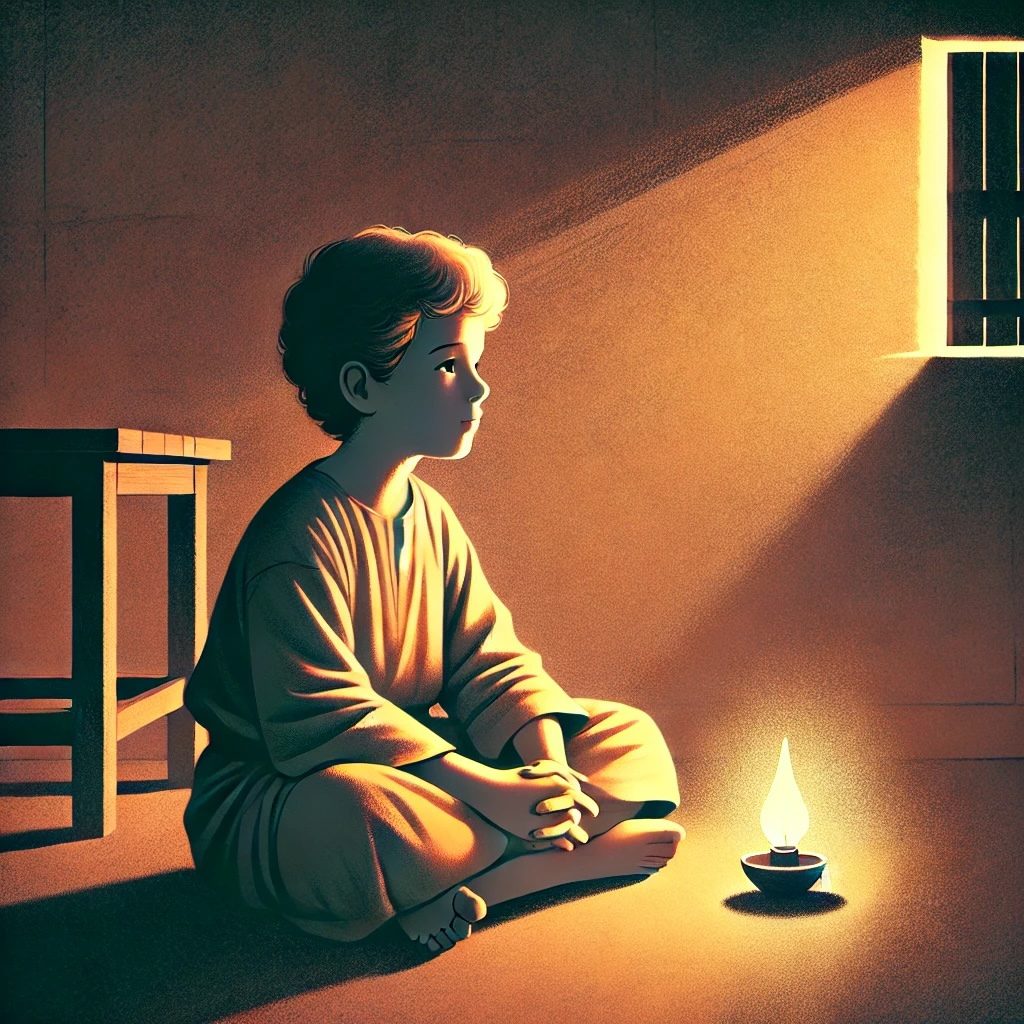
“But when you pray, go to your room, shut the door, and talk to your Father who is outside the room.” Then your Father, who knows everything that happens behind closed doors, will reward you. — Matthew 6:6
Lent is a time to deepen our relationship with God
As we begin this trip through Lent, Jesus calls us to pray more deeply. Prayer isn’t just a show or a bunch of empty words; it’s a holy meeting with God that invites us to get close. Jesus tells us to go somewhere alone, get away from things that might distract us, and let the Father fully see our thoughts.
Prayer is at the heart of Lent, which is a time to start over. We can hear God’s words, feel His love, and align our hearts with His will when we pray. We often have trouble praying because we feel far away or don’t know what to say.
But God doesn’t want perfect words; He wants an honest heart. Take a break from the noise today. Get away from everything, even if it’s just for a short time, and be with God. This is the start of a time of mindful Lent. May your heart become a place where He lives.
Thought: How can you make room in your daily life for God?
Action: Fast from unnecessary phone use. Spend the time in prayer.










 Vita Dinamica: Dynamic Life
Leave a comment