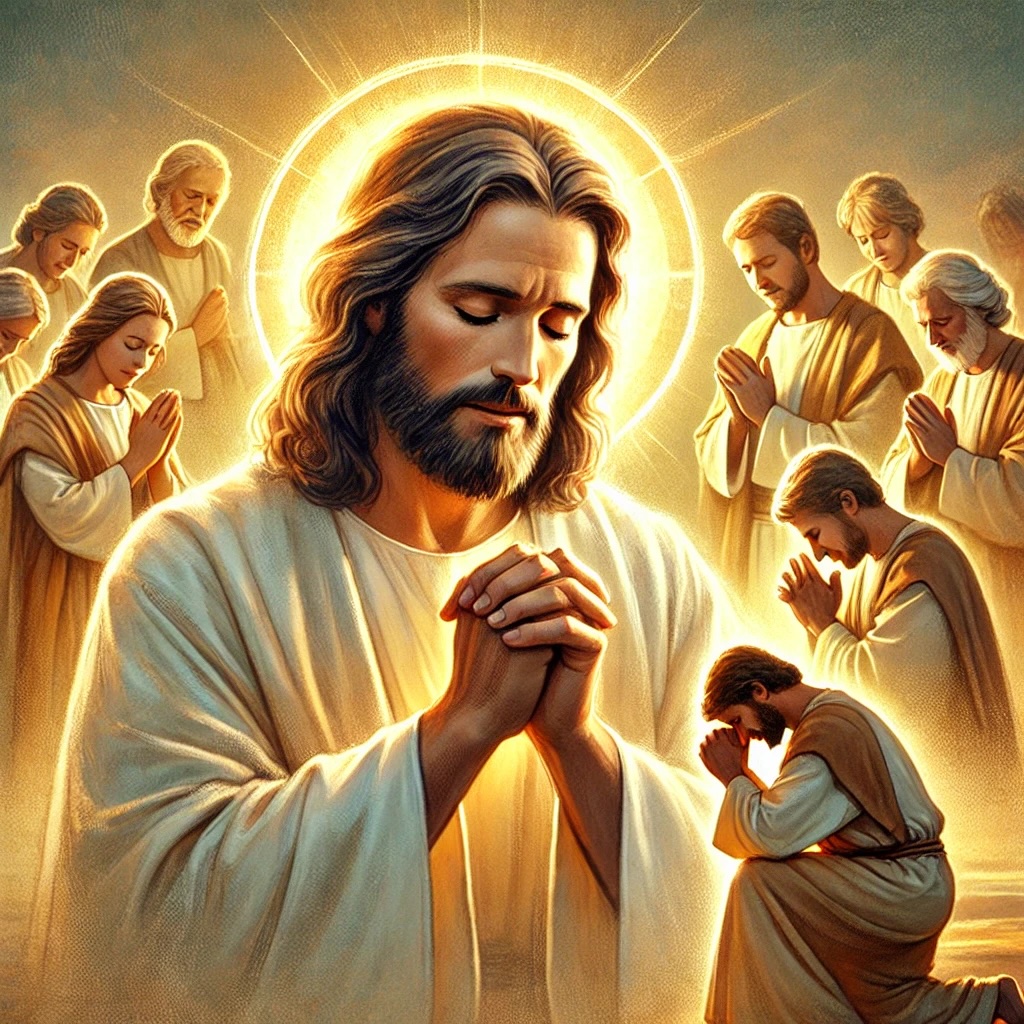
“I pray for them.” Not for the whole world, but for the people you gave me, because they belong to you. — John 17:9
Jesus prayed for His friends the night before He was put to death on the cross. He didn’t pray for them to have an easy life; instead, he prayed for their safety, unity, and holiness. He was aware that they would face problems, resistance, and tests, so He prayed for them to the Father.
This moment makes us think of how powerful it is to pray for other people. Jesus prayed for the people He loved, not just for Himself. As people who follow Christ, we should do the same. We should pray for more than just ourselves. We should pray for our family, friends, church, and even people who are against us or having a hard time.
Today, take some time to pray for a certain person. If a friend or family member is in trouble, or if someone has hurt you, please help them. Trust that God hears and answers our prayers.
Reflection: Think about who in your life needs prayer right now. Just like Jesus did for His servants, take a moment today to pray for them.
Fasting & Giving:Give time to a friend or family member who needs support.
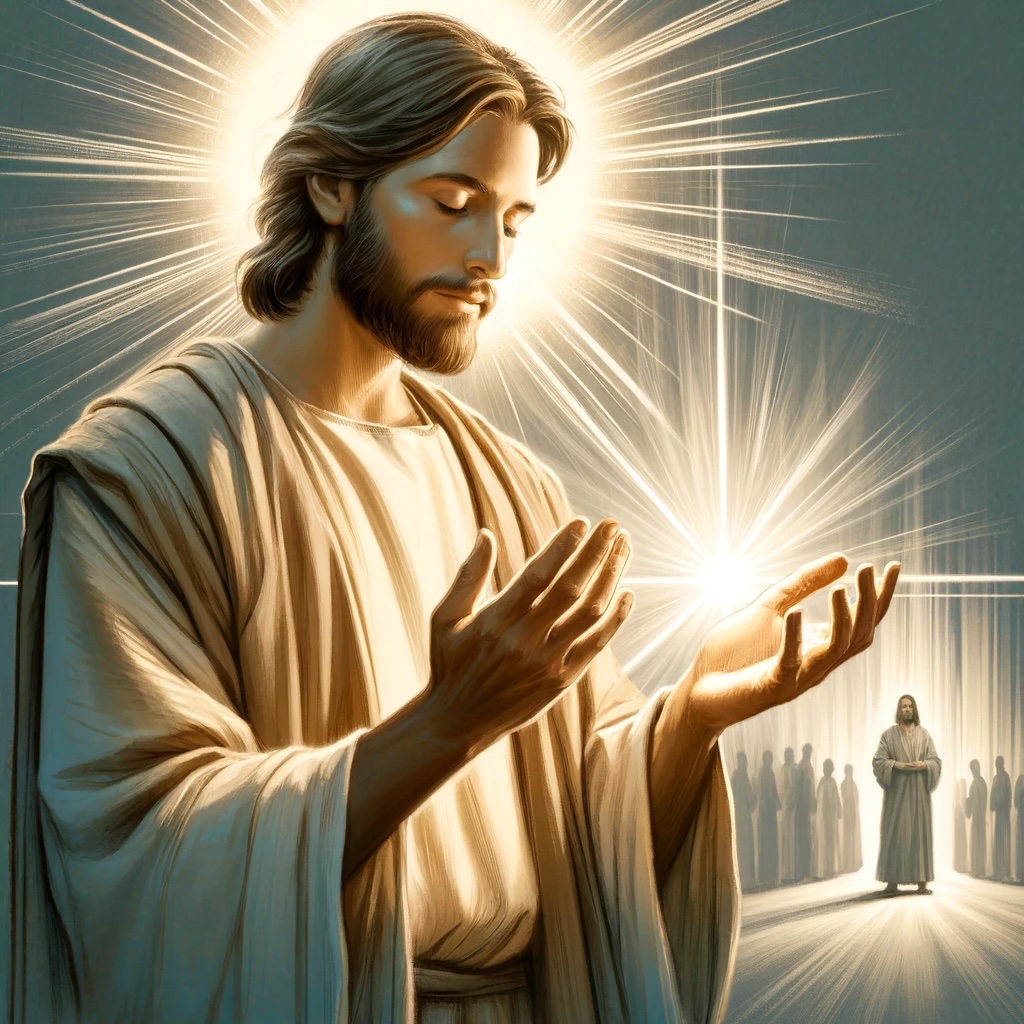
“Jesus then looked up and said, “Father, thank you for hearing me.” I knew you’d hear me every time…” — John 11:41–42
Jesus often took time to pray. He prayed before doing amazing things like healing the sick. He also prayed before raising Lazarus from the dead. Additionally, he prayed before growing loaves and fish. His prayers were simple but powerful. He thanked the Father. He asked for His will. He showed that he was totally dependent on Him.
We learn from this that prayer shouldn’t just be said in times of trouble. It should also precede our actions. We should pray before making big choices, taking on new tasks, or helping other people. Jesus teaches us that wonders and big steps forward come from being close to the Father.
Prayer before we do something shows that we know God is the source of all strength, wisdom, and kindness. We let Him into our lives and are ready to do what He wants.
Today, take a moment to pray before you do anything important, like a job, a conversation, or a choice. Ask God to be with you, to help you, and to bless what you are about to do.
Meditating: How often do you say a prayer before you do something? What is something in your life that you can pray to God about today before you move on?
Fasting & Giving: Fast from criticizing others. Encourage at least three people today.
Early in the morning, while it was still dark, Jesus rose from his sleep, left the house, and went to a lonely location to pray (Mark 1:35).
Jesus Christ, the Son of God, devoted much of His time each day to prayer. He frequently retreated to be alone with the Father. His ministry was extremely demanding. It involved teaching, healing, and caring for the multitudes. Jesus prayed to God first, before he made decisions, performed miracles, or faced difficulties.
So, what are the takeaways here? That prayer is our source of strength. How much more so do we need time alone with the Father if even Jesus needed it? Praying first thing in the morning establishes a positive tone for the entire day. We can better prepare ourselves for the day’s challenges. We do this by bringing our hearts into harmony with God’s will.
We should seek His guidance and rest in His peace.
Pray first thing in the morning today, following Jesus’ example. It doesn’t have to be long—just a few moments of stillness, offering your day to God. Seek Him first, and let Him guide your steps.
Think about it: how frequently do you pray first thing in the morning? If you want to follow Jesus’ example and pray first thing in the morning, what little thing can you do?
Fasting & Giving: Fast from sleeping in. Wake up early for morning prayer.
In the Mirror of Love: Illusions of Love and Self-Deception in The Picture of Dorian Gray and the Perils of Idealization
In Chapter 4 of The Picture of Dorian Gray, the protagonist faces a dilemma. He questions whether his obsession with Sibyl Vane is a genuine love. Or is it merely an illusion? He finds himself at a pivotal point in his development, as he becomes increasingly obsessed with her sensuality and extravagance. However, when the fantasy doesn’t pan out, Dorian’s fixation on Sibyl Vane becomes more than just an illusion.
Lord Henry Wotton, Dorian’s friend, plays a crucial role in his disconnection from reality. He informs Sibyl that he loves her and intends to marry her, but Henry’s cynical view of love is terrifying. He believes that love is an illusion that humans make up for fun and is never genuine. This belief undermines the authenticity of Dorian’s emotions and weakens his self-esteem.
Dorian disregards Lord Henry’s doubts, as he remains drunk on his love for Sibyl. However, uncertainty sets in, and the notion that love is merely a facade takes up residence in his mind. Dorian’s fixation on Sibyl renders even enormous riches, which define rank and influence in Victorian society, meaningless to him.
The chapter also explores the theme of idealization. This refers to the harmful propensity to view other people through rose-colored glasses rather than their actual qualities. This can lead to disappointment upon oneself when they realize that someone is only human. Dorian’s story cautions against the perils of idealizing others, as it invites disappointment upon themselves and can have catastrophic effects.
Imagining perfect lives isn’t necessarily negative; it can encourage us to value beauty more highly. However, we run the danger of losing the capacity to establish genuine, significant connections when we conflate illusion with reality.
Dorian invites Lord Henry and Basil Hallward to attend Sibyl Vane’s performance. He believes they will share his view of her as stunning. He thinks she is the most talented actress working today and a goddess of art. In reality, Sibyl Vane is merely a girl whose existence extends beyond the parts she plays. She is invisible to Dorian.
When deception is shattered, what happens? When Sibyl Vane materializes, what will happen? Dorian doesn’t know now, but this is the question that will ultimately alter his life.
Dorian Gray’s life mirrors ours in many ways. He prioritizes appearances over actuality and sincerity, leading to a disconnect from reality. Dorian’s life mirrors ours in many ways, and we can learn from his experiences.
Join in the Discussion.
Dorian Gray is starting to disconnect from reality as he prioritizes appearances over actuality and sincerity. But his life mirrors ours in many ways.
Have you ever been captivated by someone’s concept instead of their actual person? 💬 Is it possible to love someone without getting to know them? 💬 Have you ever had trouble seeing through illusion and beauty to what really existed?
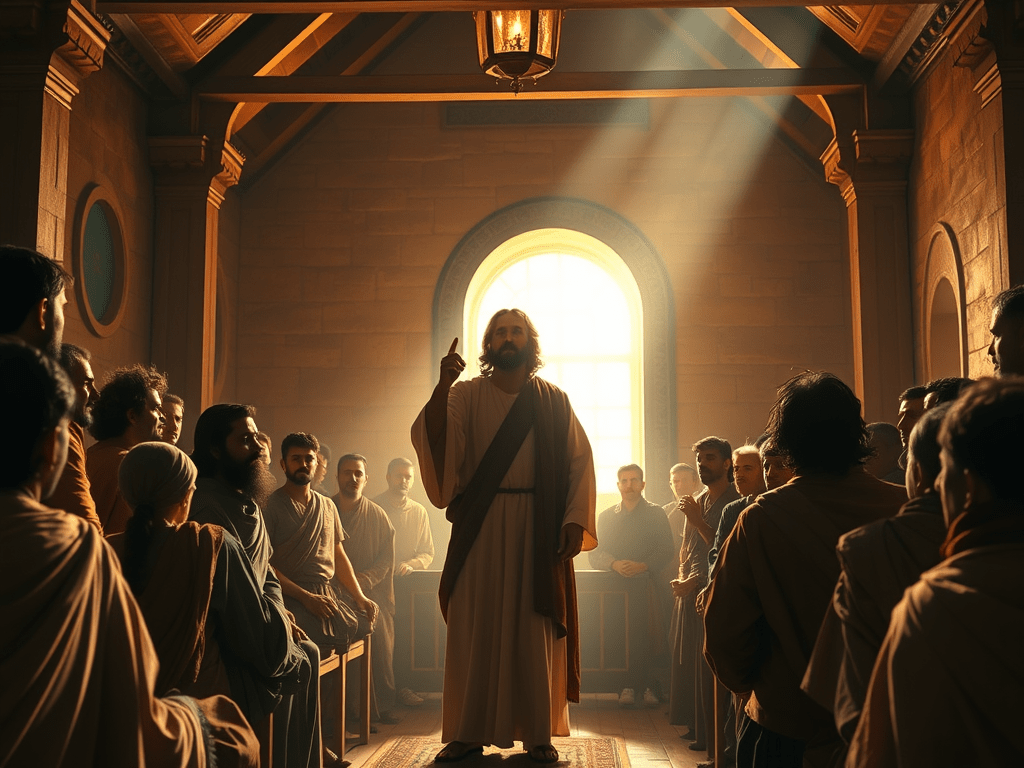
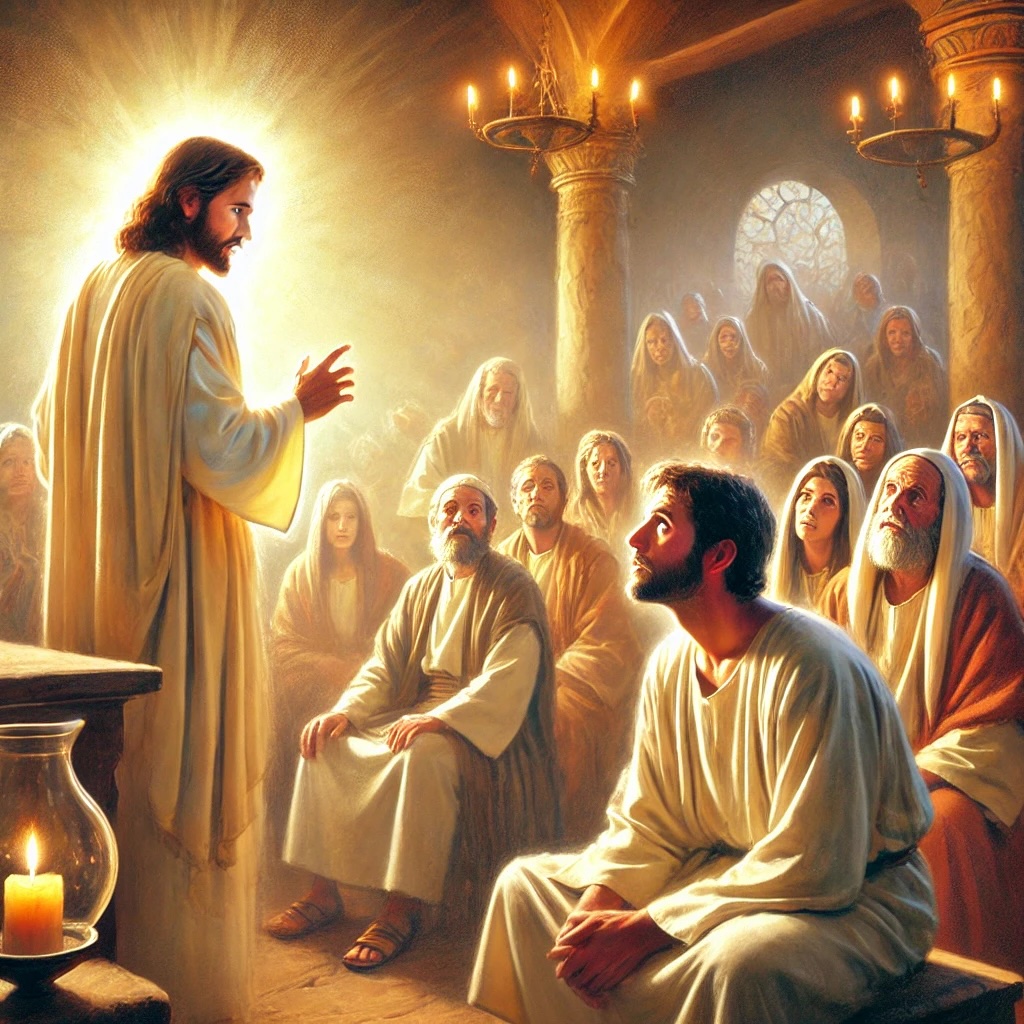
Jesus enters Capernaum, a fishing town on the northern shore of the Sea of Galilee, and immediately steps into the synagogue on the Sabbath. The people gathered there are used to hearing the Torah taught by scribes, religious experts who interpret the Scriptures. But today, something is different.
Mark tells us:
“And they went into Capernaum, and immediately on the Sabbath he entered the synagogue and was teaching. And they were astonished at his teaching, for he taught them as one who had authority, and not as the scribes.”
From the very first words He speaks, Jesus commands attention. His teaching is unlike anything the people have heard before. It is not filled with rabbinic citations, not a careful balancing act between different interpretations of the law. His words carry weight. They carry authority.
The Greek word ἐξουσία (exousia) is used here for “authority.” It means more than just power; it implies the right to rule, the ability to act decisively and with divine backing. Jesus does not simply teach about God—He speaks as if He is speaking for God Himself.
This is not just a teacher. This is something entirely different.
And before the people can fully grasp what they are witnessing, something unexpected happens.
A Disruption in the Synagogue
“And immediately there was in their synagogue a man with an unclean spirit. And he cried out, ‘What have you to do with us, Jesus of Nazareth? Have you come to destroy us? I know who you are—the Holy One of God.’”
The moment Jesus begins teaching, darkness pushes back.
A man possessed by an unclean spirit suddenly speaks, his voice cutting through the astonished silence of the synagogue. The people may not yet fully understand who Jesus is, but the spiritual realm does.
“What have you to do with us, Jesus of Nazareth? Have you come to destroy us?”
There is fear in the demon’s words. It knows that Jesus is not just another teacher, not just another prophet. It calls Him by name—“the Holy One of God.”
This is the first direct confrontation between Jesus and the forces of evil in Mark’s Gospel, and it reveals an essential truth: the presence of Jesus is a direct threat to the kingdom of darkness.
Wherever Jesus goes, light pushes into the shadows. The forces of evil do not act indifferently toward Him. They react, they resist, they tremble.
Authority Over the Spiritual Realm
Jesus does not engage in conversation with the demon. He does not ask its name, does not perform a long ritual. He does not appeal to a higher power—because He is the higher power.
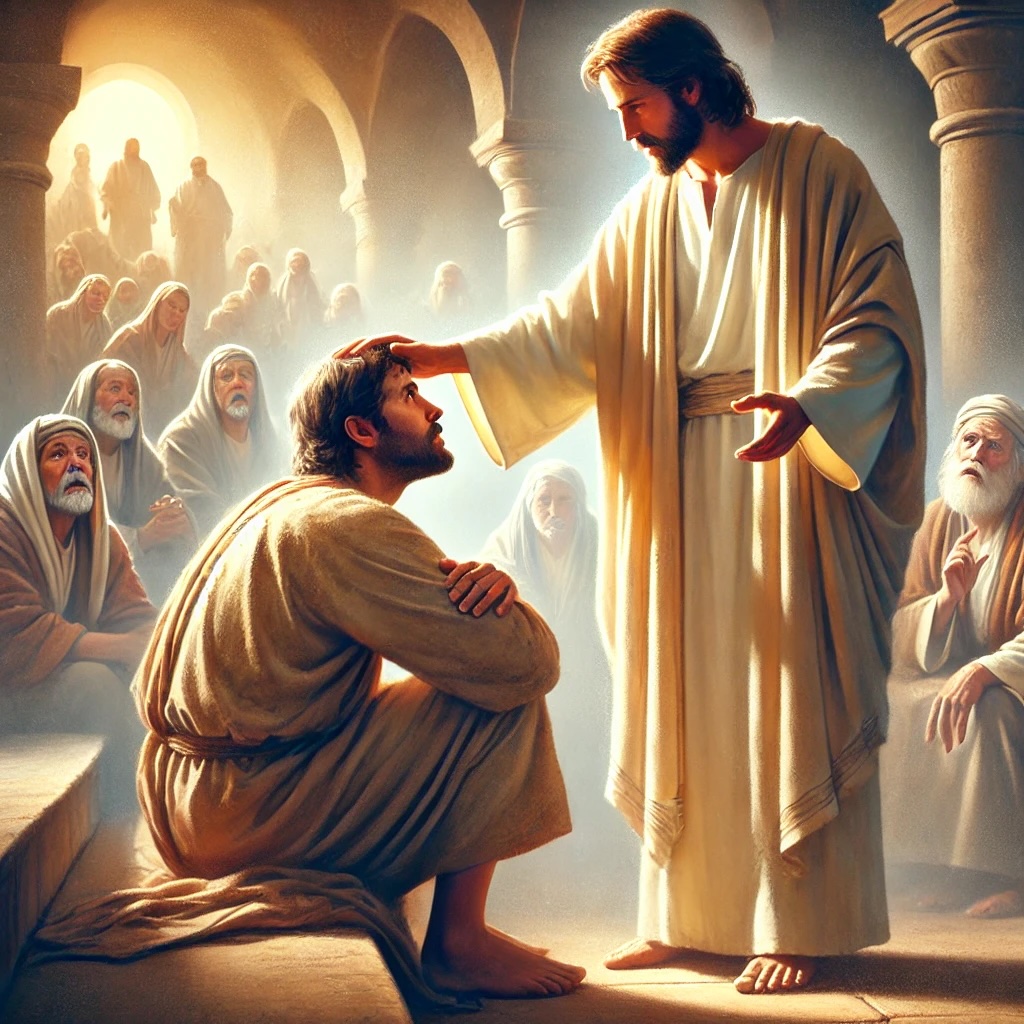
“But Jesus rebuked him, saying, ‘Be silent, and come out of him!’ And the unclean spirit, convulsing him and crying out with a loud voice, came out of him.”
There is no struggle. No back-and-forth. No contest.
With a single command, Jesus silences the spirit and drives it out.
The word “rebuke” (ἐπετίμησεν, epetimēsen) is significant. This is the same word used later when Jesus rebukes the storm on the Sea of Galilee, commanding it to be still (Mark 4:39). The same authority that subdues the chaos of nature is now being exercised over the chaos within a person’s soul.
Jesus speaks, and the forces of darkness obey immediately.
This is power beyond human comprehension. And the people witnessing it know it.
Amazement and a New Kind of Authority
“And they were all amazed, so that they questioned among themselves, saying, ‘What is this? A new teaching with authority! He commands even the unclean spirits, and they obey him.’ And at once his fame spread everywhere throughout all the surrounding region of Galilee.”
The crowd had been astonished by His teaching before the exorcism, but now they are completely overwhelmed.
The scribes spoke about spiritual matters, but they had no power over them. They could explain what God had done in the past, but they could not act with God’s authority in the present.
Jesus, however, teaches and acts with the same power. His words are not just theories or interpretations—they change reality.
The people do not simply say, What a great miracle! Instead, they recognize that this miracle and His teaching go together. His authority over the spiritual world confirms the truth of His words.
And His fame spreads instantly. The news is out: there is a man in Galilee who speaks like no other, who commands like no other, who carries authority like no other.
What This Means for Us
The authority of Jesus is not just something to admire—it is something that calls for a response.
When Jesus speaks, things change. Darkness cannot remain where He is present. He does not tolerate oppression, does not allow deception, does not negotiate with evil. He simply commands it to leave.
If Jesus has authority over the forces of darkness, then what does that mean for our own fears, struggles, and battles?
It means that His power is still active today. It means that no force of darkness has the final say over our lives. It means that when He speaks, things must shift.
And just like the people in the synagogue, we are faced with a question:
“What is this?”
Who is this Jesus who speaks, and reality bends to His voice?
Who is this teacher whose words do not just inform, but transform?
Who is this man whose presence disturbs the forces of evil, whose very existence threatens the dominion of darkness?
Mark gives us the answer before the story even unfolds:
He is the Son of God.
The question now is—will we recognize His authority, not just in theory, but in our own lives?
Because the same Jesus who walked into the synagogue in Capernaum walks into the spaces of our hearts today.
“Rejoice always, pray always, and give thanks in all situations; for this is God’s will for you in Christ Jesus” — 1 Thessalonians 5:16–18
Being grateful is a strong state of mind. Because we are thankful, our prayers are no longer just about what we need, but also about what He has already given us. If we want to follow the teachings of the Apostle Paul, we should always pray and be thankful, not just when things are going well.
Why is it so important to be thankful when you pray? Because it makes our faith stronger. Let’s thank God for everything, even if we don’t see the answer right away. This shows that we believe in His good plan. When we are thankful, we can see how God is working in our lives in ways we did not expect.
Today, stop and thank God for all the good things in your life, no matter how big or small. Write down the things you’re thankful for and say them out loud as a prayer. Let being thankful shape your relationship with God. It will make your time with Him more joyful and trustworthy.
Question: How often do you thank God when you pray? Perhaps you can thank Him for something today, even if you haven’t heard back yet.
Fasting & Giving: Fast from unnecessary purchases. Donate what you would have spent.
“Man shall not live on bread alone, but on every word that comes from God’s mouth,” says the Bible. — Matthew 4:4
In the Bible, there is a strong link between fasting and prayer. Before Jesus started His mission, He went without food for forty days in the wilderness, depending on God to keep Him alive. In the Bible, fasting is used to help people seek God with more focus, humility, and trust.
We don’t fast to show how strong we are or to earn God’s favor. We fast to make room for God. Giving up something, like food, social media, or something else that takes our attention away, helps us remember that God is the only one who gives us life. When we fast, the noise goes away, and we can hear Him better.
As you go through Lent, you might want to think about fasting as a way to pray. This doesn’t have to be very hard. Maybe it’s missing a meal once a week or blocking out time to pray without any other activities. When you’re hungry or thirsty, let it remind you to turn to God.
Thought: Is there something going on in your life that keeps you from praying? How can fasting help you pay more attention to God’s presence and care? Today, take some time to pray about what you might need to let go of.
Fasting & Giving:Give money or groceries to a local food pantry.
Scripture says, “But seek first his kingdom and his righteousness, and all these things will be given to you as well.” — Matthew 6:33
While God is very concerned about our needs, wants, and worries, we frequently center our prayers on them. Jesus encourages us to pray with a broader perspective. The Lord commands us to pray, “Your kingdom come, Your will be done,” in the Lord’s Prayer. This serves as a reminder that God’s larger plan for the world should guide our prayers.
Praying for God’s kingdom entails asking God to accomplish his will in our lives, in our communities, and globally, in addition to our own personal blessings. It entails pleading with God to act through us in order to provide love where hatred exists, peace where strife exists, and justice where oppression exists. It entails offering up prayers for change in the world as well as in our own hearts.
Spend a moment praying for something bigger than yourself today. “How can I help bring Your kingdom here on earth?” ask God.
Thought: How can you change the focus of your prayers from your own wants to God’s kingdom? What aspect of God’s work are you being called to?
Fasting & Giving: Fast from distractions during meals. Eat in silence and reflect on God’s provision.
“The Spirit also supports us when we are weak. The Spirit himself makes silent pleas on our behalf even when we are unsure of what we should pray for.” — Romans 8:26
There are times in life when we are at a loss for words—when we are too overwhelmed by grief, bewilderment, or doubt to know how to pray. However, when we are at a loss for words, God has provided us with an assistant, the Holy Spirit, who prays on our behalf.
We are not alone when we pray. We are inhabited by the Spirit of God, who directs our prayers, makes intercession for us, and aligns our hearts with the Father’s will. The Holy Spirit brings our deepest desires before the throne of grace, even when we feel weak or cut off from God.
Spend some time today asking the Holy Spirit to be a part of your prayer life. Seek His guidance for your heart, words, and thoughts. If you find it difficult to pray, just sit quietly and let the Spirit to speak on your behalf. Have faith that God is working even while you are silent.
Considering: Have you ever been uncertain about your prayers? How can you strengthen your relationship with God and depend more on the Holy Spirit to direct your prayers?
Fasting & Giving:Give away something valuable to someone in need. Trust God to provide for you.
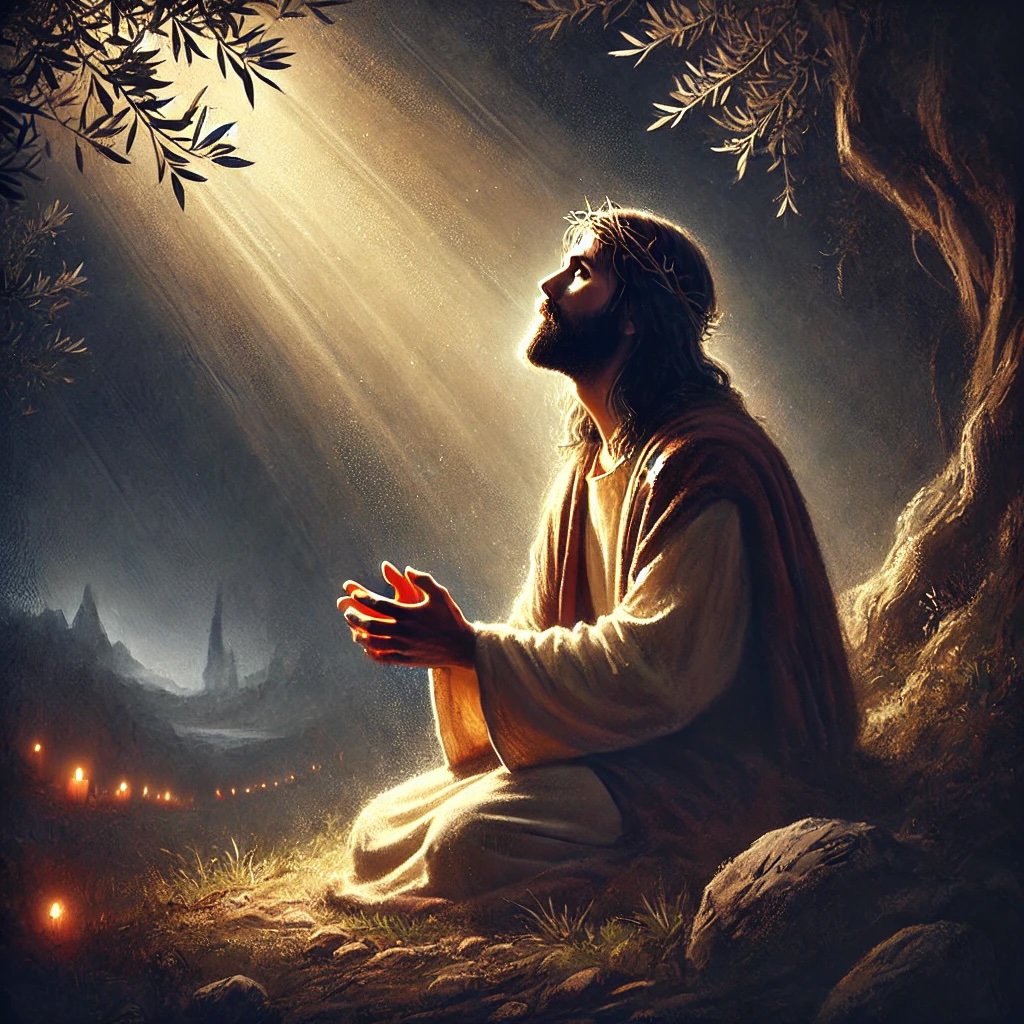
“Father, if you are willing, take this cup from me; yet not my will, but yours be done,”— Luke 22:42
In the Garden of Gethsemane, Jesus uttered one of the most potent petitions in history. “Not my will, but Yours be done,” He said in surrender as He faced the cross and poured out His heart to the Father, asking if there was another way.
Asking God for what we want is only one aspect of true prayer; another is putting our trust in Him to do what He wills. In prayer, surrender is giving God our plans, our wants, and our control because we trust that His method is always best. This does not imply that we cease asking; rather, it means that we ask with open arms, ready to receive whatever it is that God decides to provide.
Do you find it difficult to let go of things in your life? Are you struggling to let go of unanswered prayers, relationships, dreams, or fears? Take a cue from Jesus today. Present your wishes to God, but conclude your petition by saying, “Not my will, but Yours be done,” just as He did.
Think about it: What do you need to give up to God today? Even if you don’t understand, can you have faith that His will is always for your benefit?
Fasting & Giving: Give up the desire to control outcomes. Surrender one situation to God.









 Vita Dinamica: Dynamic Life